

How do you prevent chimney fires during winter?
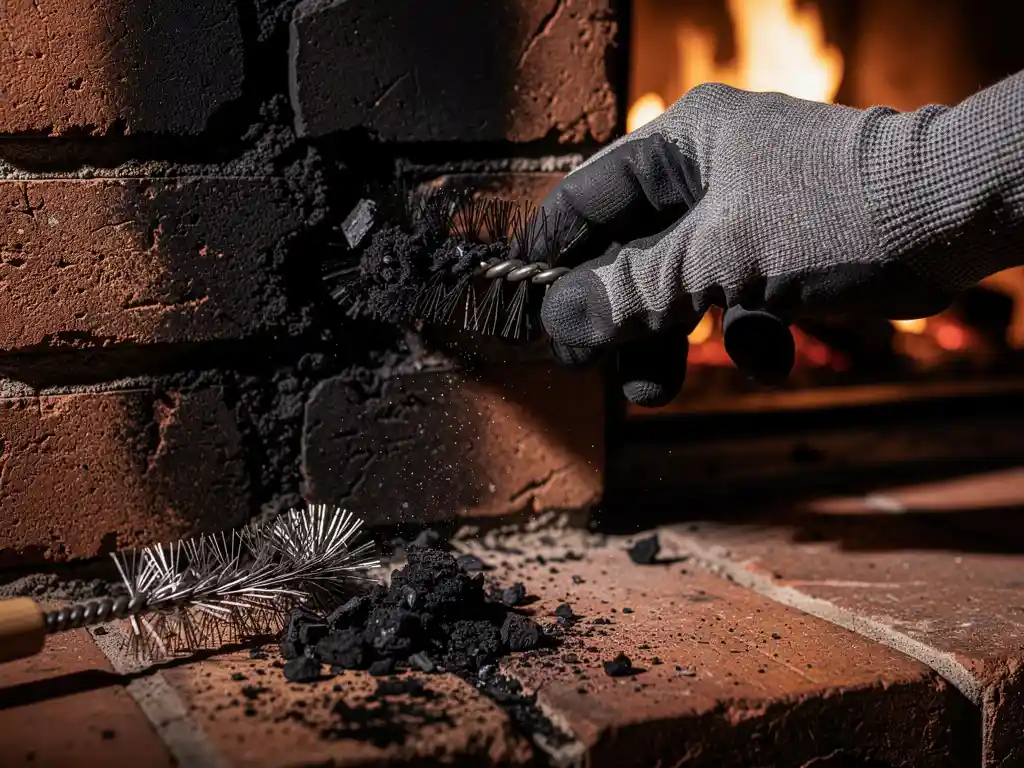
Preventing chimney fires during winter starts with regular chimney cleaning, using seasoned hardwood, and scheduling a professional inspection at least once a year. The single biggest risk factor is creosote, a flammable residue that accumulates inside the flue whenever wood burns incompletely. The sections below cover the most common questions about chimney fire causes, warning signs, and practical prevention steps.
What causes chimney fires in winter?
Chimney fires in winter are caused primarily by the ignition of creosote deposits inside the flue. When wood burns, it releases smoke, gases, and unburned particles that rise through the chimney. As these byproducts cool against the flue walls, they condense and form creosote, a tar-like, highly combustible substance. Once creosote reaches a sufficient thickness and a hot enough fire is burning, the deposit can ignite and burn at extremely high temperatures inside the flue itself.
Several factors increase the risk of chimney fires during the colder months specifically. Fireplaces and wood stoves see much heavier use in winter, which accelerates creosote accumulation. Cold outdoor temperatures also cause the flue to stay cooler, encouraging faster condensation of smoke byproducts. Burning unseasoned or wet wood makes the problem significantly worse, because incomplete combustion produces far more smoke and particulate matter than dry, well-seasoned wood does.
Restricted airflow is another contributing factor. A partially closed damper or a blocked air supply reduces the burn temperature, causing smoldering rather than clean combustion. Smoldering fires are the single most effective way to coat a flue with thick layers of creosote in a short period of time.
How does creosote buildup lead to chimney fires?
Creosote buildup leads to chimney fires because the substance is highly flammable and accumulates on flue walls over time. When a hot fire sends a surge of heat up the chimney, the creosote deposits can ignite. A chimney fire fueled by creosote can reach temperatures above 1,000 degrees Celsius, which is hot enough to crack flue tiles, warp metal liners, and damage the surrounding masonry structure.
Creosote develops in three distinct stages. First-degree creosote is a light, flaky deposit that is relatively easy to brush away. Second-degree creosote is a flakier, tar-like substance that is harder to remove and more combustible. Third-degree creosote is the most dangerous form: a thick, hardened, glaze-like coating that is extremely difficult to remove and burns with intense, sustained heat. Most serious chimney fires involve second- or third-degree creosote.
The danger is compounded by the fact that many chimney fires go undetected. A slow-burning creosote fire can smolder for hours without producing obvious flames or loud sounds, silently damaging the flue structure and creating pathways through which heat and flames can reach combustible building materials.
How often should you clean your chimney to prevent fires?
You should clean your chimney at least once a year to prevent chimney fires, ideally before the start of the heating season. The National Fire Protection Association and most fire safety authorities recommend an annual inspection combined with cleaning whenever deposits reach a certain thickness. For households that burn wood heavily throughout winter, more frequent cleaning, such as after every cord of wood burned, is advisable.
The frequency depends on several variables:
- How often you use the fireplace or stove: Daily use through a full winter season accumulates deposits much faster than occasional weekend fires.
- What type of wood you burn: Softwoods and unseasoned wood produce significantly more creosote than dry hardwoods.
- The temperature of your fires: Low, smoldering fires generate more creosote than hot, well-ventilated fires.
- The design of your flue: Longer flues, bends, and metal flues that cool quickly tend to accumulate deposits faster.
A professional chimney sweep can assess the level of buildup and advise on the appropriate cleaning interval for your specific setup. Do not skip an inspection simply because the chimney appears to be drawing well. Many dangerous deposits are not visible without proper equipment.
What type of wood burns safest in a fireplace?
Seasoned hardwood is the safest type of wood to burn in a fireplace because it burns hotter, cleaner, and produces far less creosote than softwood or unseasoned wood. Hardwoods such as oak, ash, beech, and maple are dense, release more heat per log, and leave behind minimal residue. The key requirement is that the wood must be properly seasoned, meaning dried for at least 12 to 24 months after cutting.
Moisture content is the most important factor. Wood with a moisture content above 20 percent burns inefficiently, producing excessive smoke and accelerating creosote formation. Seasoned wood should feel lighter than fresh-cut wood, show cracks at the ends of the grain, and sound hollow when two pieces are knocked together. A moisture meter is a reliable and inexpensive tool for verifying that wood is ready to burn.
Avoid burning the following in a fireplace or wood stove:
- Freshly cut or green wood
- Treated, painted, or stained wood
- Plywood, chipboard, or engineered timber products
- Cardboard, paper, or household waste
- Coal or charcoal in a fireplace not designed for it
Burning these materials either accelerates creosote buildup, releases toxic fumes, or produces burning embers that can escape the firebox and ignite nearby materials.
What are the warning signs of a chimney fire?
The warning signs of a chimney fire include a loud cracking or popping sound coming from the flue, a roaring or rumbling noise similar to a low-flying aircraft, dense smoke entering the room, and an unusually intense smell of burning. In some cases, you may see flames or sparks exiting the top of the chimney. However, slow-burning chimney fires often produce no dramatic signs at all, which is why prevention and inspection are so important.
If you suspect a chimney fire is occurring, take the following steps immediately:
- Get all occupants out of the building.
- Call the fire department, even if the fire appears to be contained within the flue.
- Close the fireplace damper and any air vents to restrict the oxygen supply to the fire.
- Do not attempt to extinguish the fire yourself by adding water to the firebox, as this can cause thermal shock and crack the masonry.
After any suspected chimney fire, do not use the fireplace again until a qualified chimney professional has inspected the entire flue and structure. Even a fire that appears to have burned out on its own may have compromised the flue liner, leaving gaps through which heat can reach the building structure.
Should you use chimney cleaning logs as a prevention method?
Chimney cleaning logs can help reduce first-degree creosote deposits, but they should not replace professional chimney cleaning or annual inspections. These products contain chemicals that, when burned, release compounds that attach to creosote and make it more brittle and easier to dislodge. They are most effective as a supplement to regular sweeping, not as a standalone solution for chimney fire prevention.
The limitations of chimney cleaning logs are significant. They have little to no effect on second- and third-degree creosote, which is precisely the type most likely to cause a serious chimney fire. They also do not remove debris such as bird nests, leaves, or structural damage inside the flue, all of which pose fire and carbon monoxide risks. Relying on a cleaning log as the primary maintenance method gives a false sense of security.
The most effective chimney fire prevention strategy combines several practices: burning only seasoned hardwood, maintaining hot and well-ventilated fires rather than slow smoldering ones, scheduling a professional inspection and sweep at least once a year, and installing a chimney cap to prevent debris and moisture from entering the flue.
How ExxFire helps with fire protection beyond the chimney
Chimney fire prevention relies on maintenance and awareness, but not all fire risks in a building are as visible or predictable as creosote buildup. Electrical cabinets, server rooms, battery storage systems, and other enclosed equipment can develop fire conditions that are difficult to detect until significant damage has already occurred.
ExxFire’s integrated fire detection and suppression systems are designed specifically for these high-risk, enclosed environments. Key features include:
- Early smoke detection: Aspirating smoke detection identifies fire conditions at the earliest possible stage, before flames develop.
- Clean nitrogen suppression: Non-pressurized nitrogen gas extinguishes fire without leaving chemical residues, protecting sensitive electronics and high-value equipment.
- PFAS-free technology: ExxFire’s patented Cool Gas Generator technology is a clean alternative to legacy suppression agents, meeting modern environmental and compliance standards.
- Easy installation and low maintenance: Systems are pre-engineered for self-installation without special certification, keeping the total cost of ownership low.
- Compatibility with existing infrastructure: Built-in relays allow the system to report to an existing fire panel, integrating seamlessly into current fire safety setups.
Whether you manage a data center, an industrial facility, or a building with critical electrical infrastructure, ExxFire provides a certified, environmentally responsible layer of protection where conventional fire safety methods fall short. Contact ExxFire to find out which system is right for your environment.