

What are the most effective fire prevention habits for families?
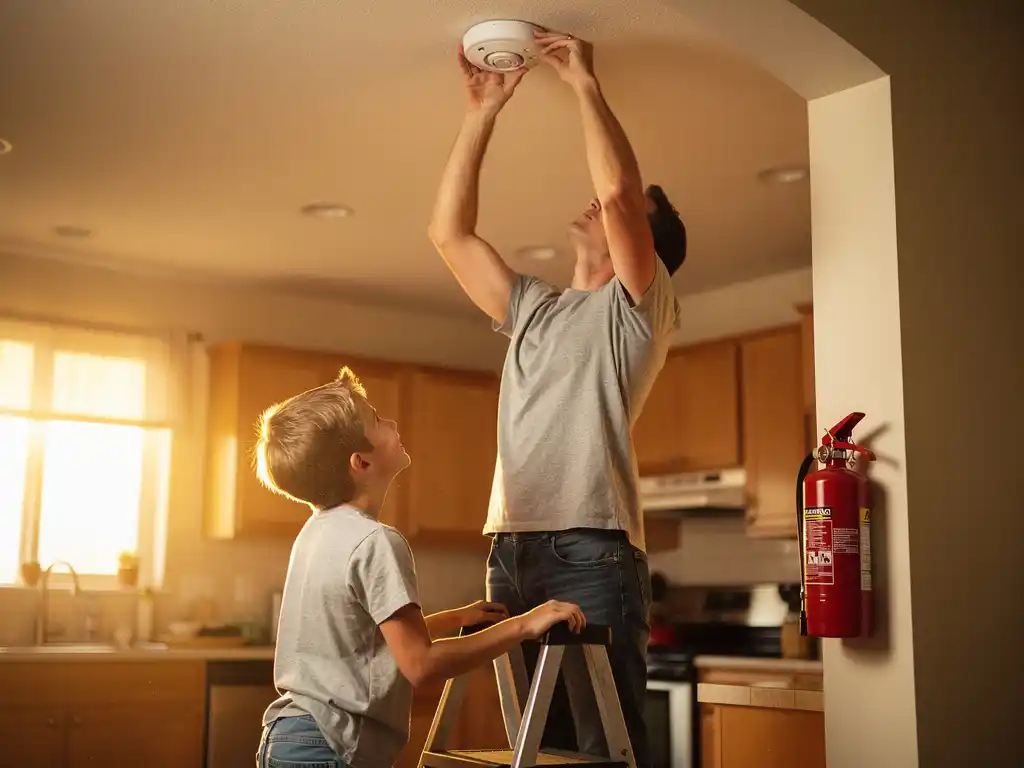
The most effective fire prevention habits for families combine daily awareness, routine equipment checks, and a practiced escape plan. Cooking safety, electrical vigilance, and smoke detector maintenance form the foundation of home fire safety. The questions below break down each habit area so families can take action immediately.
How do most house fires actually start?
Most house fires start in the kitchen, with cooking being the leading cause of residential fires worldwide. Unattended stovetops, grease buildup, and flammable materials left near open flames account for a significant share of home fire incidents. Electrical faults, heating equipment, and candles are the next most common sources of ignition.
Understanding where fires begin helps families focus their prevention efforts where the risk is highest. Cooking fires often escalate quickly because heat sources are left unattended, even briefly. A pan of oil on a burner can reach ignition temperature in minutes, and a small flame can spread to cabinetry or curtains before anyone reacts.
Electrical fires are particularly dangerous because they often start inside walls, in junction boxes, or within appliances where they are not immediately visible. Overloaded power strips, aging wiring, and faulty appliances are frequent culprits. Heating equipment such as space heaters placed too close to bedding or furniture is another consistent source of fire incidents, especially during colder months.
Smoking materials, including cigarettes that are not fully extinguished, remain a significant cause of fatal home fires. Candles left burning in unoccupied rooms are similarly responsible for many preventable incidents each year.
What fire prevention habits should every family practice daily?
Every family should practice a short set of daily fire safety habits: never leave cooking unattended, keep flammable materials away from heat sources, unplug appliances not in use, and ensure candles and smoking materials are fully extinguished before leaving a room or going to bed. These habits address the most common ignition sources directly.
In the kitchen, the single most impactful habit is staying present while cooking. If you must leave the kitchen, turn off the burner. Keep dish towels, paper, and packaging away from the stovetop. Clean the oven and hob regularly to prevent grease accumulation, which can ignite suddenly at high temperatures.
Electrical habits matter just as much. Avoid daisy-chaining power strips or overloading sockets. Replace any cables that are frayed or show signs of heat damage. Unplug phone chargers, toasters, and other small appliances when they are not in use. These small actions significantly reduce the risk of electrical fires developing overnight or when the home is empty.
Candle safety is straightforward but often overlooked. Place candles in stable holders on non-flammable surfaces, keep them away from drafts that could cause uneven burning, and never leave them lit in a room where no one is present. Battery-operated candles are a practical alternative in homes with young children or pets.
How often should smoke detectors and alarms be tested?
Smoke detectors should be tested at least once a month by pressing the test button. Batteries in non-hardwired detectors should be replaced once a year, or immediately when the low-battery warning sounds. The entire unit should be replaced every ten years, as sensor sensitivity degrades over time regardless of whether the alarm has been triggered.
Many families install smoke detectors and then forget about them entirely. A detector with a dead battery or a failed sensor provides no protection at all. Monthly testing takes less than a minute and is one of the highest-impact fire safety habits a family can develop.
Placement matters as much as maintenance. Smoke detectors should be installed on every floor of the home, inside each bedroom, and outside sleeping areas. Detectors placed too close to kitchens or bathrooms may trigger false alarms from steam or cooking smoke, which leads families to disable them. Position detectors at least three meters from cooking appliances to reduce nuisance alarms while maintaining coverage.
Carbon monoxide detectors follow similar maintenance schedules and should be installed on every level of the home, particularly near sleeping areas. While carbon monoxide is not a fire hazard itself, it often accompanies incomplete combustion and deserves the same routine attention as smoke detection equipment.
What should a family fire escape plan include?
A family fire escape plan should include two exit routes from every room, a designated outdoor meeting point, and a clear agreement that everyone exits immediately without stopping to collect belongings. The plan should be practiced as a physical drill at least twice a year, including at night, so that every family member can execute it under stress and in low visibility.
Start by walking through every room in the home and identifying the primary exit and a secondary exit, typically a window. Ensure that windows can be opened quickly and that any security bars have an emergency release. For upper-floor rooms, consider whether a portable escape ladder is practical and ensure family members know how to use it.
The meeting point should be a specific, fixed location outside the home such as a neighbor’s driveway or a particular tree at the end of the garden. Avoid vague instructions like “meet outside.” A specific location prevents family members from re-entering a burning building to look for someone who is already safely outside.
Children should know how to check whether a door is hot before opening it and how to crawl low to avoid smoke inhalation. Assign an adult to assist any family member who may need help evacuating, including young children, elderly relatives, or anyone with a mobility limitation. Ensure that everyone knows the local emergency number and that at least one family member calls it from outside the building, not from inside.
Which household areas carry the highest fire risk?
The kitchen carries the highest fire risk in most homes, followed by the laundry area, the garage, and electrical panels or utility rooms. These are the spaces where heat, flammable materials, and electrical loads converge most frequently. Targeting fire prevention habits in these specific areas delivers the greatest reduction in overall household risk.
Kitchen and laundry areas
The kitchen is the most active fire zone in any home. Beyond cooking, accumulated grease in extractor fans and ducting is a serious hazard that many families underestimate. Clean extractor filters regularly and arrange a professional duct cleaning if the system has not been serviced in several years.
The laundry area is a frequently overlooked risk. Tumble dryers are a leading cause of appliance fires, largely because lint traps are not cleaned after every cycle. Lint is highly flammable and accumulates rapidly. Clean the lint filter before every drying cycle, and periodically check the external vent hose for blockages. Never run a dryer while the household is asleep or away from home.
Garage and utility spaces
Garages often store flammable liquids such as petrol, paint, and solvents alongside power tools and electrical equipment. Store flammable liquids in approved containers away from heat sources, and ensure the garage has adequate ventilation. Avoid using the garage as an extension of the home’s electrical load without having the wiring assessed by a qualified electrician.
Electrical panels and fuse boxes deserve periodic inspection. If circuit breakers trip repeatedly or if you notice a burning smell near the panel, contact a licensed electrician promptly. These are warning signs of an underlying fault that will not resolve itself and carries a real risk of developing into a structural fire.
When should families consider object-level fire suppression?
Families should consider object-level fire suppression when a specific piece of equipment or enclosure represents a concentrated fire risk that standard smoke detectors and general suppression systems cannot adequately address. This applies in particular to home battery energy storage systems, large electrical panels, and home server or network equipment where a fire starting inside an enclosure could cause significant damage before a room-level detector responds.
As home energy systems become more common, including solar battery storage units and electric vehicle charging equipment, the risk profile of the domestic environment is changing. These systems store substantial energy and can experience thermal events that escalate rapidly. A smoke detector on the ceiling of a utility room may not detect a developing fault inside a sealed cabinet quickly enough to prevent serious damage.
Object-level suppression addresses the fire at its source rather than waiting for it to spread into the surrounding space. This approach is well established in commercial and industrial environments and is increasingly relevant for residential settings where high-value or high-risk equipment is installed.
How ExxFire helps protect high-risk equipment at home and beyond
For environments where standard fire safety measures are not sufficient to protect specific high-value or high-risk equipment, ExxFire provides a purpose-built solution. ExxFire’s combined fire detection and suppression systems are designed to stop fires at the object level, before they can spread or cause lasting damage.
ExxFire’s systems are particularly relevant for:
- Battery energy storage systems (BESS) in homes and commercial buildings, where thermal runaway can develop rapidly inside a sealed enclosure
- Electrical panels and switchgear cabinets that carry high loads and represent a concentrated ignition risk
- Server racks and ICT enclosures where fire damage to sensitive electronics causes both financial loss and operational downtime
- Telecom and network infrastructure where continuity of service is critical
The systems combine aspirating smoke detection with non-pressurized nitrogen gas suppression, detecting smoke at the earliest stage and suppressing the fire inside the enclosure before it escalates. Nitrogen leaves no chemical residue, meaning sensitive electronics are protected from both fire and suppression damage. The systems are pre-engineered for straightforward installation, require minimal maintenance, and are certified by CNPP in France and tested by DMT, part of TÜV Nord in Germany. ExxFire’s technology is also a PFAS-free alternative to older gas suppression agents, supporting both safety and environmental compliance.
If your home or facility includes high-risk electrical equipment that standard fire safety measures do not adequately cover, contact ExxFire to discuss which system is right for your situation.
Related Articles
- What are the fire safety compliance requirements for renewable energy installations?
- How do wildfires start and what can homeowners do to prevent them?
- How do you prevent fires in a home office?
- How do you choose a sustainable fire suppression system?
- How does green fire protection align with EU taxonomy requirements?