

What is the difference between a fire alarm system and a suppression system?
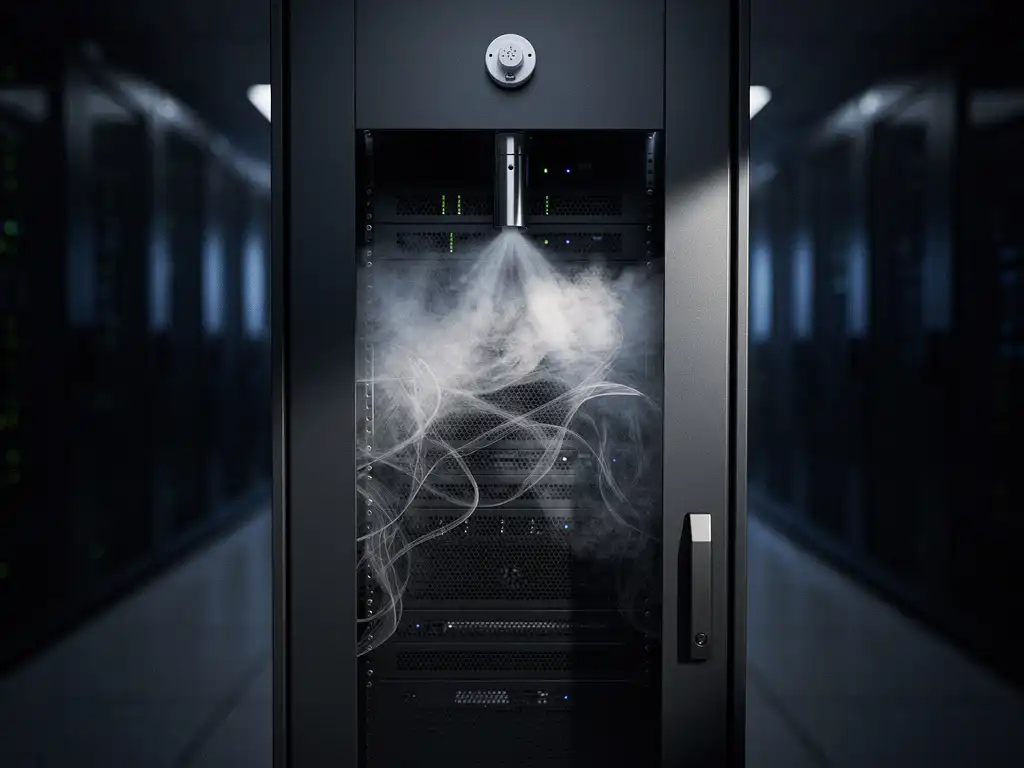
A fire alarm system detects the presence of fire and alerts people to evacuate, while a fire suppression system actively intervenes to extinguish or contain the fire itself. The two systems serve fundamentally different purposes: detection and notification versus active intervention. Together, they form a complete fire protection strategy, and understanding the distinction helps facility managers make better decisions about where each is needed.
How does a fire alarm system actually work?
A fire alarm system works by continuously monitoring an environment for signs of fire, typically smoke, heat, or carbon monoxide, and triggering an audible or visual alert when a threat is detected. The goal is to give occupants enough time to evacuate safely and to notify emergency services before the fire spreads.
Most fire alarm systems consist of three core components: detection devices (smoke detectors, heat detectors, or manual call points), a central fire alarm control panel that processes incoming signals, and output devices such as sirens, strobes, or notification systems. When a detector registers a threat, the signal travels to the control panel, which activates the appropriate alert across the facility.
Modern fire alarm systems range from simple standalone detectors in small buildings to complex, addressable systems in large industrial facilities, where each detector has a unique address and the control panel can pinpoint the exact location of a triggered device. Some advanced systems use aspirating smoke detection, which actively draws air samples through a pipe network to identify smoke particles at very low concentrations, providing earlier warning than conventional point detectors.
Critically, a fire detection system on its own takes no action to stop the fire. It informs and alerts. What happens next depends entirely on human response or a connected suppression system.
What does a fire suppression system do that an alarm cannot?
A fire suppression system actively applies an extinguishing agent, such as water, gas, foam, or chemical powder, directly to a fire in order to extinguish or control it. Unlike a fire alarm, which only raises the alert, a suppression system intervenes physically, reducing or eliminating the fire before it can cause catastrophic damage.
This distinction matters enormously in environments where human response time is too slow or where the assets at risk cannot tolerate fire damage even for a few minutes. A server room, an electrical switchgear cabinet, or a battery energy storage system can sustain irreversible damage in seconds. An alarm alone, even a fast one, cannot prevent that damage if no one is present to act immediately.
Suppression systems also operate autonomously. Once triggered, they do not depend on human intervention, which makes them essential for unmanned facilities, remote installations, or any environment where fire can escalate rapidly. The combination of early detection and automatic suppression is what closes the gap between detecting a fire and actually stopping it.
What are the main types of fire suppression systems?
Fire suppression systems fall into several categories based on the extinguishing agent used, and the right choice depends on the type of hazard, the assets being protected, and the environment.
Water-based suppression systems
Sprinkler systems are the most widely recognized type of fire suppression. They release water when heat activates individual sprinkler heads, making them effective for general building protection. Deluge systems release water across an entire zone simultaneously and are used in high-hazard areas. Water mist systems use fine droplets to suppress fire while minimizing water damage, making them suitable for sensitive environments such as data centers or heritage buildings.
Gaseous suppression systems
Gaseous systems suppress fire by displacing oxygen or interrupting the chemical chain reaction of combustion. Common agents include CO2, inert gases such as nitrogen or argon blends, and clean agents such as FM-200 or Novec 1230. Inert gas systems are particularly valued in environments with sensitive electronics because they leave no residue and cause no secondary damage. It is worth noting that many traditional clean agents contain PFAS compounds, which are facing increasing regulatory restrictions in 2026 due to their environmental persistence.
Foam and powder suppression systems
Foam systems are used primarily for flammable liquid hazards in industries such as oil and gas, petrochemicals, and aviation. Dry chemical powder systems are effective against a wide range of fire classes but leave significant residue, making them unsuitable for environments with sensitive equipment.
Can a fire alarm and suppression system be combined?
Yes, fire alarm and suppression systems can be combined into a single integrated system that handles both detection and automatic suppression within one coordinated unit. Integrated systems are increasingly common in industrial and mission-critical environments because they eliminate the delay between detection and response.
In a combined system, detection and suppression share the same trigger logic. When the detection component identifies a fire, the suppression system activates automatically without requiring a separate signal or human intervention. This tight integration significantly reduces response time, which is the most important factor in limiting fire damage to high-value equipment.
Integrated systems can also interface with existing building fire panels through built-in relays, meaning they report their status to a facility’s broader fire safety infrastructure without requiring a full system replacement. This makes them practical for facilities that already have a fire alarm network in place but want to add localized suppression capability to specific high-risk enclosures or cabinets.
When should a facility use suppression instead of just alarms?
A facility should use fire suppression, not just alarms, whenever the consequences of a fire cannot be adequately managed by evacuation and manual firefighting alone. This applies when assets are irreplaceable, when fire can escalate faster than human response allows, or when operations are unmanned.
Specific scenarios where suppression is essential include:
- Electrical and ICT cabinets: Fires in switchgear, server racks, or control panels can destroy critical infrastructure within seconds and cannot wait for manual intervention.
- Battery energy storage systems (BESS): Lithium-ion battery fires involve thermal runaway, a self-sustaining chemical process that alarms alone cannot interrupt.
- Unmanned or remote facilities: Where no personnel are present to respond, automatic suppression is the only line of defense after detection.
- High-value or irreplaceable equipment: When the cost of asset loss or operational downtime far exceeds the cost of a suppression system, suppression is the economically rational choice.
- Environments with flammable liquids or gases: In oil and gas or petrochemical facilities, fire can spread explosively, making rapid automatic suppression a safety necessity.
Alarms remain essential in all these scenarios, but they function as the trigger for suppression rather than the sole protective measure. The question is not whether to have alarms, but whether alarms alone are sufficient for the specific risk profile of the facility.
What are the compliance and certification differences between the two systems?
Fire alarm systems and fire suppression systems are governed by different standards and certification frameworks, and compliance requirements vary depending on the industry, geography, and type of hazard being protected.
Fire alarm systems are typically certified under standards such as EN 54 in Europe or UL 268 in the United States, which govern detector performance, control panel functionality, and system reliability. In industrial environments, equipment installed in hazardous zones must also meet ATEX certification (in Europe) or NEC Class/Division ratings (in North America), which ensure that detection equipment does not itself become an ignition source in explosive atmospheres.
Fire suppression systems are subject to a separate set of standards. Water-based systems are governed by NFPA 13 in the US and EN 12845 in Europe. Gaseous suppression systems fall under NFPA 2001 or ISO 14520, which specify agent concentrations, discharge times, and enclosure integrity requirements. FM Global has its own approval standards that many insurers require for industrial facilities.
Beyond product certification, integrated systems must also demonstrate that the combined detection-to-suppression response meets the performance requirements of whichever standard governs the protected hazard. This is why third-party testing and certification, such as testing by accredited bodies like CNPP in France or TÜV Nord in Germany, is an important factor when evaluating any combined fire protection system.
For safety and compliance managers, the practical implication is straightforward: alarms and suppression systems must each be independently certified to the relevant standards, and any integrated solution must demonstrate compliance for both functions simultaneously.
How ExxFire addresses fire detection and suppression in one system
ExxFire’s integrated fire detection and suppression systems are purpose-built for exactly the scenarios described above, combining aspirating smoke detection with automatic nitrogen gas suppression in a single, pre-engineered unit. The systems are designed for closed enclosures such as server racks, electrical cabinets, and battery energy storage systems, and are tested and certified by CNPP in France.
Key features of ExxFire’s approach include:
- Non-pressurized nitrogen suppression: Nitrogen is stored in a solid, non-pressurized state using the patented Cool Gas Generator technology, eliminating the risks and maintenance demands associated with pressurized gas cylinders.
- No chemical residue: Nitrogen leaves no residue after discharge, meaning sensitive electronics and components are protected from both the fire and the extinguishing agent itself.
- PFAS-free: ExxFire’s systems contain no PFAS compounds, making them compliant with tightening environmental regulations and a sustainable alternative to traditional clean agent systems.
- Easy installation: The systems are pre-engineered for self-installation without requiring special certification, reducing total cost of ownership.
- Fire panel integration: Built-in relays allow the system to report status to a facility’s broader fire safety infrastructure, ensuring compatibility with a facility’s existing fire safety setup.
If you are evaluating fire protection for mission-critical enclosures and want a certified, integrated solution that handles both detection and suppression automatically, contact ExxFire to discuss which system configuration is right for your facility.
Related Articles
- What makes wooden buildings more vulnerable to fire?
- What are the biggest challenges in modern fire management?
- How do wildfires start and what can homeowners do to prevent them?
- What is the difference between inert gas and chemical suppression agents?
- What is the environmental impact of CO2 fire suppression systems?