

What are the fire protection requirements for outdoor electrical enclosures?
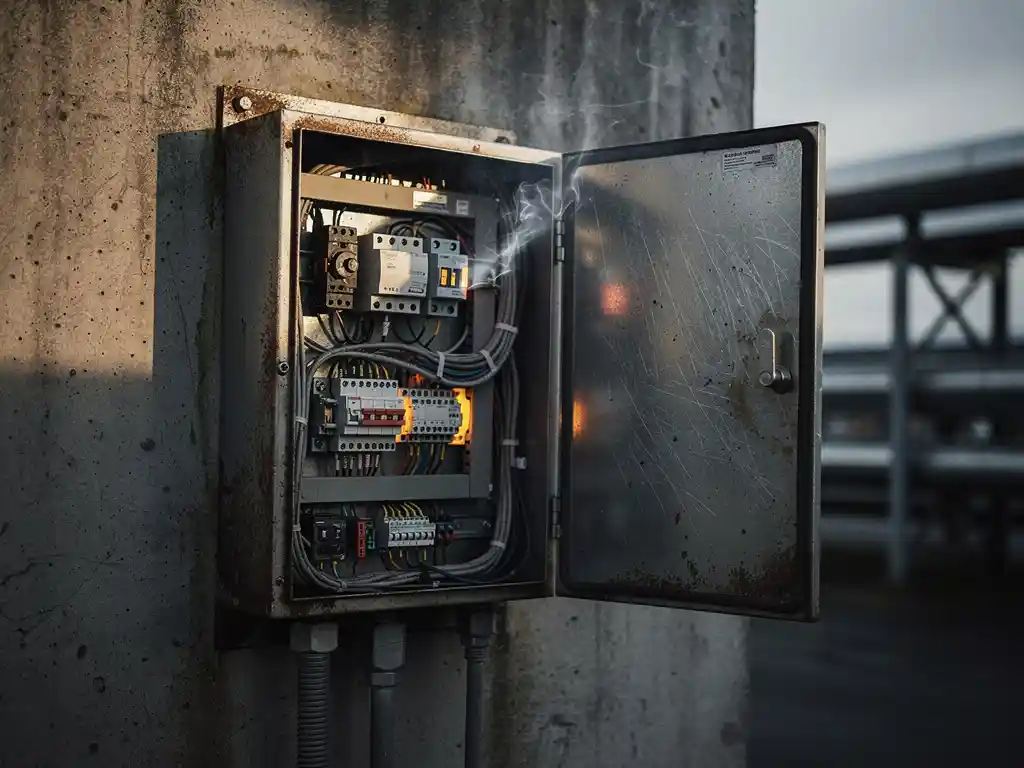
Outdoor electrical enclosures require fire protection measures that address both the internal hazards of electrical equipment and the external environmental conditions they face. Compliance typically involves meeting enclosure ingress protection ratings, adhering to standards such as NFPA 70 and IEC 60529, and installing detection and suppression systems suited to sealed cabinet environments. The sections below address the most common questions safety and compliance managers ask when specifying fire protection for outdoor electrical installations.
What fire hazards are specific to outdoor electrical enclosures?
Outdoor electrical enclosures face a distinct combination of internal ignition sources and environmental stressors that make them more fire-prone than their indoor counterparts. The primary hazards include arc flash events, overheating components, insulation degradation, and moisture ingress that accelerates short-circuit risk. These factors interact with outdoor conditions to create a higher-risk profile than most facility managers initially anticipate.
Thermal cycling caused by direct sunlight and overnight temperature drops stresses cable insulation and connection points over time. As insulation cracks or connections loosen, resistance increases at contact points, generating localized heat. In switchgear and high-voltage cabinets, this can escalate rapidly into an arc flash, which produces extreme temperatures capable of igniting surrounding materials within milliseconds.
Moisture and condensation present a compounding hazard. Water that enters through inadequate sealing or conduit entries can bridge insulation gaps, creating conductive paths that trigger faults. In coastal or industrial environments, salt-laden or chemically contaminated air accelerates corrosion of busbars and terminals, further increasing the probability of resistive heating and ignition.
Dust and particulate accumulation is another underappreciated risk. In outdoor industrial settings near mining, cement, or petrochemical operations, fine particles can coat internal components, reducing heat dissipation and, in the case of combustible dust, introducing a secondary fuel source. Together, these hazards make early detection inside the enclosure itself a critical line of defense.
Which standards and codes govern outdoor enclosure fire protection?
Fire protection for outdoor electrical enclosures is governed primarily by NFPA 70 (National Electrical Code), NFPA 72 (National Fire Alarm and Signaling Code), and the IEC 60529 standard for ingress protection ratings. In industrial environments, FM Global Property Loss Prevention data sheets and ATEX directives for explosive atmospheres add further layers of requirements depending on the site classification.
NFPA 70 establishes installation requirements for electrical equipment in outdoor locations, including wiring methods, enclosure types, and environmental exposure ratings. Article 110 and Article 312 are particularly relevant for outdoor cabinets and panelboards. NFPA 72 governs how detection systems within those enclosures must be designed, installed, and maintained, including requirements for alarm initiation and notification.
For international installations, IEC 62305 covers lightning protection, which is directly relevant to outdoor enclosures exposed to direct strike risk. In the European Union, the Low Voltage Directive and the EMC Directive also apply to electrical enclosure design. Facilities operating in classified hazardous zones must additionally comply with ATEX (Directive 2014/34/EU) or IECEx, which impose strict requirements on equipment construction and fire prevention measures.
FM Global data sheets, particularly those covering electrical equipment and switchgear, provide loss-prevention recommendations that often exceed code minimums. Many insurers and multinational operators treat FM Global guidance as a de facto specification standard, making it relevant even where it is not legally mandated.
What enclosure ratings are required for outdoor fire safety compliance?
For outdoor fire safety compliance, electrical enclosures must meet a minimum of IP54 under IEC 60529, or the equivalent NEMA Type 3R or Type 4 rating under North American standards. These ratings ensure the enclosure resists dust ingress and water spray from any direction, protecting internal components from the environmental conditions most likely to cause electrical faults and fire.
IP ratings consist of two digits: the first indicates protection against solid particles, and the second indicates protection against liquids. An IP54 rating means the enclosure is dust-protected and splash-proof. For harsher environments, IP65 (dust-tight and jet-proof) or IP66 (dust-tight and protection against powerful water jets) may be required, particularly in wash-down areas or coastal industrial sites.
NEMA ratings provide a parallel North American classification. NEMA Type 3R enclosures protect against falling rain and sleet, making them suitable for general outdoor use. NEMA Type 4 adds protection against hose-directed water, while NEMA Type 4X adds corrosion resistance. For classified hazardous locations, NEMA Type 7 or Type 9 enclosures may be required, aligning with ATEX Zone requirements.
It is important to note that IP and NEMA ratings address ingress protection, not fire resistance. A separate assessment is needed to determine whether the enclosure construction provides adequate containment of an internal fire event and whether detection and suppression systems inside the cabinet are compatible with the enclosure’s sealed design.
How does fire detection work inside an outdoor electrical enclosure?
Fire detection inside an outdoor electrical enclosure works by continuously sampling the air within the sealed cabinet for smoke particles or abnormal heat signatures before a fire fully develops. Aspirating smoke detection (ASD) is the most effective method for enclosed electrical cabinets because it actively draws air from inside the enclosure to a detector, enabling detection at the pre-combustion or early smoldering stage rather than waiting for visible smoke or flame.
Conventional point-type smoke detectors are generally unsuitable for use inside electrical enclosures. The confined volume, airflow restrictions, and electromagnetic interference common in switchgear cabinets reduce their reliability. Aspirating systems overcome these limitations by using a sampling pipe network to draw air continuously to a highly sensitive photoelectric or laser-based detection chamber located outside the enclosure or in a protected zone within it.
Heat detection is a supplementary option, particularly in dusty outdoor environments where smoke detectors may generate false alarms. Rate-of-rise and fixed-temperature heat detectors can be installed at cable entry points or near busbars where resistive heating is most likely to occur first. However, heat detection alone provides a later warning than smoke-based systems and is generally considered a secondary measure.
For outdoor enclosures exposed to wide temperature swings, detection systems must be specified with an appropriate operating temperature range. Standard commercial detectors rated to 50°C may be inadequate in enclosures exposed to direct solar gain in hot climates, where internal temperatures can exceed 60°C without any fault condition present.
What suppression methods are approved for outdoor electrical enclosures?
Approved suppression methods for outdoor electrical enclosures include inert gas systems, clean agent gaseous suppression, and aerosol-based systems. Inert gas systems using nitrogen are widely preferred for enclosed electrical cabinets because nitrogen is electrically non-conductive, leaves no residue, and does not damage sensitive electronics or create secondary hazards for personnel.
Clean agent systems using fluorinated compounds such as FK-5-1-12 (Novec 1230) or HFC-227ea are also used in enclosed electrical applications. However, increasing regulatory pressure on fluorinated gases, including restrictions under the EU F-Gas Regulation and the phase-out of PFAS-containing substances, is driving a shift toward inert gas alternatives. Nitrogen-based systems are currently the most future-proof choice from a regulatory compliance standpoint.
CO2 suppression is effective but poses a significant personnel safety risk in enclosed outdoor installations where access may be frequent or unannounced. Most modern specifications for outdoor electrical enclosures explicitly exclude CO2 where human entry is possible, limiting its use to fully automated, locked installations with robust pre-discharge warning systems.
Aerosol condensed systems offer a compact alternative for small enclosures, but their suitability depends on the sensitivity of the protected equipment. Some aerosol agents leave fine particulate residue that can coat electronics and create secondary maintenance issues. For high-value switchgear or ICT-integrated outdoor cabinets, residue-free nitrogen suppression is generally the preferred specification.
What maintenance and inspection requirements apply to outdoor enclosure fire systems?
Maintenance and inspection requirements for fire systems in outdoor electrical enclosures are defined by NFPA 72 for detection systems and the relevant suppression agent standard (such as NFPA 2001 for clean agents) for suppression components. At minimum, visual inspections should be conducted quarterly, with full functional testing performed annually by a qualified technician.
Quarterly inspections should verify that enclosure seals remain intact, that detection sampling ports or detector heads are unobstructed, and that suppression agent containers or generators show no signs of physical damage or corrosion. Outdoor installations are particularly susceptible to seal degradation from UV exposure and thermal cycling, which can compromise both the enclosure’s IP rating and the integrity of the suppression system.
Annual testing should include verification of alarm and suppression trigger functions, confirmation that relay outputs to any connected fire panel are operating correctly, and a check of agent quantity or generator charge status. For aspirating systems, sampling pipe integrity and filter condition should be assessed, as blocked filters reduce sensitivity and can cause nuisance alarms or missed detections.
Documentation requirements under NFPA 72 include maintaining records of all inspections, tests, and maintenance activities. These records are typically required during insurance audits and regulatory inspections. Facilities operating under FM Global guidelines or ISO 45001 occupational health and safety management systems should integrate fire system maintenance records into their broader safety management documentation.
How ExxFire addresses fire protection for outdoor electrical enclosures
ExxFire’s integrated detection and suppression systems are purpose-built for the kind of closed, high-value enclosures found in outdoor electrical installations, including switchgear cabinets, high-voltage panels, and battery energy storage systems. The system combines aspirating smoke detection with non-pressurized nitrogen gas suppression, delivered through ExxFire’s patented Cool Gas Generator technology. Key features that directly address outdoor enclosure requirements include:
- Aspirating early smoke detection that identifies fire at the pre-combustion stage, well before heat or flame develops inside the cabinet
- Nitrogen-based suppression that is electrically non-conductive, leaves zero chemical residue, and protects sensitive electronics without causing secondary damage
- PFAS-free and fluorinated-gas-free formulation, ensuring compliance with current and upcoming F-Gas and PFAS regulations
- Non-pressurized solid-state storage of the suppression agent, eliminating the pressure vessel maintenance requirements associated with conventional gas cylinder systems
- Built-in relay outputs for integration with existing fire alarm panels, supporting seamless compatibility with site-wide fire safety infrastructure
- Pre-engineered design that allows self-installation without specialist certification, reducing installation costs and downtime
- Coverage for enclosures up to 4.5 m³, with multiple units interconnectable for larger cabinet volumes
- Independent testing and certification by CNPP France and DMT/TÜV Nord, supporting compliance documentation for regulatory and insurance audits
For safety and compliance managers specifying switchgear fire protection for outdoor installations, ExxFire’s system provides a technically robust, regulation-ready, and low-maintenance solution. Contact ExxFire directly to discuss your enclosure specifications and receive guidance on the right system configuration for your site.