

Can fire management help restore degraded landscapes?
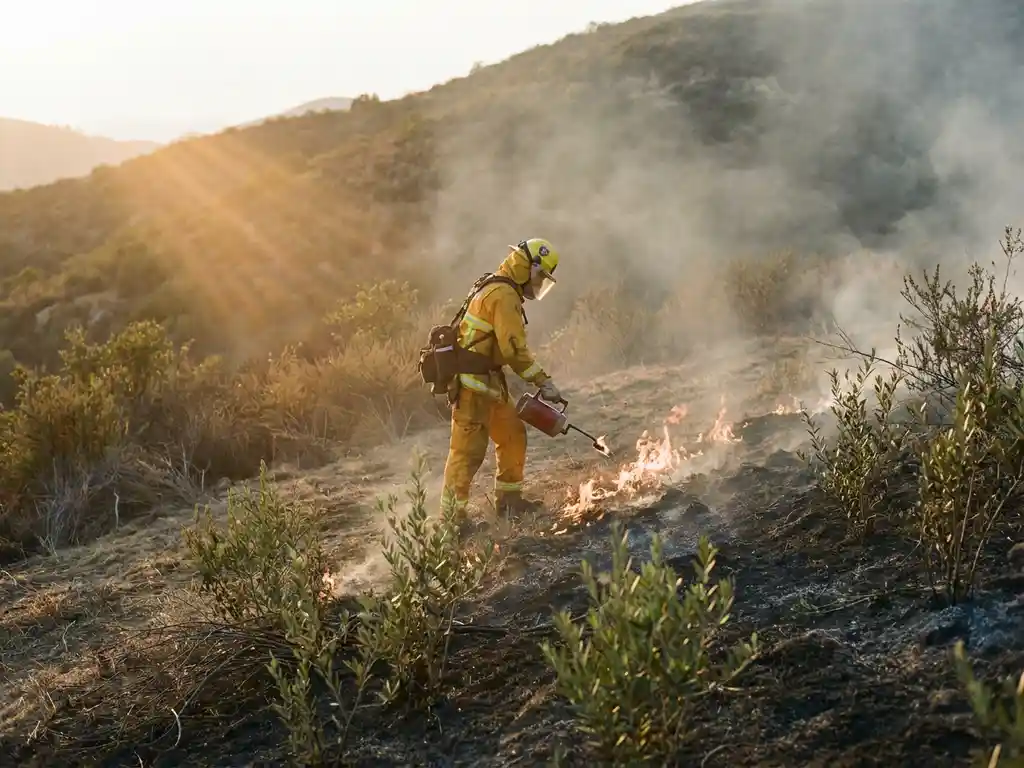
Fire management can help restore degraded landscapes when applied thoughtfully and in the right ecological context. Controlled burning, prescribed fire, and managed wildfire all have the potential to reset vegetation structure, release locked nutrients, and create habitat conditions that passive restoration alone cannot achieve. This article walks through the key questions around fire ecology, restoration practice, and when fire is the right tool for land recovery.
What does it mean to restore a degraded landscape?
Restoring a degraded landscape means returning land to a functional, self-sustaining ecological state after it has been damaged by human activity, invasive species, overgrazing, pollution, or prolonged fire suppression. Restoration does not always mean recreating a historical baseline exactly. Instead, it focuses on rebuilding ecological processes, biodiversity, and resilience so the land can support native species and withstand future pressures.
Degradation takes many forms. Soil compaction, erosion, nutrient depletion, and the dominance of invasive plants are among the most common. In fire-adapted ecosystems, the absence of regular burning is itself a form of degradation. When fire is excluded for decades, woody shrubs encroach on grasslands, leaf litter accumulates to unnatural depths, and plant communities shift away from species that evolved alongside fire. Restoring these landscapes often requires reintroducing the very disturbances that shaped them.
Landscape restoration is increasingly recognized as a priority for biodiversity conservation, carbon sequestration, and climate adaptation. It operates at scales ranging from a single field to entire watersheds, and it draws on a toolkit that includes replanting, rewetting, grazing management, invasive species removal, and fire management.
How does fire naturally shape ecosystems?
Fire is a natural ecological force that shapes vegetation structure, nutrient cycles, and species composition in many of the world’s biomes. In fire-adapted ecosystems such as savannas, grasslands, Mediterranean shrublands, and boreal forests, periodic burning is not a destructive event but a renewal process that many plant and animal species depend on for survival and reproduction.
When fire moves through a landscape, it clears accumulated dead plant material, opens the canopy to allow light to reach the ground, and releases nutrients stored in vegetation back into the soil as ash. This creates a temporary but highly productive flush of new growth that supports grazing animals, ground-nesting birds, and early-successional plant communities. Some plant species have evolved to germinate only after exposure to smoke or heat, meaning they cannot regenerate without fire.
Fire also acts as a natural control on woody encroachment. In African savannas, for example, regular burning prevents trees from shading out grasses, maintaining the open structure that defines the ecosystem. In the absence of fire, these systems can transition toward closed woodland, losing the biodiversity and productivity that characterize the savanna state. Understanding this ecological role is fundamental to using fire as a restoration tool rather than treating all burning as harmful.
What types of fire management are used in landscape restoration?
The main types of fire management used in landscape restoration are prescribed burning, cultural burning, and managed wildfire. Each approach differs in its objectives, scale, and the degree of control applied, but all share the goal of using fire deliberately to achieve ecological outcomes.
Prescribed burning
Prescribed burning, also called controlled burning, involves setting planned fires under specific weather and fuel conditions to achieve defined land management goals. Practitioners set fires when wind speed, humidity, temperature, and fuel moisture fall within a predetermined window that allows the fire to behave predictably and be contained. Prescribed burns are used to reduce hazardous fuel loads, stimulate native plant regeneration, control invasive species, and restore habitat structure for wildlife.
Cultural burning
Cultural burning refers to Indigenous fire practices that have been used for thousands of years to manage land, maintain food sources, and care for country. These practices are increasingly being recognized and integrated into contemporary land restoration programs, particularly in Australia, North America, and southern Africa. Cultural burning typically involves low-intensity, mosaic burning that creates a patchwork of habitats at different stages of recovery, supporting greater biodiversity than uniform burning regimes.
Managed wildfire
In some remote or wilderness areas, land managers allow naturally ignited wildfires to burn under monitored conditions rather than suppressing them immediately. This approach, sometimes called managed wildfire or fire use, acknowledges that suppression in fire-adapted ecosystems can create worse long-term conditions by allowing fuels to accumulate. Managed wildfire is typically reserved for areas where public safety risks are low and ecological benefits are high.
What are the measurable benefits of fire management for degraded land?
The measurable benefits of fire management for degraded land include improved soil nutrient availability, increased native plant diversity, reduced dominance of invasive species, enhanced habitat for fire-adapted wildlife, and reduced risk of catastrophic wildfire. These outcomes are well-documented across fire-adapted ecosystems globally and form the ecological basis for including fire in restoration programs.
Burning releases phosphorus, potassium, and other nutrients from accumulated organic matter, making them available to plants in the growing season immediately following a fire. This nutrient pulse can accelerate the recovery of native grasses and forbs in degraded grasslands where soil fertility has been depleted by long-term agricultural use or erosion.
Invasive plant species that have colonized degraded land are often less fire-tolerant than native species that evolved in fire-prone environments. Repeated prescribed burning can reduce the competitive advantage of invasives and create windows for native seed germination. In Australian grasslands and North American prairies, fire management has been used successfully to shift plant communities back toward native species assemblages over periods of several years.
For wildlife, fire creates structural diversity in vegetation. A landscape that has experienced burns at different times contains a mosaic of open, recently burned patches alongside older, denser vegetation. This heterogeneity supports a wider range of species than either fully burned or fully unburned land could provide alone.
What are the risks and limitations of using fire to restore landscapes?
The risks and limitations of using fire in landscape restoration include the potential for fire escape, air quality impacts from smoke, unintended harm to sensitive species, and the difficulty of applying fire safely in fragmented or human-dominated landscapes. Fire is a powerful tool, but it is not universally applicable and requires careful planning to avoid causing the damage it is meant to prevent.
Escaped prescribed fires are a serious concern. If weather conditions shift unexpectedly during a burn, a fire intended to stay within a defined area can spread to neighboring properties, infrastructure, or high-conservation-value habitats. Rigorous pre-burn planning, experienced crews, and clearly defined containment lines reduce this risk but cannot eliminate it entirely.
Smoke from burning affects air quality and can pose health risks to nearby communities, particularly people with respiratory conditions. In densely populated regions, the social license to burn is often limited, even when the ecological case is strong. This is one reason why fire management is more commonly practiced in remote or rural areas than in landscapes close to urban centers.
Not all degraded ecosystems are fire-adapted. Applying burning to landscapes where fire was not historically a regular feature can damage soil structure, kill slow-recovering native species, and create conditions that favor invasive plants rather than suppressing them. Matching the fire regime to the ecological history of a site is essential to achieving restoration outcomes rather than causing further degradation.
When is fire management the right tool for landscape restoration?
Fire management is the right tool for landscape restoration when the target ecosystem is fire-adapted, when passive restoration alone cannot reset vegetation structure or reduce fuel loads, and when the practical conditions exist to apply fire safely. It is most effective in grasslands, savannas, shrublands, and open woodlands where fire was historically a regular ecological process.
The decision to use fire should be based on a clear understanding of the site’s fire history, the current state of degradation, and the specific restoration objectives. If the goal is to reduce woody encroachment, stimulate native grass recovery, or create habitat for ground-nesting birds, prescribed burning is often the most cost-effective intervention available. If the goal is to restore a forest ecosystem where fire was historically infrequent, other methods are likely more appropriate.
Practical feasibility also matters. Land managers need access to trained personnel, appropriate weather windows, legal permits, and community support before they can burn responsibly. In many jurisdictions, prescribed burning requires regulatory approval and notification of neighboring landowners. Where these conditions can be met, fire management delivers ecological outcomes that are difficult to replicate through mechanical or chemical means alone.
Combining fire with complementary restoration actions typically produces the best results. Burning followed by targeted replanting, grazing management, or invasive species control allows land managers to capitalize on the post-fire recovery window and guide succession toward the desired ecological state.
How ExxFire supports fire safety in critical environments
While fire management plays a vital role in ecological restoration, fire in built environments tells a very different story. In data centers, switchgear rooms, battery energy storage systems, and industrial cabinets, fire poses an immediate threat to equipment, operations, and business continuity. ExxFire addresses this challenge with a purpose-built approach to fire detection and suppression that protects high-value assets at the source.
- Early smoke detection: Aspirating smoke detection identifies fire at the earliest possible stage, before flames develop.
- Clean nitrogen suppression: Non-pressurized nitrogen gas extinguishes fire without leaving chemical residues, protecting sensitive electronics and components.
- PFAS-free technology: ExxFire’s patented Cool Gas Generator is a fully sustainable alternative to PFAS-containing suppression agents.
- Easy installation: Systems are designed for self-installation inside or outside enclosures, with no special certification required.
- Low maintenance: Once installed and commissioned, the system requires no further check-ups, minimizing the total cost of ownership.
- Certified performance: All systems are tested and certified by CNPP France and DMT, part of TÜV Nord.
Whether you manage a server room, an electrical cabinet, or a battery storage installation, ExxFire’s integrated systems deliver reliable, environmentally responsible fire protection. Contact ExxFire to find out how its technology can safeguard your critical infrastructure.