

What are the fire risks during building renovation or construction?
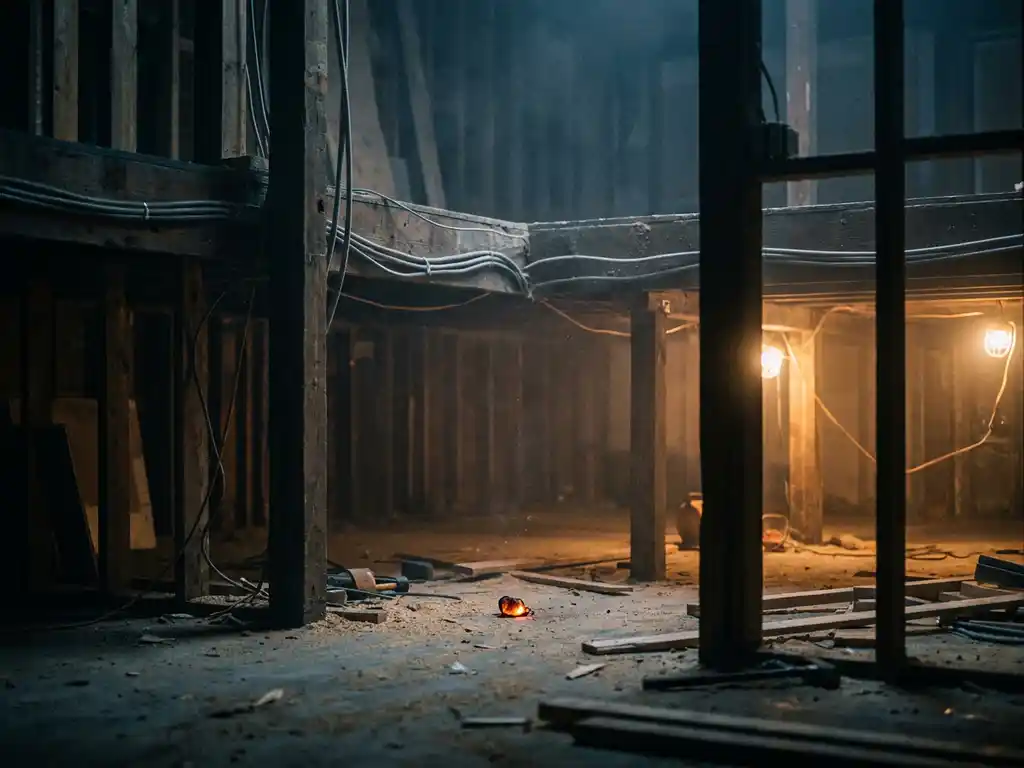
Construction and renovation sites carry some of the highest fire risks of any working environment. Open structures, exposed wiring, flammable materials, and disrupted safety systems create conditions where fire can ignite quickly and spread without warning. The sections below answer the most common questions about fire risks during building renovation and construction, covering causes, vulnerable areas, regulatory requirements, and protective measures.
What makes construction and renovation sites especially fire-prone?
Construction and renovation sites are especially fire-prone because they combine multiple ignition sources with large quantities of combustible materials in environments where normal fire safety systems are often incomplete or temporarily disabled. Unlike occupied buildings with active suppression and detection infrastructure, construction sites operate in a state of controlled disorder where risk factors accumulate rapidly.
Several structural conditions drive this elevated risk. Walls are opened, exposing timber frames, insulation, and cabling. Temporary power supplies replace permanent electrical systems, introducing improvised connections that are more likely to arc or overheat. Ventilation pathways change constantly, meaning fire can travel through a building in unexpected ways if it does take hold.
Human factors also play a significant role. Multiple contractors working simultaneously means that no single team has complete oversight of what is happening across the site. Hot work, waste disposal, and material storage decisions are made by different workers under time pressure, and the cumulative effect is a site where fire hazards are introduced faster than they can be systematically managed.
What are the most common causes of fire on construction sites?
The most common causes of fire on construction sites are hot work operations, electrical faults, arson, and the improper storage or disposal of flammable materials. Hot work, which includes welding, cutting, grinding, and soldering, is consistently identified as a leading ignition source because it generates sparks and heat in close proximity to combustible building materials.
Electrical faults are particularly prevalent during renovation because temporary wiring, overloaded circuits, and damaged cables are routine features of a working site. Generators and portable power tools introduce additional risk when poorly maintained or used in wet conditions.
Flammable liquids and gases, including adhesives, solvents, paints, and liquefied petroleum gas used for heating, are often stored on site without adequate separation from ignition sources. Waste accumulation is another underappreciated hazard. Offcuts, packaging, sawdust, and insulation scraps build up quickly and can ignite from a single spark or a discarded cigarette.
Arson is also a statistically significant cause of construction site fires. Sites are often left unattended overnight, access controls are minimal, and the presence of flammable materials makes them attractive targets. Security measures such as lighting, fencing, and surveillance can reduce but not eliminate this risk.
How does renovation affect existing fire detection and suppression systems?
Renovation work frequently disables, bypasses, or physically damages existing fire detection and suppression systems, leaving buildings temporarily unprotected. Smoke detectors may be removed or isolated to prevent false alarms triggered by dust and construction debris. Sprinkler pipework is often drained or rerouted to accommodate structural changes, and fire alarm panels may be taken offline during electrical rewiring.
This creates a critical protection gap. The period when fire risk is at its highest, during active construction work, is often the same period when the building’s permanent safety infrastructure is least functional. Facilities managers and contractors must plan for this gap explicitly rather than assuming the existing system will continue to provide adequate coverage.
Temporary fire detection measures should be installed to compensate for any disabled permanent systems. These may include portable smoke detectors, temporary alarm panels, and supplementary suppression units positioned near high-risk activities such as hot work or electrical installations. Any isolation of the permanent system should be logged, communicated to all site personnel, and reversed as soon as the relevant work is complete.
Which areas of a building face the highest fire risk during renovation?
The areas of a building facing the highest fire risk during renovation are electrical rooms and switchgear enclosures, roof spaces, wall cavities, plant rooms, and any area where hot work is actively taking place. These locations share a common characteristic: they combine ignition potential with limited visibility and difficult access for fire crews.
Roof spaces are particularly dangerous because they contain large volumes of timber, insulation, and concealed voids through which fire spreads rapidly. Hot work on roofing membranes or near roof penetrations is a frequent cause of fires that smolder undetected for hours before breaking through to the main structure.
Electrical rooms and switchgear cabinets carry elevated risk because renovation work often involves modifications to power distribution, and disturbed connections or incorrectly reinstated wiring can arc and ignite without visible warning. Server rooms, ICT cabinets, and battery energy storage systems that remain operational throughout a renovation are especially vulnerable, as they cannot be shut down but are exposed to increased dust, vibration, and potential power interruptions.
Stairwells and corridors, which normally act as protected escape routes, can become high-risk zones during renovation if they are used for temporary material storage or if fire doors are propped open to allow movement of equipment.
How can mission-critical equipment be protected from fire during renovation?
Mission-critical equipment can be protected from fire during renovation by installing dedicated object-level fire detection and suppression systems that operate independently of the building’s main fire safety infrastructure. This approach ensures that servers, switchgear, ICT cabinets, and other high-value enclosures remain protected even when surrounding systems are offline or impaired.
The key principle is to bring protection as close to the potential ignition source as possible. Object protection systems that combine early smoke detection with targeted suppression act before a fire can grow and spread, which is especially important in environments where the standard detection and alarm chain has been disrupted by construction activity.
Practical steps for protecting mission-critical equipment during renovation include:
- Identifying all active high-value enclosures that will remain operational throughout the project
- Installing self-contained detection and suppression units inside or directly adjacent to those enclosures
- Ensuring suppression agents are clean and residue-free to avoid secondary damage to sensitive electronics
- Maintaining clear physical separation between construction activity and operational equipment wherever possible
- Establishing a monitoring protocol so that any alarm from object-level protection is acted on immediately, even when the main alarm system is isolated
Nitrogen-based suppression is well suited to this application because it extinguishes fire by reducing oxygen levels without leaving chemical residues, meaning electronics and components remain undamaged even after a suppression event.
What fire safety regulations apply to construction and renovation sites?
Fire safety regulations for construction and renovation sites vary by country, but most jurisdictions impose obligations on both the principal contractor and the building owner to maintain fire safety throughout the project. In the European Union and the United Kingdom, these obligations derive from a combination of construction health and safety legislation, fire safety orders, and building regulations that collectively require a documented fire risk assessment, a fire prevention plan, and adequate emergency arrangements at all times.
Key regulatory requirements typically include:
- A written fire risk assessment specific to the construction or renovation phase, reviewed regularly as conditions change
- A hot work permit system that controls when and where hot work can take place and mandates fire watches after completion
- Adequate means of escape that remain accessible throughout the project, even as the building layout changes
- Temporary fire detection and alarm systems when permanent systems are taken offline
- Proper storage, handling, and disposal of flammable and combustible materials
- Clear designation of responsibility for fire safety across all contractors working on site
In many jurisdictions, insurers impose additional conditions on coverage during renovation, including requirements for overnight security, limits on the volume of flammable materials stored on site, and mandatory notification when fire suppression systems are taken out of service. Failure to comply with these conditions can invalidate a policy in the event of a claim.
Renovation projects involving occupied buildings, or buildings where critical systems remain live, face the strictest requirements because the consequences of a fire extend beyond property damage to business continuity, data integrity, and the safety of occupants.
How ExxFire helps protect equipment during building renovation
ExxFire’s combined fire detection and suppression systems are designed specifically for the kind of object-level protection that construction and renovation environments demand. When building-wide systems are offline, ExxFire units provide an independent layer of security for the enclosures that matter most.
- Aspirating smoke detection identifies fire at the earliest possible stage, before a flame develops, giving maximum response time in high-risk environments
- Non-pressurized nitrogen suppression extinguishes fire cleanly without chemical residues, protecting sensitive electronics and preventing secondary damage
- Easy self-installation means units can be deployed quickly at the start of a renovation project without specialist certification or lengthy commissioning
- Maintenance-free operation removes the need for ongoing checks during a project period when site conditions are constantly changing
- Relay outputs allow the system to report status to an existing fire panel or temporary monitoring setup, ensuring alarms are never missed
- PFAS-free technology meets the latest environmental and regulatory standards, with no harmful chemical agents
Whether protecting a server rack, switchgear cabinet, or battery energy storage system during a major renovation, ExxFire provides a certified, sustainable, and practical solution. Contact ExxFire to discuss the right object protection system for your project.