

How do outdoor grills cause fires and how can you prevent them?
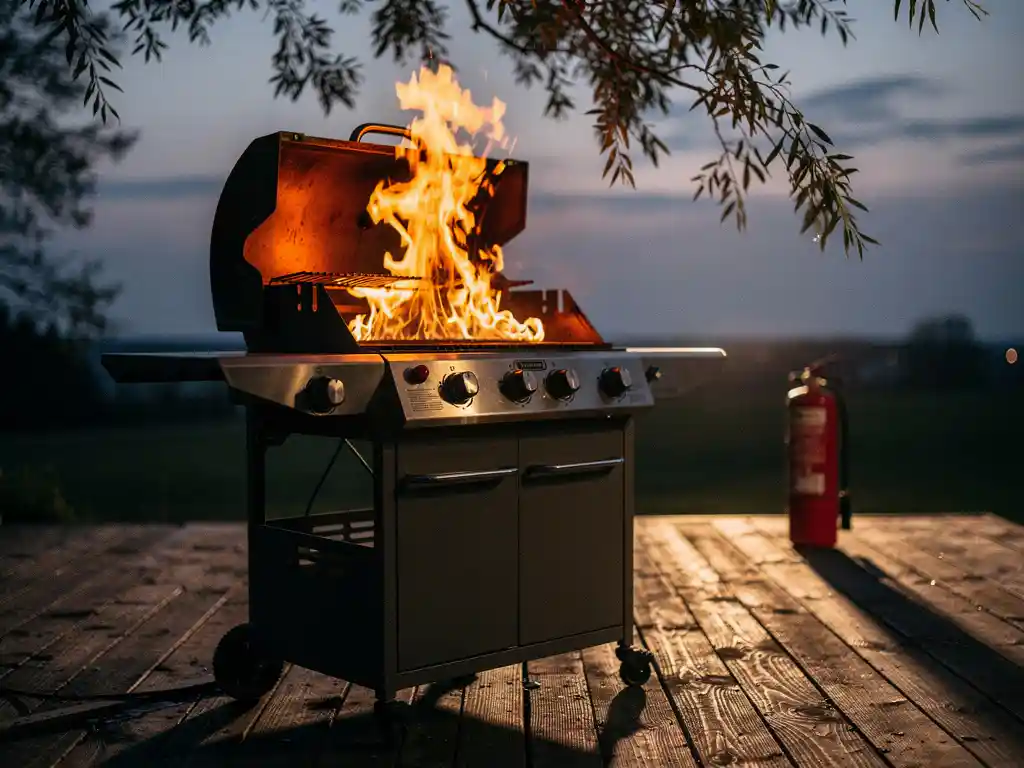
Outdoor grills cause fires primarily through grease buildup, improper placement, and user error during lighting or operation. These hazards apply to both gas and charcoal grills, and they send thousands of households to their insurers every year. The sections below break down the most common causes, key prevention steps, and what to do when things go wrong.
What are the most common causes of outdoor grill fires?
The most common causes of outdoor grill fires are accumulated grease, blocked burner tubes, proximity to flammable structures, and leaving a lit grill unattended. Gas grills add the risk of propane leaks, while charcoal grills introduce hazards from improper lighter fluid use and live ember disposal.
Understanding the full picture of barbecue fire hazards starts with recognizing that most grill fires are preventable. The majority occur not because of equipment failure but because of neglected maintenance or unsafe habits. Grease trays that are never emptied, grills positioned too close to wooden decks or fences, and burner tubes clogged with spider webs or debris are among the leading culprits. Each of these conditions creates an environment where a single spark or flare-up can escalate quickly into a serious fire.
Other common contributing factors include:
- Using a grill indoors or in an enclosed space such as a garage
- Leaving a lit grill unattended, especially around children or pets
- Overloading the grill with high-fat foods that drip heavily
- Failing to check gas connections and hoses for cracks or leaks
- Disposing of hot charcoal ash in a combustible container
How does grease buildup lead to grill fires?
Grease buildup leads to grill fires by creating a layer of flammable residue on grates, burner covers, and drip trays. When this residue reaches its ignition temperature from sustained heat, it catches fire independently of the fuel source, producing intense, fast-spreading flames that are difficult to control.
Every time you grill fatty meats, rendered fat drips down and collects on surfaces below the cooking area. Over multiple uses without cleaning, this accumulation becomes a significant fuel source in its own right. A sudden flare-up from a new batch of food can ignite this residue instantly, turning a manageable cooking fire into a grease fire that burns well beyond the grill itself.
Grease fires are particularly dangerous because they cannot be extinguished with water. Pouring water onto burning grease causes the fat to vaporize explosively, spreading flames outward. Preventing grease fires means cleaning the grill thoroughly after every use, emptying the drip tray regularly, and keeping grates free of carbonized residue that can reignite.
What’s the difference between a gas grill fire and a charcoal grill fire?
A gas grill fire typically involves a propane or natural gas fuel source, meaning leaks, flashbacks, or blocked burners can cause sudden, high-intensity flames. A charcoal grill fire is more likely to result from flare-ups caused by dripping fat, excessive lighter fluid, or improperly disposed embers that remain hot for hours after cooking ends.
Gas grill fire risks
Gas grills introduce the specific hazard of pressurized fuel. A cracked hose, a loose connection, or a burner left open before ignition can allow propane to accumulate. When that gas cloud meets a spark, the result is a flash fire or, in severe cases, an explosion. Always open the lid before igniting a gas grill to prevent gas buildup inside the cooking chamber.
Charcoal grill fire risks
Charcoal grills present a different set of grill fire causes. The most common mistake is using too much lighter fluid, which can cause unpredictable flare-ups when the charcoal catches. Equally hazardous is ash disposal: charcoal embers can remain hot enough to ignite combustible materials for up to 24 hours after the grill has been extinguished. Always transfer cooled ash into a metal container with a lid before disposal.
How far should a grill be placed from your home to prevent fires?
A grill should be placed at least 3 meters (10 feet) away from your home, any structure, or combustible material such as wooden fencing, overhanging branches, or patio furniture. This distance applies to both gas and charcoal grills and is a widely recommended minimum for safe outdoor grilling.
Many grill fires spread not because the grill itself fails but because it is positioned too close to something that can catch fire. Wooden decks, vinyl siding, low-hanging eaves, and fabric outdoor furniture are all common ignition points when a flare-up sends flames sideways or upward. Even heat radiation from a hot grill can be enough to scorch nearby surfaces over time.
Never use a grill on a balcony, inside a garage, or under a canopy or awning. These confined spaces trap heat and combustible gases, dramatically increasing the risk of fire spreading to the structure itself.
How can you prevent a grill fire before it starts?
You can prevent a grill fire by cleaning the grill after every use, checking gas connections before each session, maintaining safe clearance from structures, and never leaving a lit grill unattended. These grill fire prevention tips address the root causes of nearly all outdoor grill fires.
A practical pre-grill checklist covers most risk factors:
- Inspect gas hoses and connections for cracks, wear, or loose fittings before every use
- Clean the grates and drip tray to remove grease and carbonized residue
- Check burner tubes for blockages caused by insects or debris
- Position the grill at least 3 meters from any structure or combustible surface
- Keep a fire extinguisher or bucket of sand nearby for rapid response
- Never leave the grill unattended while it is lit
- Keep children and pets at a safe distance from the cooking area
For gas grills, perform an annual leak test by applying soapy water to all connections while the gas is on. Bubbles indicate a leak that must be fixed before the grill is used again. For charcoal grills, use a chimney starter instead of lighter fluid to eliminate flare-up risk during ignition.
What should you do if your outdoor grill catches fire?
If your outdoor grill catches fire, your first priority is to move people away from the area. For a grease fire on a gas grill, turn off the burners if it is safe to do so and close the lid to cut off oxygen. Never use water on a grease fire. If the fire involves a gas leak or is spreading beyond the grill, call emergency services immediately.
The right response depends on the type and scale of the fire:
- Small grease flare-up: Close the grill lid and reduce heat. The fire should self-extinguish within seconds once oxygen is limited.
- Persistent grease fire: Turn off the gas supply at the tank valve if accessible without reaching over the flames. Apply a dry chemical fire extinguisher rated for grease fires (Class B or K).
- Gas leak fire: Do not attempt to extinguish it. Evacuate the area and call emergency services. Extinguishing a gas fire without stopping the fuel source allows unburned gas to accumulate and re-ignite explosively.
- Fire spreading to nearby structures: Evacuate and call emergency services immediately. Do not attempt to fight a structural fire with a portable extinguisher.
After any grill fire, inspect the equipment thoroughly before using it again. Check for heat damage to hoses, connections, and the grill body. If in doubt, replace the affected components before the next use.
How ExxFire helps protect against fire risks in critical environments
While outdoor grill safety relies on personal habits and safe positioning, many organizations face fire risks from equipment that operates continuously and without direct human supervision. ExxFire addresses these risks with integrated fire detection and suppression systems designed for enclosed, mission-critical environments.
ExxFire’s systems combine aspirating smoke detection with non-pressurized nitrogen gas suppression, delivered through patented Cool Gas Generator technology. Key capabilities include:
- Early smoke detection that identifies a fire event before it escalates to open flame
- Automatic suppression using clean, inert nitrogen gas that leaves no residue and causes no damage to sensitive electronics
- Pre-engineered installation that requires no special certification, reducing deployment time and cost
- Compatibility with existing fire panels via built-in relays, ensuring seamless integration into current safety infrastructure
- PFAS-free, environmentally responsible suppression that meets modern sustainability and compliance requirements
ExxFire’s solutions are tested and certified by CNPP in France and validated by DMT, part of TÜV Nord in Germany, making them a trusted choice for organizations that cannot afford downtime or hardware damage. If you manage switchgear cabinets, server rooms, battery energy storage systems, or other high-value enclosed equipment, contact ExxFire to find out how its fire detection and suppression systems can protect your assets.
Related Articles
- How do you assess fire risk in a multi-story building?
- When should you upgrade your fire suppression system to meet new standards?
- How do you verify that a suppression system meets NFPA requirements?
- How do sprinkler systems contribute to fire prevention?
- What is the future of fire suppression technology in a low-carbon economy?