

How does fire risk assessment support building compliance?
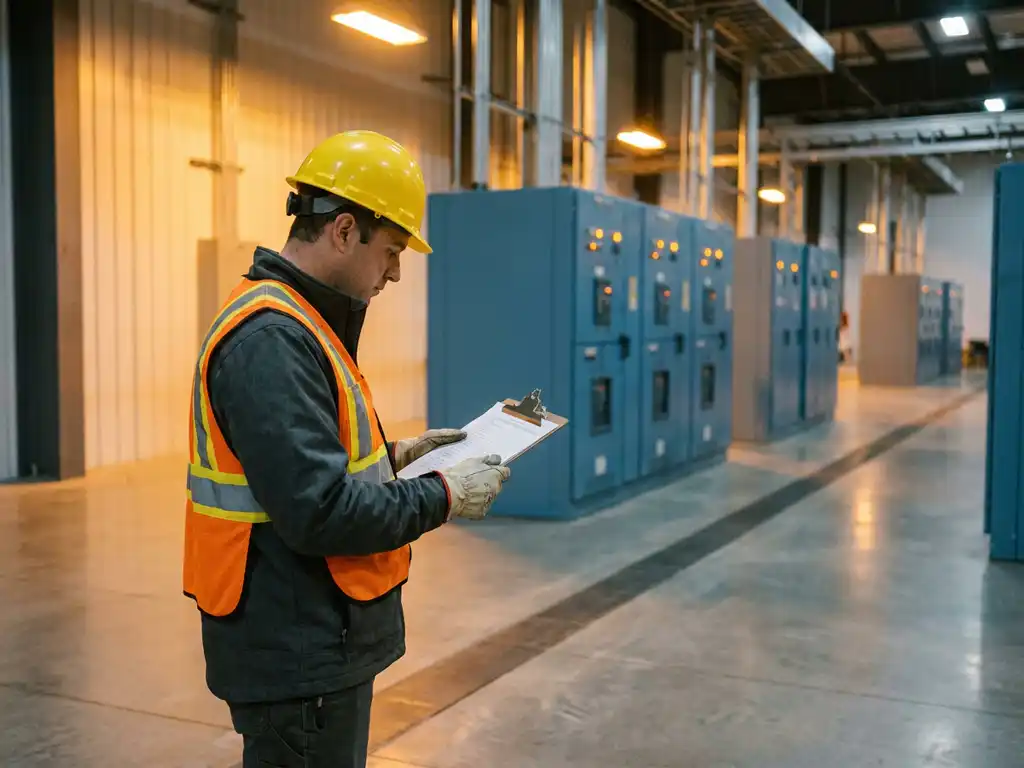
A fire risk assessment directly supports building compliance by providing documented evidence that a responsible person has identified fire hazards, evaluated risks to occupants, and put appropriate control measures in place. This process is the legal foundation of fire safety compliance in most jurisdictions, including under the UK’s Regulatory Reform (Fire Safety) Order 2005 and equivalent legislation across Europe. The sections below unpack each layer of that compliance picture, from what the assessment covers to who is qualified to carry it out.
What does a fire risk assessment actually cover?
A fire risk assessment is a structured evaluation of a building or premises that identifies fire hazards, determines who is at risk, and records the measures needed to eliminate or reduce that risk to an acceptable level. It covers the physical environment, the people who use it, and the systems in place to detect and respond to fire.
In practice, a thorough assessment examines five core areas:
- Identifying fire hazards — sources of ignition, fuel, and oxygen within the premises
- Identifying people at risk — occupants, visitors, and anyone who may be particularly vulnerable
- Evaluating and removing or reducing risks — reviewing whether hazards can be eliminated or controlled
- Recording findings and implementing action plans — documenting what was found and what was done
- Reviewing and updating the assessment — ensuring it stays current as conditions change
Beyond structural fire risks, a comprehensive assessment also considers equipment-level hazards. Electrical cabinets, server racks, battery energy storage systems, and switchgear all represent concentrated ignition risks that a building-level assessment must account for. Where these assets are present, the assessment should evaluate whether object-level fire suppression is in place alongside building-wide detection systems.
What building regulations require a fire risk assessment?
Fire risk assessment requirements are embedded in fire safety legislation across most countries. In the UK, the Regulatory Reform (Fire Safety) Order 2005 requires a suitable and sufficient fire risk assessment for virtually all non-domestic premises. Building regulations under Approved Document B provide the technical framework for fire safety in new builds and significant alterations.
The responsible person, typically the employer, building owner, or occupier, carries the legal duty to ensure the assessment is completed, documented, and acted upon. For premises with five or more employees, or where a licence is in place, the findings must be recorded in writing.
Across the European Union, the Fire Safety Directive and national transpositions impose comparable obligations, with specific requirements varying by member state. In many jurisdictions, certain building types, including healthcare facilities, data centres, industrial sites, and multi-occupancy buildings, face additional sector-specific requirements on top of baseline fire safety legislation.
For facilities housing mission-critical equipment, fire risk assessment building regulations often intersect with sector standards such as EN 54 for fire detection systems, reinforcing the need for documented, evidence-based compliance across both building and equipment levels.
How does a fire risk assessment demonstrate compliance to authorities?
A fire risk assessment demonstrates compliance by creating a documented audit trail that shows authorities the responsible person has systematically identified hazards, assessed risks, and implemented control measures. When enforcement bodies or insurers request evidence of fire safety compliance, the assessment record is the primary document they examine.
Fire safety inspectors from local fire and rescue services have the authority to inspect premises and request access to fire risk assessment records. A well-maintained, up-to-date assessment signals that the organisation takes its legal obligations seriously and has a functioning fire safety management process.
Compliance is demonstrated not just by having a document, but by evidence that actions identified in the assessment have been completed. This includes records of fire safety training, maintenance logs for detection and suppression equipment, evacuation drill records, and any remedial works carried out. Authorities look for a living compliance process, not a static report.
For organisations operating across multiple sites or countries, consistent fire risk assessment documentation also supports regulatory audits and corporate governance reporting, particularly where environmental, health, and safety obligations are subject to board-level scrutiny.
What happens if a building fails its fire risk assessment?
If a building fails its fire risk assessment, the responsible person is legally required to implement remedial measures to bring the premises up to an acceptable standard of fire safety. Failure to act can result in enforcement notices, prohibition orders, prosecution, and, in serious cases, unlimited fines or imprisonment.
The enforcement pathway typically follows a graduated approach:
- Informal notice — fire safety officers may initially advise on required improvements
- Enforcement notice — a formal legal requirement to carry out specific fire safety measures within a set timeframe
- Prohibition notice — restricts or prevents use of the premises until critical risks are addressed
- Prosecution — reserved for serious or persistent non-compliance, with significant financial and reputational consequences
Beyond regulatory penalties, a failed assessment creates direct operational risk. Insurance coverage can be voided or claims disputed if a fire occurs in premises where known deficiencies were unaddressed. For businesses that depend on continuous uptime, such as data centres or manufacturing facilities, the combination of fire damage, regulatory action, and insurance complications can be catastrophic for business continuity.
How often should a fire risk assessment be reviewed for ongoing compliance?
A fire risk assessment should be reviewed regularly and whenever significant changes occur in the premises, its use, or the people who occupy it. Fire safety legislation requires the assessment to remain suitable and sufficient at all times, which means review frequency is driven by change rather than a fixed calendar alone.
As a baseline, most guidance recommends a formal review at least annually for higher-risk premises and every one to three years for lower-risk environments. However, a review should be triggered immediately by any of the following:
- Structural changes to the building or layout
- Introduction of new equipment, processes, or hazardous materials
- Changes in occupancy or the number of people using the premises
- A fire incident or near-miss event
- Changes in fire safety legislation or relevant standards
- Feedback from fire safety inspections
For facilities housing high-value or mission-critical equipment, any significant upgrade to infrastructure, such as adding battery energy storage systems or expanding server capacity, should prompt an immediate reassessment of fire risks at both building and object level.
Who is qualified to carry out a compliant fire risk assessment?
A fire risk assessment must be carried out by a competent person, defined in UK and EU fire safety legislation as someone with sufficient training, experience, knowledge, and other qualities to identify fire risks and evaluate their significance. There is no single mandatory qualification, but the responsible person must be able to demonstrate competence if challenged by authorities.
In practice, competence can be demonstrated through:
- Membership of a recognised professional body such as the Institution of Fire Engineers (IFE) or the Fire Protection Association (FPA)
- Accreditation through schemes such as the UK’s Third Party Accreditation (BAFE SP205) for fire risk assessors
- Relevant qualifications from bodies such as NEBOSH or the Chartered Institute of Environmental Health
- Demonstrated experience in fire safety assessment for the specific building type
For straightforward, lower-risk premises, a trained and experienced in-house person may be sufficient. For complex environments, including industrial sites, healthcare facilities, data centres, or buildings with specialist equipment, an independent, externally accredited assessor is strongly advisable. The greater the complexity of the risk environment, the stronger the case for specialist external expertise.
Regardless of who carries out the assessment, the responsible person retains legal accountability for ensuring it is suitable, sufficient, and acted upon.
How ExxFire supports fire risk assessment and building compliance
Meeting fire safety compliance obligations often reveals gaps at the equipment level, where building-wide detection systems cannot respond quickly enough to protect high-value assets. ExxFire’s integrated fire detection and suppression systems address exactly this gap, making it easier for organisations to close the vulnerabilities identified in a fire risk assessment. Key advantages include:
- Early smoke detection at the source — aspirating smoke detection identifies fire risk inside cabinets and enclosures before it escalates to a building-level event
- Clean, residue-free suppression — non-pressurised nitrogen gas extinguishes fire without damaging sensitive electronics, avoiding the secondary losses that follow a suppression event
- PFAS-free and environmentally compliant — ExxFire’s technology is a direct alternative to PFAS-containing suppression systems, supporting compliance with tightening environmental regulations
- Easy installation and low maintenance — systems are pre-engineered for straightforward installation without specialist certification, reducing TCO and simplifying the compliance process
- Integration with existing fire panels — built-in relays allow status reporting to your existing fire safety infrastructure, supporting documented compliance monitoring
- Tested and certified — systems are validated by CNPP France and DMT (TÜV Nord), providing the third-party evidence that compliance documentation requires
For organisations looking to strengthen their fire safety compliance posture at the equipment level, explore ExxFire’s fire suppression systems and find out how the technology can be integrated into your existing fire safety framework.