

What are the main goals of fire management?
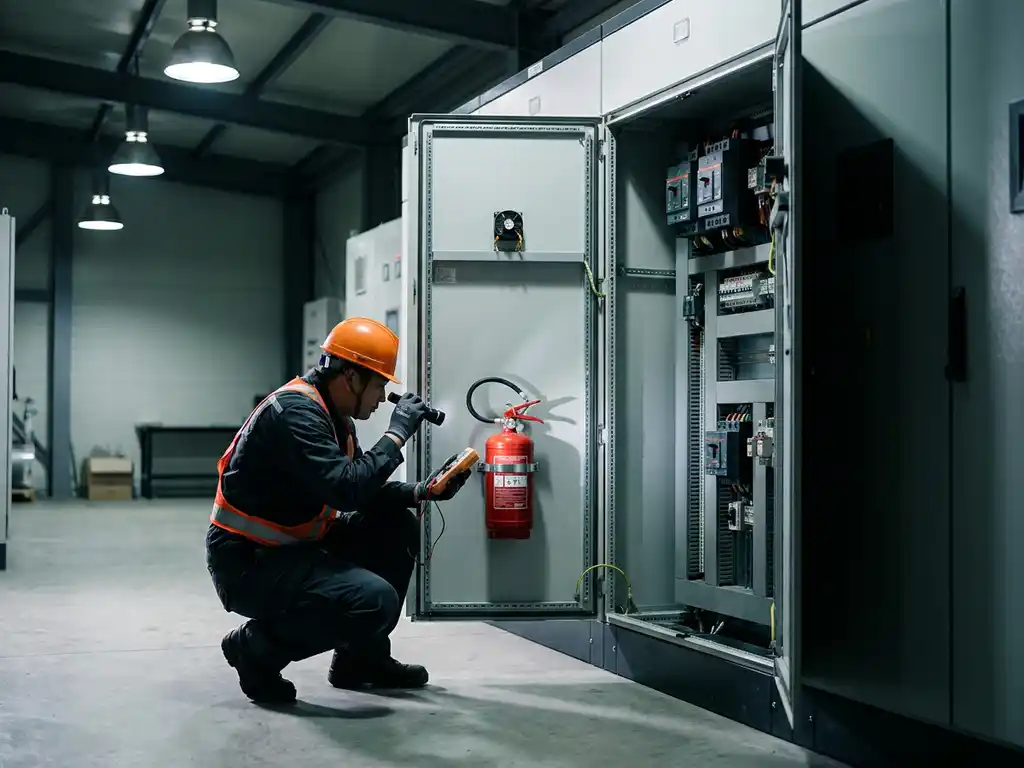
The main goals of fire management are to detect fire as early as possible, suppress it before it causes significant damage, protect people and assets, and restore normal operations with minimal disruption. These objectives apply across every environment where fire poses a risk, from industrial facilities and data centers to healthcare sites and energy infrastructure. The sections below unpack each core goal and explain how a structured fire management strategy achieves them.
How does fire management protect critical assets and equipment?
Fire management protects critical assets and equipment by placing detection and suppression as close to the risk source as possible, intercepting a fire event before it can spread to surrounding infrastructure. The underlying principle is object protection — targeting the specific enclosure, cabinet, or system most likely to ignite rather than waiting for a room-level response.
In environments where server racks, switchgear cabinets, battery energy storage systems, or power distribution units are at stake, a fire that reaches full intensity can destroy hardware that takes weeks or months to replace. The financial cost of that hardware is only part of the picture. Reconfiguration, data recovery, regulatory reporting, and lost operational capacity compound the damage significantly.
An effective fire protection strategy addresses this by combining aspirating smoke detection with a suppression agent that acts fast and leaves no residue. When suppression is delivered directly inside the protected enclosure, the fire is contained at its origin. Equipment remains functional, and the business continues operating. That outcome, preventing damage rather than managing its aftermath, is the defining purpose of asset-focused fire management.
What are the key stages of a fire management strategy?
A complete fire management strategy moves through four key stages: prevention, detection, suppression, and recovery. Each stage builds on the last, and a gap in any one of them increases the overall risk to people, assets, and operations.
- Prevention: Identifying and reducing fire hazards before ignition occurs. This includes safe equipment installation, proper cable management, load monitoring, and regular risk assessments.
- Detection: Identifying the earliest signs of fire, typically smoke or heat, as quickly as possible. Early detection is the stage that determines how much time is available to respond before damage begins.
- Suppression: Applying an extinguishing agent to stop the fire from growing or spreading. The choice of agent matters enormously, particularly in environments with sensitive electronics or sustainability requirements.
- Recovery: Restoring systems, replacing any affected components, and reviewing what happened to prevent recurrence. A well-designed system minimizes what needs to happen at this stage.
These stages are not sequential in isolation — they must be integrated. A detection system that triggers suppression automatically compresses the time between stages two and three to seconds, which is often the difference between minor damage and total equipment loss.
Why is early fire detection central to fire management goals?
Early fire detection is central to fire management goals because the earlier a fire is identified, the more options exist to stop it. A fire detected at the smoldering stage, before open flames develop, can be suppressed with minimal agent and minimal disruption. A fire detected after it has spread requires far more intervention and causes far more damage.
Aspirating smoke detection technology takes this principle seriously. Rather than waiting for smoke to drift to a ceiling-mounted detector, aspirating systems actively draw air samples from inside the protected enclosure and analyze them continuously. This approach can identify combustion particles at concentrations that are invisible to conventional detectors, giving the suppression system a head start of minutes rather than seconds.
For mission-critical environments, that time advantage is not a luxury. It is the mechanism by which fire risk management translates into business continuity. Detection speed determines suppression speed, and suppression speed determines how much of the protected asset survives intact. This is why early smoke detection is treated as the foundation of any serious fire safety strategy, not an optional add-on.
How does fire suppression minimize downtime and operational disruption?
Fire suppression minimizes downtime and operational disruption by stopping a fire before it can destroy the equipment an organization depends on. The faster suppression acts, and the cleaner the extinguishing agent, the less time and money an organization spends on repairs, replacements, and recovery.
The choice of suppression agent directly affects how much disruption follows a fire event. Some agents leave chemical residues that corrode circuit boards, contaminate sensitive components, or require professional decontamination before equipment can be restarted. In those cases, the suppression system itself becomes a source of downtime, even when it successfully stops the fire.
Inert gas suppression using nitrogen avoids this problem entirely. Nitrogen extinguishes fire by reducing oxygen concentration within the protected enclosure to a level that cannot sustain combustion. It leaves no residue, causes no secondary damage to electronics, and does not require cleanup before systems are brought back online. For organizations where every hour of downtime carries a measurable cost, this is a critical distinction in evaluating fire suppression goals.
Suppression systems that integrate directly with existing fire panels through relay outputs add another layer of operational continuity. Facility managers receive immediate status alerts, enabling faster human response and reducing the window between a fire event and a return to normal operations.
What role does environmental responsibility play in modern fire management?
Environmental responsibility has become a core fire safety objective in modern fire management, driven by tightening regulations, corporate sustainability commitments, and growing awareness of the long-term harm caused by certain extinguishing agents. Organizations are increasingly expected to demonstrate that their fire protection strategy does not create a secondary environmental problem.
The most significant concern in this area is PFAS, a class of synthetic chemicals found in many traditional foam and gas extinguishing systems. PFAS compounds persist in the environment indefinitely, accumulate in living organisms, and have been linked to serious health risks. Regulatory pressure across Europe and globally is accelerating the phase-out of PFAS-containing suppression agents, making PFAS-free alternatives a compliance priority as well as an ethical one.
Inert gas systems based on nitrogen represent the most environmentally responsible option currently available. Nitrogen is a naturally occurring, non-toxic gas that makes up approximately 78% of the atmosphere. When used as a suppression agent, it disperses harmlessly after use, leaves no chemical residue, and has no global warming potential. For sustainability-conscious organizations, this aligns fire risk management with broader environmental, social, and governance commitments without compromising protection performance.
How do fire management goals differ across industries and environments?
Fire management goals share a common foundation — detect early, suppress fast, protect assets, and resume operations — but the specific priorities and constraints differ significantly across industries and environments. What counts as acceptable risk, which assets matter most, and what suppression methods are viable all vary by context.
Data centers and ICT infrastructure
In data centers and ICT environments, the primary fire management goal is protecting densely packed electronic equipment without causing collateral damage. Suppression agents must be residue-free, and detection must be fast enough to act before heat or smoke damages servers, storage arrays, or networking hardware. Downtime is measured in financial terms that can reach thousands of euros per minute, making speed and precision the defining criteria for fire protection strategy in this sector.
Energy storage and high-voltage environments
Battery energy storage systems and high-voltage cabinets present a different risk profile. Lithium-ion batteries can enter thermal runaway, a self-sustaining exothermic reaction that is extremely difficult to stop once initiated. Fire management goals in this environment prioritize early detection of the gases and heat signatures that precede thermal runaway, combined with suppression that can interrupt the process before it escalates. The stakes include not just equipment loss but potential facility-wide fire events.
Healthcare and pharmaceutical facilities
In healthcare and pharmaceutical environments, fire management must balance equipment protection with strict requirements around chemical contamination. Suppression agents that leave residues or introduce airborne substances are often unsuitable. The fire safety objectives in these settings prioritize clean agents that protect sensitive equipment and comply with stringent hygiene and safety standards.
Industrial and manufacturing environments
Industrial facilities face fire risks from a wide range of sources, including electrical switchgear, control panels, and automated machinery. Fire management goals here often emphasize redundancy and the ability to suppress a fire in one area without shutting down adjacent operations. Modular, scalable suppression systems that can be configured for different enclosure types and volumes are particularly well suited to these environments.
How ExxFire supports your fire management goals
ExxFire delivers integrated fire detection and suppression systems purpose-built to meet the fire management goals described throughout this article. The systems combine aspirating smoke detection with non-pressurized nitrogen gas suppression, protecting closed enclosures at the object level before a fire can spread.
- Aspirating detection identifies smoke at the earliest possible stage, inside the protected enclosure
- Non-pressurized nitrogen suppression extinguishes fire without chemical residues, protecting sensitive electronics
- PFAS-free technology meets current and emerging environmental compliance requirements
- Systems cover enclosures up to 4.5 m³, with multiple units interconnectable for larger volumes
- Easy self-installation requires no special certification, reducing setup time and cost
- Built-in relay outputs integrate with existing fire panels for real-time status reporting
- Maintenance-free operation after commissioning, keeping total cost of ownership low
- Tested and certified by CNPP France and DMT/TÜV Nord Germany
Whether you are protecting server racks, switchgear cabinets, battery energy storage systems, or other mission-critical enclosures, ExxFire provides a clean, reliable, and environmentally responsible solution. Contact the ExxFire team to discuss your specific fire protection requirements and find the right system for your environment.
Related Articles
- What are the fire risks of overloaded power sockets?
- How do prescribed fires benefit grassland ecosystems?
- What is the process for getting a fire suppression system VdS certified?
- What is defensible space and how does it prevent wildfire damage?
- What is the role of fire suppression in green building certification?