

How do you know if your building’s fire risk assessment is out of date?
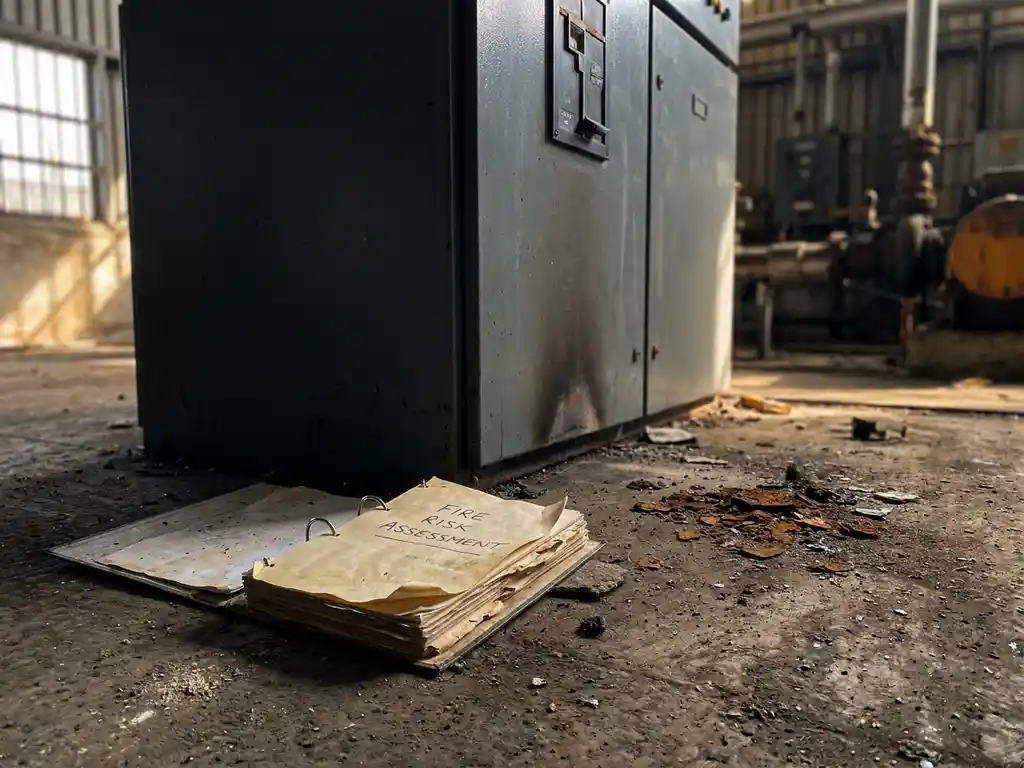
A fire risk assessment becomes out of date when there has been a significant change to the building, its occupancy, its use, or the equipment and processes within it. Even without visible changes, assessments should be reviewed at regular intervals to remain valid and legally compliant. The sections below unpack the specific triggers, responsibilities, and consequences that every building owner or manager should understand.
What triggers a fire risk assessment to become invalid?
A fire risk assessment becomes invalid when the circumstances it was based on no longer reflect reality. The assessment is a snapshot of risk at a specific point in time, and any significant change to the building, its occupants, or its contents can render that snapshot inaccurate and therefore unsafe to rely on.
Common triggers that invalidate an existing assessment include:
- Structural changes such as extensions, partitioning, or alterations to escape routes
- Changes in occupancy, including an increase in the number of people or the introduction of vulnerable occupants such as elderly residents or individuals with mobility limitations
- New processes or activities that introduce additional ignition sources, flammable materials, or hazardous substances
- Installation of new equipment, particularly electrical cabinets, server racks, battery energy storage systems, or other high-load electrical infrastructure
- Changes to fire safety systems, including the removal, upgrade, or addition of detection or suppression equipment
- A fire, near-miss, or incident that reveals gaps in the existing assessment
Any one of these changes should prompt an immediate review. Waiting for the next scheduled review cycle after a significant change is a risk that building managers should not take.
How often should a fire risk assessment be reviewed?
There is no single legally mandated interval that applies universally, but the widely accepted standard in fire safety practice is to review a fire risk assessment at least once every twelve months. For higher-risk premises, more frequent reviews are advisable. The review cycle should also be triggered by change, not just by the calendar.
In the UK, the Regulatory Reform (Fire Safety) Order 2005 requires that the responsible person keep the fire risk assessment under regular review and revise it when it is no longer valid. Similar obligations exist across European jurisdictions. What constitutes a valid review interval depends on the complexity of the premises, the nature of the risks present, and the pace at which the building’s use evolves.
Practically speaking, a low-risk, single-occupancy office that remains unchanged year to year may be adequately covered by an annual review. A facility housing critical electrical infrastructure, battery storage systems, or high-density server environments should consider more frequent reviews, given how rapidly equipment configurations and fire risk profiles can change in those environments.
What are the signs that a fire risk assessment is outdated?
The clearest sign that a fire risk assessment is outdated is that it no longer accurately describes the building or the risks within it. If you read the assessment and find references to rooms, layouts, equipment, or occupancy levels that no longer exist, the document is out of date and needs updating.
Other signs to watch for include:
- The assessment was completed more than twelve months ago with no review since
- New electrical equipment, cabinets, or high-voltage infrastructure has been installed since the last review
- The building has undergone refurbishment, even if the overall footprint has not changed
- Staff numbers have increased significantly, or new shift patterns have been introduced
- Fire safety equipment listed in the assessment has been replaced, upgraded, or decommissioned
- A near-miss or fire incident has occurred on the premises
- The person who conducted the original assessment is no longer available to verify its conclusions
If any of these apply, the assessment should be treated as potentially invalid until it has been reviewed and updated by a competent person.
Who is responsible for keeping a fire risk assessment up to date?
The legal responsibility for maintaining an up-to-date fire risk assessment rests with the responsible person, a term defined in fire safety legislation as the employer, building owner, or the person who has control of the premises. This responsibility cannot be delegated, even when a third party is hired to conduct the assessment itself.
In practice, this means that facility managers, building owners, and health and safety officers must actively monitor whether the conditions described in the assessment still hold true. They should not wait to be told that a review is needed. Any team member who notices a significant change to the building, its use, or its equipment should have a clear process for escalating that information to the responsible person.
In larger organisations, responsibility is often shared across departments. IT infrastructure directors, for example, may oversee the installation of new server racks or electrical cabinets without realising that those changes have fire safety implications that must be reflected in the building’s assessment. Effective communication between departments is essential to keeping the assessment current.
What happens if a fire risk assessment is not updated?
Failing to keep a fire risk assessment up to date exposes a building and its occupants to unmanaged risk and exposes the responsible person to serious legal consequences. If a fire occurs and the assessment is found to be out of date, the responsible person can face prosecution, significant fines, and, in cases of injury or death, potential imprisonment.
Beyond the legal dimension, the practical consequences are equally serious. An outdated assessment may mean that fire detection equipment is inadequate for the current layout, that escape routes are no longer clearly identified, or that new ignition sources introduced by equipment changes have not been assessed. Any of these gaps can allow a fire to develop further before it is detected, increasing the likelihood of equipment damage, operational downtime, and harm to occupants.
For organisations that rely on mission-critical infrastructure, the financial consequences of an undetected or poorly managed fire can be severe. Hardware replacement, data loss, regulatory penalties, and reputational damage can all follow from a fire that a current, accurate risk assessment might have helped prevent or contain.
How does new fire suppression technology affect an existing assessment?
Installing new fire suppression technology directly affects an existing fire risk assessment because it changes the risk profile of the protected environment. When a suppression system is added, upgraded, or replaced, the assessment must be reviewed to reflect the new level of protection, the system’s coverage area, and any interaction with existing detection and alarm infrastructure.
This is particularly relevant when organisations move from older, chemical-based suppression agents to modern inert gas systems. The risk assumptions, maintenance requirements, and environmental considerations in the original assessment may no longer apply. A system that uses a different suppression mechanism, operates at a different pressure, or covers a different enclosure type introduces variables that the existing document has not accounted for.
It is worth noting that modern object-level suppression systems, designed to protect individual cabinets or enclosures rather than entire rooms, represent a fundamentally different approach to fire risk management. Their installation does not replace a building-level fire risk assessment, but it does change what that assessment needs to say about the protected objects and the residual risk they present.
How ExxFire supports a stronger fire risk assessment for critical equipment
When a fire risk assessment identifies unprotected electrical cabinets, server racks, or battery energy storage systems as a significant risk, the next step is implementing protection that can be documented and verified. ExxFire’s integrated fire detection and suppression systems are designed specifically for this purpose.
- Early detection at the source: Aspirating smoke detection identifies fire risk at the earliest possible stage, directly inside the protected enclosure
- Clean nitrogen suppression: Non-pressurised nitrogen gas extinguishes fire without leaving chemical residues, protecting sensitive electronics and avoiding secondary damage
- No maintenance burden: Once installed and commissioned, ExxFire systems require no further check-ups, reducing the ongoing compliance workload for facility managers
- Integration with fire panels: Built-in relays allow the system to report status to an existing fire panel, supporting a coherent, documented fire safety infrastructure
- Tested and certified: Systems are certified by CNPP in France and tested by DMT, part of TÜV Nord, providing the documented evidence that a fire risk assessment requires
- PFAS-free and environmentally compliant: As regulations around PFAS-containing agents tighten, ExxFire’s inert gas technology ensures your suppression solution remains compliant
If your fire risk assessment review has identified gaps in object-level protection, explore ExxFire’s suppression systems to find a certified, low-maintenance solution that strengthens your building’s fire safety documentation and keeps your critical equipment protected.