

How do prescribed fires benefit grassland ecosystems?
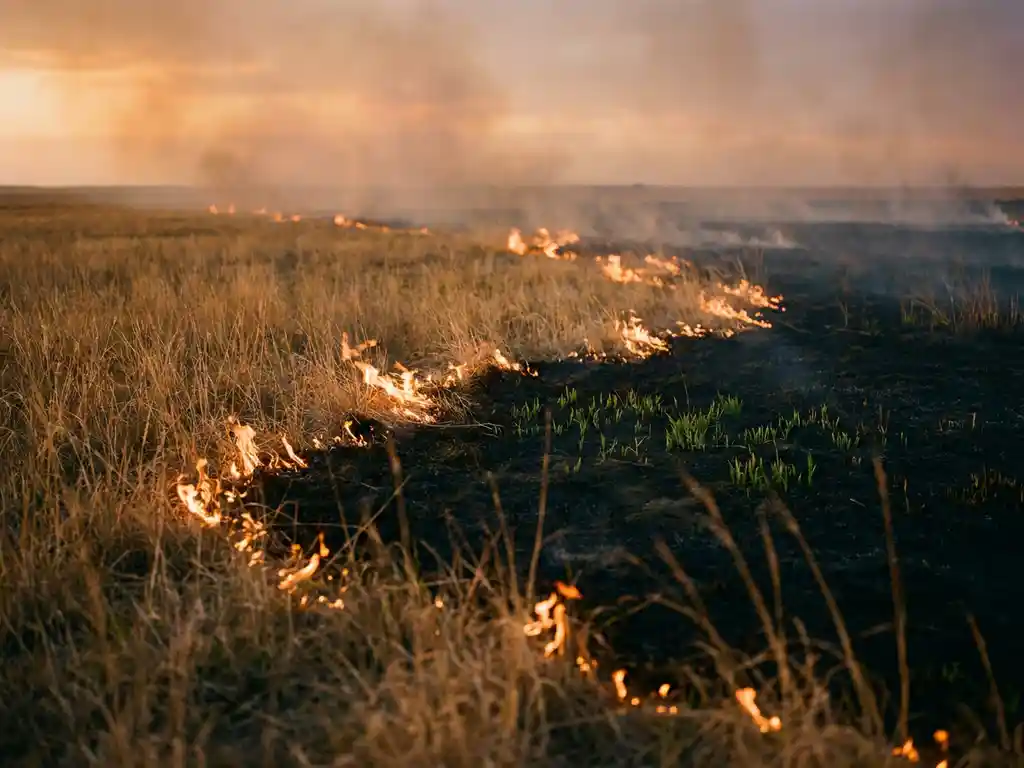
Prescribed fires benefit grassland ecosystems by clearing accumulated dead plant material, recycling nutrients back into the soil, stimulating the growth of native grasses and wildflowers, and maintaining the open structure that grassland species depend on. Without periodic fire, grasslands shift toward shrubland or woodland, losing the biodiversity and ecological function that define them.
Fire is not a threat to healthy grasslands – it is a foundational ecological process. Many grassland plant communities evolved alongside natural ignitions from lightning and Indigenous land management practices over thousands of years. The sections below answer the most common questions about how prescribed burning works, what it achieves, and how land managers apply it responsibly.
What actually happens to a grassland during a prescribed burn?
During a prescribed burn, fire moves across the grassland surface, consuming dry thatch, leaf litter, and standing dead vegetation. The above-ground portions of most grasses and forbs are destroyed, but the root systems and underground growing points – called meristems – survive because soil insulates them from heat. The landscape looks bare immediately after, but recovery begins within days.
The heat of a controlled burn volatilizes nitrogen from surface debris, but phosphorus, potassium, and other minerals are left behind as ash and quickly absorbed by the soil. This flush of available nutrients triggers rapid, vigorous regrowth. Grasses that were previously suppressed by thick thatch now receive direct sunlight at the soil surface, allowing them to photosynthesize and grow far more efficiently than before the burn.
Smoke and heat also interact with the seed bank buried in the soil. Some native grassland species actually require heat or smoke exposure to break seed dormancy, meaning a prescribed burn can trigger germination events that would not occur under any other conditions. This is one reason why post-burn grasslands often display a diversity of flowering plants that were invisible in the years preceding the fire.
How do prescribed fires restore grassland biodiversity?
Prescribed fires restore grassland biodiversity by removing the thick layer of accumulated dead material – called thatch or litter – that suppresses low-growing plants and reduces structural variety. When that layer is cleared, light reaches the soil, dormant seeds germinate, and a wider range of plant species can establish and compete. Greater plant diversity directly supports more insects, birds, and mammals.
Grassland biodiversity depends on structural heterogeneity – meaning patches of short, medium, and tall vegetation at different stages of growth. A single unburned grassland tends to become uniformly tall and dense over time, which benefits a narrow range of species. Prescribed burning, especially when applied in a mosaic pattern across a landscape, creates a patchwork of recovery stages that different species use for nesting, foraging, and shelter.
Pollinators are among the most direct beneficiaries. Native wildflowers that are outcompeted in unburned, thatch-heavy grasslands bloom abundantly after a controlled burn, providing nectar and pollen resources that support bees, butterflies, and other insects. Ground-nesting birds such as meadowlarks and bobolinks also benefit from the open, low-vegetation conditions that post-burn grasslands provide.
Why do grasslands need fire to stay healthy?
Grasslands need fire to stay healthy because they are fire-adapted ecosystems where the natural accumulation of dead plant material, if left unburned, gradually suppresses native species and allows woody plants to encroach. Without periodic disturbance, the energy and nutrients locked in thatch are unavailable to living plants, and the ecosystem slowly transitions away from grassland entirely.
This process is called woody encroachment or shrub encroachment, and it is one of the primary drivers of grassland loss globally. Trees and shrubs, once established, shade out grasses and forbs, alter soil moisture, and change the microclimate in ways that make it increasingly difficult for grassland species to survive. Fire removes woody seedlings and saplings before they can mature, effectively resetting the competitive balance in favor of grasses.
Many native grassland grasses evolved with deep, extensive root systems precisely because fire repeatedly removed their above-ground biomass. These root systems store carbohydrates that fuel rapid regrowth after burning. The relationship between fire and grassland plants is so deeply embedded in their biology that regular burning does not weaken them – it keeps them in the vigorous, competitive state they evolved to occupy.
How does prescribed burning control invasive species in grasslands?
Prescribed burning controls invasive species in grasslands by exploiting the timing mismatch between native and invasive plant growth cycles. Many invasive grasses and forbs begin growing earlier in spring than native species. A well-timed burn in late spring, after invasives have leafed out but before natives have emerged, can selectively set back invasive populations while leaving native root systems largely unaffected.
Invasive cool-season grasses such as smooth brome and Kentucky bluegrass are a particularly well-documented target for this approach. These species grow actively in early spring when soil temperatures are still low, making them vulnerable to a burn timed to coincide with their peak growth. Native warm-season grasses, which emerge later, are still dormant underground at this point and suffer far less damage from the same fire event.
Repeated prescribed burning over multiple years is typically necessary to achieve lasting invasive species control. A single burn may knock back an invasive population, but seeds in the soil and surviving root fragments will recolonize quickly. A multi-year burning schedule, combined with monitoring and occasional follow-up treatment, is the most effective approach land managers use to shift competitive advantage back to native grassland species.
What are the risks of prescribed burns to grassland wildlife?
The risks of prescribed burns to grassland wildlife are real but manageable when burns are planned carefully. Mobile animals such as birds, mammals, and many insects can flee an advancing fire. The greatest risks are to slow-moving or immobile life stages – eggs, larvae, pupae, and hibernating invertebrates – and to animals that nest or shelter directly in the burn area during the fire.
Timing is the most important tool for reducing wildlife risk. Burns conducted outside of nesting and breeding seasons minimize direct mortality to birds and small mammals. Leaving unburned refugia – patches deliberately excluded from each year’s burn – gives wildlife populations places to survive and recolonize from. Most prescribed fire programs incorporate these refugia as a standard practice, ensuring that no single burn event affects an entire population.
It is also worth noting that the long-term risk of not burning often outweighs the short-term risk of burning. Grasslands that accumulate decades of unburned thatch support far fewer species overall. The temporary disturbance of a controlled burn is typically followed by a rapid increase in plant diversity, insect abundance, and the wildlife that depends on both. For most grassland-dependent species, a well-managed burn regime is a net benefit over time.
How often should grasslands be burned to maintain ecosystem health?
Most grasslands benefit from prescribed burning on a rotation of every two to five years, though the ideal frequency depends on the grassland type, climate, productivity, and management goals. Highly productive grasslands in humid regions accumulate thatch faster and may need more frequent burns. Drier, less productive grasslands accumulate litter more slowly and can sustain longer intervals between burns.
Land managers typically use a combination of visual indicators and ecological monitoring to guide burn timing. When thatch depth exceeds a threshold that visibly suppresses new growth, when invasive species are expanding, or when target wildlife species are declining, these are signals that a burn is due. Rigid calendar-based schedules are less effective than adaptive management approaches that respond to actual conditions on the ground.
Burning the entire grassland in a single year is generally not recommended. A rotational approach – burning different sections in different years – maintains the habitat mosaic that supports the widest range of species. It also reduces the risk of catastrophic loss if a burn goes wrong, and ensures that some areas are always in a post-burn recovery state while others are in a later successional stage. This spatial diversity is itself a key driver of grassland ecosystem health.
How ExxFire supports fire safety in critical environments
While prescribed fire is a valuable ecological management tool in natural landscapes, fire remains a serious and preventable threat inside buildings, industrial facilities, and mission-critical infrastructure. ExxFire specializes in protecting the environments where fire cannot be allowed to start – or must be stopped the moment it does.
ExxFire’s integrated fire detection and suppression systems are designed for enclosed, high-value environments where even a small fire event can cause significant operational and financial damage. Key features include:
- Early smoke detection through aspirating detection technology that identifies fire at the earliest possible stage
- Non-pressurized nitrogen suppression that extinguishes fire without leaving chemical residues, protecting sensitive electronics and components
- PFAS-free technology that meets the highest environmental standards and serves as a clean alternative to legacy suppression agents
- Easy self-installation with no special certification required, keeping Total Cost of Ownership low
- Scalable protection for enclosures up to 4.5 m³, with multiple units interconnectable for larger volumes
- Tested and certified by CNPP France and DMT (TÜV Nord), ensuring verified performance
Whether you manage server racks, electrical switchgear, battery energy storage systems, or other mission-critical enclosures, ExxFire provides a proven, sustainable fire suppression solution. Contact the ExxFire team to find out which system is right for your application.
Related Articles
- How do you know if your building's fire risk assessment is out of date?
- What is fuel load management in fire prevention?
- How does a fire suppression system work in an E-cabinet?
- What are the fire safety compliance requirements for renewable energy installations?
- What happens if your fire suppression system is not certified?