

How do you develop a wildfire evacuation plan?
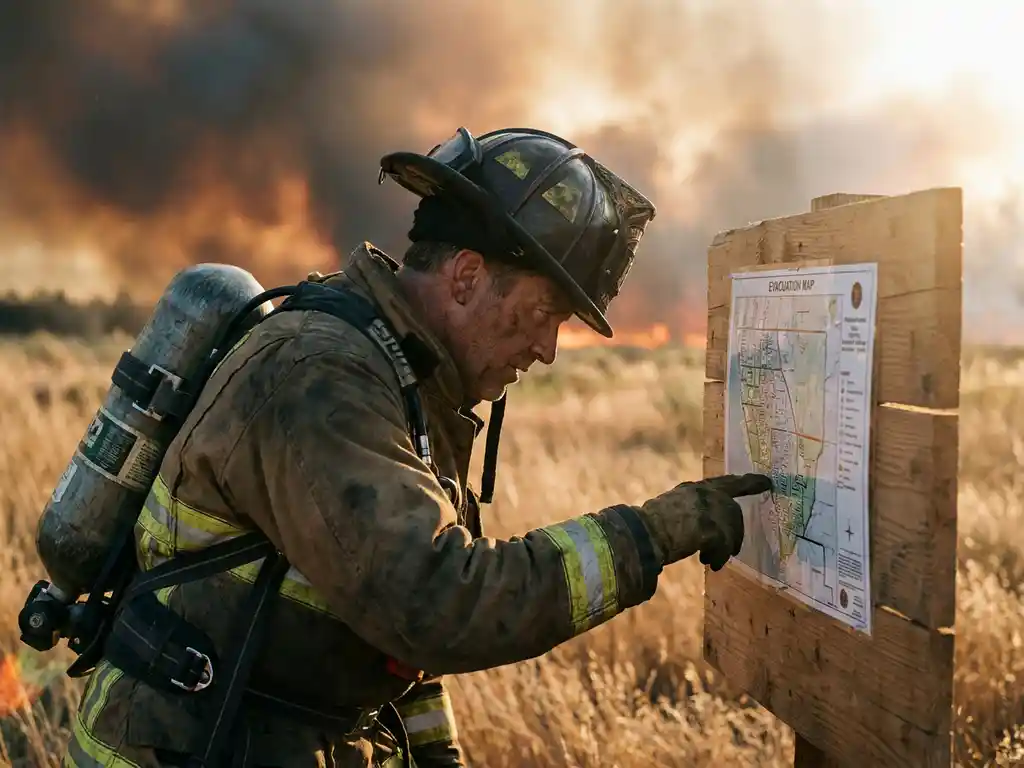
Developing a wildfire evacuation plan means identifying evacuation routes in advance, assigning roles to household members or team members, preparing a go-bag, and establishing a clear trigger point for when to leave. A strong plan removes guesswork during a fast-moving emergency and is built before a wildfire threatens your area. The sections below answer the most important questions about building, communicating, and maintaining that plan.
What should a wildfire evacuation plan include?
A wildfire evacuation plan should include designated evacuation routes, a predetermined meeting point, a communication strategy, a packed emergency kit, and clearly assigned roles for every person in the household or team. These five components give everyone a specific action to take the moment an evacuation order is issued, reducing panic and saving critical time.
Start with a written document that maps out at least two exit routes from your home or facility, since wildfires can block roads without warning. Alongside the routes, list emergency contacts, including local fire departments, emergency management agencies, and out-of-area relatives who can serve as a central point of contact when local lines are congested.
Your emergency kit, often called a go-bag, should be packed and ready to grab within minutes. A well-prepared kit typically contains:
- Enough water and non-perishable food for at least 72 hours
- Copies of important documents such as insurance policies, identification, and medical records
- Prescription medications and basic first aid supplies
- Chargers and a portable battery pack for mobile devices
- Cash in small denominations
- A battery-powered or hand-crank radio for emergency broadcasts
Finally, include pets and any individuals with mobility limitations in the plan. Arrangements for livestock or large animals require additional lead time, so those logistics should be worked out well before wildfire season begins.
How do you identify the safest evacuation routes from a wildfire?
The safest evacuation routes from a wildfire are roads that lead away from the fire’s direction of travel, remain accessible under smoke conditions, and avoid dead ends or narrow canyons where fire can accelerate. Identify at least two routes from your location by consulting local emergency management maps and driving each route in advance.
Contact your local fire department or county emergency management office to find out which roads are designated official evacuation corridors in your area. These routes are prioritized for emergency traffic management and are less likely to be closed due to fire suppression activity.
When evaluating routes, consider the following factors:
- Terrain: Fires travel faster uphill, so routes that descend away from ridgelines are generally safer
- Road width: Narrow single-lane roads can become gridlocked quickly; wider roads allow two-way traffic during mass evacuations
- Fuel density: Routes lined with dense brush or dry vegetation carry higher risk if fire jumps the road
- Bridge and underpass access: Some infrastructure becomes impassable during large fire events; know your alternatives
Practice driving each route during daylight and, if possible, at night. Smoke can reduce visibility dramatically, and familiarity with the road reduces the chance of a wrong turn under pressure.
When should you evacuate during a wildfire?
You should evacuate immediately when local authorities issue a mandatory evacuation order. If a voluntary evacuation warning is issued, begin preparing to leave right away rather than waiting for the order to become mandatory. Wildfires can double in size within minutes under the right wind and fuel conditions, and waiting too long is the most common mistake people make.
Emergency managers use a tiered warning system in most jurisdictions. A Watch or Advisory means conditions are favorable for fire spread and you should monitor updates closely. A Warning or Evacuation Warning means the threat is imminent and you should be ready to leave within minutes. A Mandatory Evacuation Order means you should leave immediately without delay.
Do not wait to see the fire before deciding to leave. By the time flames are visible, road congestion, smoke, and falling embers may already compromise your ability to exit safely. Leaving early also reduces the burden on emergency services and keeps evacuation routes clear for those who need more time.
If you are caught off guard and cannot evacuate safely by road, contact emergency services immediately and shelter in place in the most fire-resistant room available, sealing gaps under doors and windows until help arrives.
How do you communicate your evacuation plan to your household or team?
Communicate your wildfire evacuation plan by holding a dedicated walkthrough with every person who will follow it, distributing a written or printed summary, and practicing the plan at least once before wildfire season. Verbal explanations alone are not enough because stress and smoke impair memory during actual emergencies.
For households, gather everyone and walk through each step of the plan out loud. Show children and elderly family members the designated meeting point and practice the route from the house to the vehicle. Assign a specific role to each person, such as who grabs the go-bag, who is responsible for pets, and who makes the first phone call.
For workplace or facility teams, the communication approach should be more structured:
- Incorporate the evacuation plan into onboarding for new staff
- Post laminated evacuation route maps at key locations throughout the building
- Designate an evacuation coordinator and a backup coordinator
- Conduct at least one tabletop exercise or drill annually
- Ensure all team members have the emergency contact list saved on their phones
For both households and organizations, identify an out-of-area contact person who can serve as a communication hub if local phone networks become overloaded. Everyone in the group should know that person’s number by heart or have it written down in their go-bag.
What should you do to protect property before evacuating?
Before evacuating from a wildfire, take quick steps to reduce your property’s vulnerability: close all windows and doors, move flammable outdoor furniture inside, shut off gas at the meter, and leave exterior lights on so your home is visible through smoke. These actions take less than 15 minutes and can meaningfully reduce fire damage if you have the time to complete them safely.
Property protection measures before evacuation fall into two categories: reducing ignition risk and aiding emergency responders.
Reducing ignition risk
Remove or relocate anything combustible from around the exterior of the building. This includes patio furniture, doormats, potted plants with dry soil, and wooden decorations. Connect garden hoses to outdoor faucets and leave them accessible so firefighters can use them if they reach your property. If you have a pool or water tank, leave a note indicating its location.
Aiding emergency responders
Leave your address clearly visible from the road. Unlock gates and leave them open so fire crews can access the property without delay. Place a ladder against the house near the roofline if you have one, giving firefighters quick roof access. Leave interior lights on to help crews navigate inside if they need to enter.
Never delay your evacuation to complete property protection tasks if fire is already close. No property asset is worth risking your life. Complete these steps only when you have confirmed time and a clear exit route.
How often should a wildfire evacuation plan be reviewed and updated?
A wildfire evacuation plan should be reviewed and updated at least once per year, ideally before the start of wildfire season in your region. Any significant change to your household, team, or physical location should also trigger an immediate review, regardless of the calendar.
Plans become outdated faster than most people realize. Road construction can close a primary evacuation route. A new family member or employee changes the logistics of the plan. Contact numbers change. Emergency management agencies update their official evacuation corridors. A plan that was accurate two years ago may contain critical gaps today.
During your annual review, check the following:
- Are all emergency contact numbers still current?
- Have any designated evacuation routes changed due to road work or new development?
- Is the go-bag fully stocked and are any perishable items expired?
- Have any household or team members changed, requiring updated role assignments?
- Have local emergency management guidelines been updated in your area?
- Has the fire risk profile of your location changed due to land use or vegetation changes nearby?
In 2026, many regional fire agencies are updating their community risk maps as climate patterns shift. Check your local emergency management website annually to ensure your plan reflects the most current guidance for your specific area.
How ExxFire supports fire safety in mission-critical environments
While a wildfire evacuation plan focuses on protecting people and mobilizing quickly, organizations also need to consider what happens to the equipment left behind. For facilities housing server racks, electrical cabinets, switchgear, or battery energy storage systems, a fire that reaches that equipment can result in catastrophic data loss, costly hardware replacement, and extended operational downtime.
ExxFire’s integrated fire detection and suppression systems are designed specifically to protect enclosed, high-value equipment at the object level, providing an additional layer of safety that operates independently of whether people are on site. Key features include:
- Early smoke detection: Aspirating smoke detection identifies fire at the earliest possible stage, before flames develop
- Clean nitrogen suppression: Non-pressurized nitrogen gas extinguishes fire without leaving chemical residues that could damage sensitive electronics
- PFAS-free technology: A sustainable alternative to legacy gas suppression systems containing harmful PFAS compounds
- Easy installation and low maintenance: Systems require no special certification to install and no ongoing maintenance checks once commissioned
- Fire panel integration: Built-in relays report system status to existing fire panels, ensuring seamless compatibility with your current infrastructure
For organizations that need to protect business-critical equipment alongside their people, ExxFire provides a tested, certified, and environmentally responsible solution. Contact ExxFire to find out how its object protection systems can be integrated into your broader fire safety and emergency preparedness strategy.
Related Articles
- When should you upgrade your fire suppression system to meet new standards?
- What fire risks are specific to E-cabinets in industrial settings?
- What is the difference between VdS and EN54 certification?
- Why is GWP an important factor when selecting a fire suppression system?
- What is the difference between suppression and prevention in fire safety?