

What is the difference between a fire hazard and a fire risk?
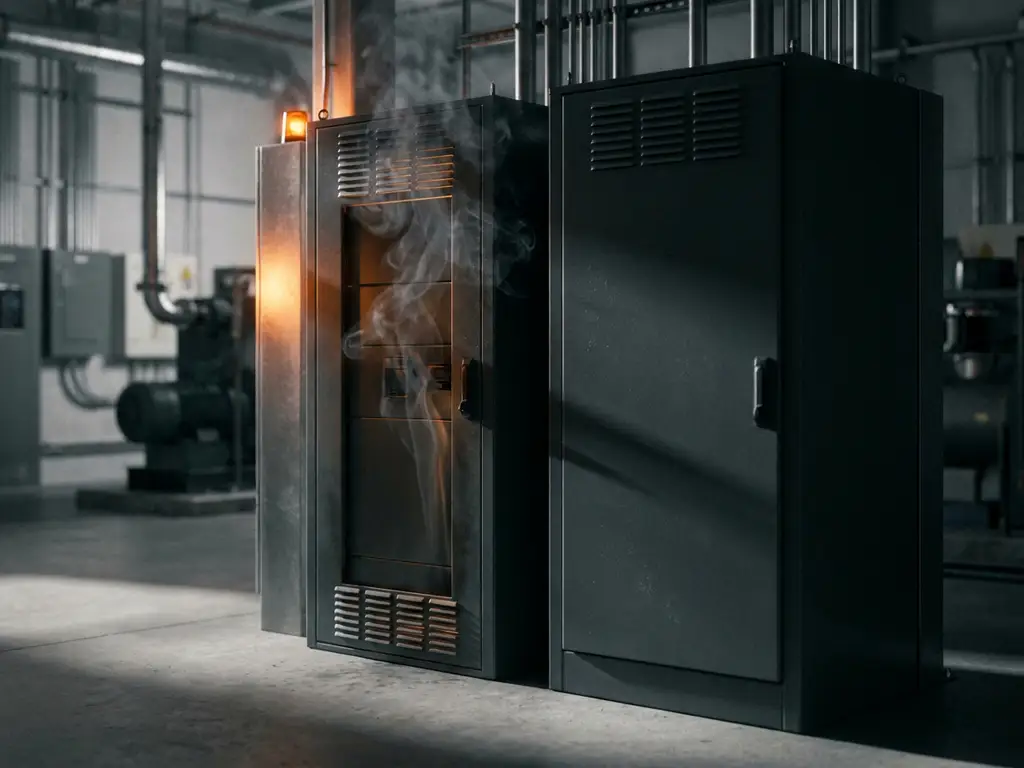
A fire hazard is any condition, material, or situation that has the potential to start or spread a fire. A fire risk is the likelihood that a fire hazard will actually cause harm, combined with the severity of that harm if it occurs. In short: a hazard is the source of danger, and a risk is the probability and consequence of that danger being realized.
Understanding this distinction is fundamental to effective fire safety management. A workplace may contain dozens of fire hazards, but not all of them carry the same level of risk. The relationship between the two concepts shapes how organizations prioritize protective measures, conduct assessments, and meet regulatory requirements.
How do fire hazards and fire risks relate to each other?
A fire hazard and a fire risk are related but distinct concepts: a hazard is the precondition, and a risk is the outcome that hazard could produce. No fire risk can exist without an underlying fire hazard, but a hazard does not automatically translate into significant risk. The risk level depends on how likely the hazard is to ignite, what is exposed to it, and how severe the consequences would be.
Think of it this way: a fuel source such as a battery cabinet is a fire hazard. The risk associated with that hazard depends on factors like the proximity of ignition sources, the presence of people or critical equipment nearby, and whether any suppression measures are in place. Two workplaces can share the same fire hazard yet face very different levels of fire risk based on their controls, layout, and operational conditions.
This relationship is the foundation of any fire risk assessment. Assessors first identify hazards, then evaluate the risk each hazard presents given the specific environment and the people or assets at stake.
What are common examples of fire hazards in the workplace?
Common workplace fire hazards fall into three broad categories: ignition sources, fuel sources, and conditions that allow fire to spread. Identifying these during a fire hazard identification process is the first step in any structured fire safety program.
- Ignition sources: Faulty electrical wiring, overloaded circuits, overheating equipment, open flames, and hot surfaces are among the most frequent triggers of workplace fires.
- Fuel sources: Combustible materials such as paper, packaging, flammable liquids, gases, and increasingly, lithium-ion battery systems used in energy storage all serve as fuel for fire.
- Oxygen supply: Poor ventilation management or the presence of oxidizing agents can accelerate fire spread significantly.
- Structural conditions: Cluttered escape routes, unsealed cable penetrations, and the absence of fire compartmentalization allow fire to travel rapidly between areas.
In environments with high-value electrical infrastructure, such as server rooms, switchgear cabinets, or battery energy storage systems, the hazards are particularly concentrated. Electrical faults and thermal runaway events in battery systems represent a growing category of fire hazard that many organizations are still underprepared for.
How is fire risk calculated or assessed?
Fire risk is assessed by evaluating two variables: the likelihood of a fire occurring and the potential severity of its consequences. In most formal frameworks, this is expressed as: Risk = Likelihood x Impact. A fire risk assessment systematically works through this equation for every significant hazard identified in a given environment.
A structured fire risk assessment typically follows these steps:
- Identify fire hazards across the site, including ignition sources, fuel sources, and conditions that aid fire spread.
- Identify people and assets at risk, including employees, visitors, and critical equipment or infrastructure.
- Evaluate the existing controls already in place, such as detection systems, suppression measures, and emergency procedures.
- Assign a risk rating to each hazard based on likelihood and potential impact, accounting for current controls.
- Implement additional measures where the residual risk remains unacceptably high.
- Review and update the assessment regularly or whenever significant changes occur in the environment.
Regulatory frameworks in many countries, including the UK’s Regulatory Reform (Fire Safety) Order and EU fire safety directives, require this type of documented assessment for most commercial and industrial premises. The output is not a single number but a prioritized action plan that guides investment in fire safety measures.
What’s the difference between eliminating a hazard and reducing a risk?
Eliminating a fire hazard means removing the source of danger entirely so that it can no longer contribute to a fire. Reducing a fire risk means accepting that the hazard remains but taking steps to lower the likelihood of ignition or limit the impact if a fire does occur. Both are valid strategies, but elimination is always preferable where it is practicable.
In practice, complete elimination is rarely possible. A data center cannot remove its servers to eliminate electrical fire hazards, and a manufacturing facility cannot always replace every flammable material in its process. This is where risk reduction becomes the operational priority.
Risk reduction measures include:
- Installing early smoke or fire detection systems to catch fires at the earliest possible stage
- Applying suppression systems directly at the source of potential ignition, particularly inside high-risk enclosures
- Implementing regular maintenance schedules to prevent equipment faults from developing into ignition events
- Training staff in emergency procedures and evacuation protocols
- Separating high-risk equipment from other assets to limit fire spread
The distinction matters practically because it shapes which interventions are chosen. A facility manager who confuses hazard elimination with risk reduction may invest in the wrong controls, leaving residual risk unaddressed.
Why does the hazard vs. risk distinction matter for fire safety compliance?
Fire safety regulations and standards are built around the hazard-risk framework, which means understanding the difference is not just conceptually useful, it is a compliance requirement. Regulations typically require organizations to demonstrate that they have identified hazards and assessed the associated risks, not simply listed potential dangers without evaluating their significance.
When regulatory bodies inspect premises or review fire safety documentation, they look for evidence that the organization understands which hazards present the highest risk and has prioritized its protective measures accordingly. A fire risk assessment that lists hazards without evaluating risk levels, or that applies the same level of control to a low-risk hazard as to a high-risk one, will not satisfy most regulatory standards.
The distinction also has direct implications for liability. If a fire occurs and an investigation reveals that a known hazard was not properly risk-assessed, or that a high-risk scenario was treated as low priority, the organization may face significant legal and financial consequences. In 2026, as sustainability and ESG reporting increasingly intersect with health and safety obligations, demonstrating a rigorous approach to fire hazard identification and fire risk assessment is becoming part of broader organizational governance.
For environments housing mission-critical equipment, the stakes are even higher. The cost of a fire in a server room or electrical cabinet is not limited to hardware replacement. It includes operational downtime, data loss, regulatory penalties, and reputational damage, all of which a thorough hazard-and-risk framework is designed to prevent.
How ExxFire helps with fire hazard and risk management
Understanding the difference between a fire hazard and a fire risk is the first step. Acting on that understanding with the right protection is what actually prevents damage. ExxFire’s integrated fire detection and suppression systems are built specifically for high-risk enclosures where electrical hazards are concentrated and the consequences of fire are severe.
- Early detection at the source: Aspirating smoke detection identifies fire at its earliest stage, directly inside server racks, switchgear cabinets, battery energy storage systems, and other enclosures.
- Suppression without residue: Non-pressurized nitrogen gas extinguishes fire without leaving chemical residues, protecting sensitive electronics and ensuring equipment can return to operation quickly.
- PFAS-free and environmentally responsible: ExxFire’s patented Cool Gas Generator technology offers a clean alternative to legacy suppression agents, supporting both compliance and sustainability goals.
- Low maintenance, easy installation: Systems are pre-engineered for straightforward installation without special certification, with no ongoing maintenance requirements after commissioning.
- Status reporting to existing fire panels: Built-in relays allow seamless integration with existing fire safety infrastructure, supporting a complete and auditable fire safety system.
If your organization is ready to move from hazard identification to active risk reduction, contact ExxFire to find the right protection for your critical equipment.