

How do you prevent fires caused by candles?
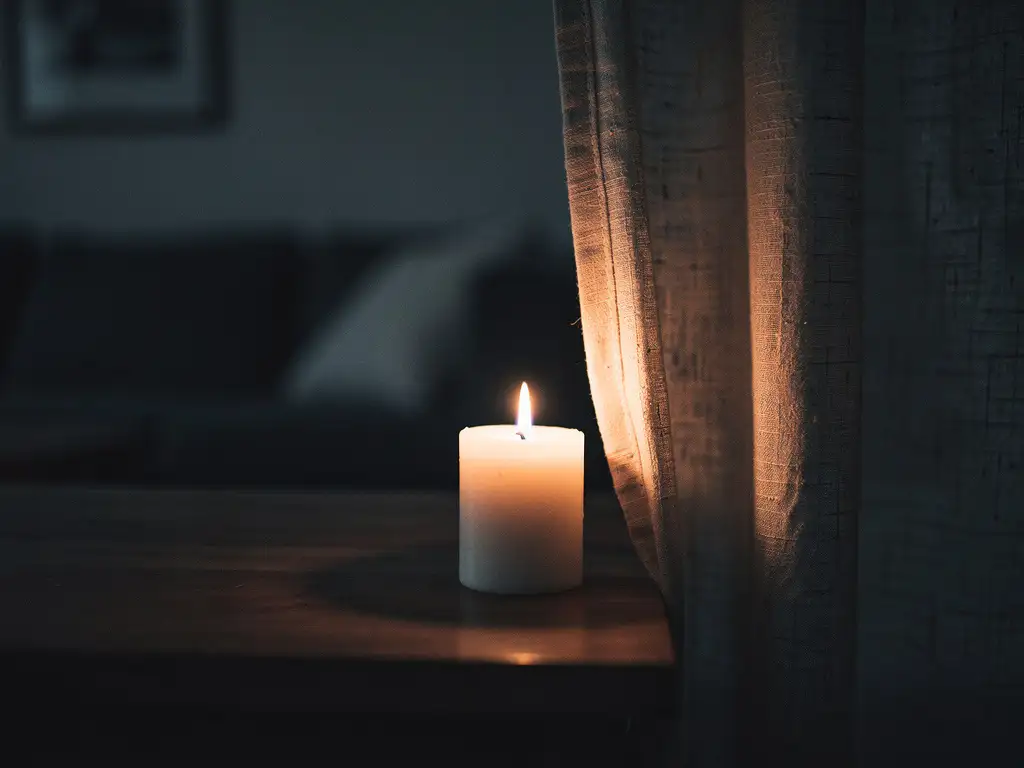
Preventing fires caused by candles comes down to a few consistent habits: never leaving a candle unattended, keeping it away from flammable materials, and trimming the wick before each use. Candle fires are almost always avoidable, and the risk drops significantly when basic safety rules are followed every time. The questions below cover the most important candle fire safety practices in detail.
What makes candles such a common cause of house fires?
Candles are one of the leading causes of residential fires because they combine an open flame with common household hazards — flammable materials, forgetfulness, and poor placement. Unlike most other fire risks in the home, a candle fire can start silently and spread quickly before anyone notices.
Several factors make candles particularly hazardous:
- Unattended burning: Leaving a candle lit in an empty room is one of the most frequent causes of candle-related fires. A small draft, a falling object, or a pet brushing past can be enough to ignite nearby materials.
- Proximity to flammable objects: Curtains, paper, books, fabric, and wooden surfaces are often within reach of a candle flame. Wax can also splatter or drip onto surfaces that catch fire.
- Overly long wicks: A wick that is too long produces a larger, more unstable flame that flickers excessively and generates more heat than necessary.
- Falling asleep with candles lit: Candles used for relaxation or ambiance before bed are frequently forgotten, making this one of the highest-risk scenarios.
- Improper containers: Burning candles in containers that are not heat-resistant can crack, tip, or allow wax to spill onto flammable surfaces.
Understanding these patterns is the first step toward effective candle fire prevention. Most candle fires are not accidents in the unpredictable sense — they are the result of predictable, avoidable behaviors.
How far should a candle be placed from flammable materials?
A candle should be placed at least 30 centimeters (about 12 inches) away from any flammable material. This includes curtains, bedding, books, clothing, wooden furniture, and decorative items. The flame itself is not the only risk — radiant heat from a burning candle can ignite materials that are not in direct contact with the flame.
When choosing where to place a candle, consider the full environment around it, not just what is directly beside it. Curtains that hang above a windowsill candle can swing inward due to a breeze. Shelving above a candle can trap heat and ignite objects stored there. Even a low ceiling in a small space can be a risk if a candle with a tall flame is placed directly beneath it.
Practical placement guidelines include:
- Use a sturdy, heat-resistant holder that prevents tipping
- Place candles on a flat, stable surface — never on a carpet or uneven surface
- Keep candles away from open windows, fans, and air vents where drafts can push the flame toward nearby objects
- Avoid placing candles in high-traffic areas where people or pets could knock them over
- Never place candles directly under shelves, cabinets, or hanging decorations
How often should you trim a candle wick, and why does it matter?
You should trim a candle wick to approximately 5 millimeters (about a quarter of an inch) before every single use. Wick trimming is one of the most effective and underused candle safety tips. A wick that is too long creates a larger, more unstable flame that produces excess heat, generates more soot, and increases the risk of the candle container overheating or the flame reaching nearby objects.
A properly trimmed wick produces a steady, controlled flame. It also extends the life of the candle by ensuring an even burn. When a wick is left untrimmed over multiple uses, it can develop a “mushroom” shape at the tip — a carbon buildup that causes the flame to flicker unpredictably and burn at a higher temperature than intended.
Use a wick trimmer, nail clippers, or small scissors to trim the wick before lighting. Always allow the candle to cool completely before trimming. If you notice the flame growing unusually large while the candle is burning, extinguish it, allow it to cool, trim the wick, and then relight it.
Should you ever leave a candle burning unattended?
No. You should never leave a candle burning unattended. This is the single most important rule in candle fire safety. Extinguish every candle before leaving a room, before going to sleep, and before leaving the house. Even a candle burning in a seemingly safe location can become a fire hazard in seconds if conditions change unexpectedly.
The risks of leaving a candle unattended are not limited to obvious scenarios like falling asleep. A child or pet entering the room, a sudden draft from an opening door, or a piece of paper drifting near the flame are all realistic possibilities that can cause a candle fire to start within moments of the room being empty.
If you want the ambiance of a candle without the attention it requires, set a timer as a reminder to extinguish it. Some households use a simple rule: no candle stays lit in a room without a person present. This single habit eliminates a significant proportion of candle fire hazards.
What are the safest alternatives to traditional candles?
The safest alternatives to traditional candles are battery-operated or USB-powered LED candles, which produce realistic flickering light without any open flame. These products have improved significantly in quality and now closely mimic the warm glow of real candles without any fire risk, making them a practical choice for households with children, pets, or anyone who wants candle ambiance without the associated hazards.
Other alternatives worth considering include:
- Wax warmers: These use a low-wattage bulb or heating element to melt scented wax, releasing fragrance without an open flame
- Reed diffusers: A completely flameless way to scent a room using essential oils and porous reeds
- Electric oil diffusers: Ultrasonic or heat-based devices that disperse essential oil scents safely
- Flameless pillar candles with timers: Battery-powered options that can be programmed to switch on and off automatically
For those who prefer real candles for specific occasions, limiting use to times when someone is actively present and attentive significantly reduces the risk. The key is matching the type of candle or alternative to the context — a birthday cake calls for real candles, but a relaxing evening at home is an ideal situation for a flameless alternative.
What should you do if a candle causes a fire?
If a candle causes a fire, your immediate priority is safety. Alert everyone in the building and evacuate if the fire is spreading beyond the immediate area. Never attempt to carry a burning object through the building. Call emergency services as soon as you are safely out. Do not re-enter the building for any reason.
For a small, contained candle fire — such as a candle that has ignited a nearby piece of paper or a small object — you may be able to act quickly if you are trained to do so:
- Smother the flame: Place a fire blanket or a metal lid over the burning object to cut off the oxygen supply. Never use water on a wax fire, as it can cause the burning wax to splatter and spread the flames.
- Use a fire extinguisher: A dry powder or CO2 extinguisher is appropriate for small fires. Aim at the base of the flame, not the top.
- Evacuate if the fire grows: If you cannot extinguish the fire within a few seconds, leave immediately. Do not waste time trying to save belongings.
Preparation matters as much as response. Ensure working smoke detectors are installed throughout your home and tested regularly. Keep a fire blanket in the kitchen and know where your fire extinguisher is located. These measures are the foundation of effective candle fire hazard management.
How ExxFire helps protect against fire in enclosed, high-value environments
While candle fire prevention relies on personal habits and awareness, some environments require a more robust layer of protection — particularly where sensitive equipment or mission-critical systems are involved. ExxFire’s integrated fire detection and suppression systems are designed precisely for these situations.
ExxFire’s systems combine aspirating smoke detection with non-pressurized nitrogen gas suppression, delivered through its patented Cool Gas Generator technology. Key features include:
- Early smoke detection: Aspirating detection identifies fire at the earliest possible stage, before flames develop and damage occurs
- Clean suppression: Nitrogen gas leaves no chemical residues, protecting sensitive electronics and high-value components without causing secondary damage
- No PFAS: ExxFire’s systems are a fully PFAS-free alternative to conventional gas suppression systems, supporting environmental and compliance goals
- Easy installation: Systems are pre-engineered for self-installation without requiring special certification, reducing Total Cost of Ownership
- Seamless integration: Built-in relays allow the system to report status to an existing fire panel, ensuring compatibility with current fire safety infrastructure
Whether protecting server racks, switchgear cabinets, or battery energy storage systems, ExxFire provides a certified, tested solution that limits downtime and safeguards business continuity. Contact ExxFire to find out which system is right for your environment.
Related Articles
- How do seasonal changes affect fire risk levels?
- What is the difference between fire management and fire suppression?
- What are PFAS chemicals in fire extinguishing systems?
- How does ESG compliance affect fire protection decisions in 2026?
- How does nitrogen-based fire suppression protect the environment?