
How do you reduce fire risk without disrupting daily operations?
You can reduce fire risk without disrupting daily operations by deploying object-level fire detection and suppression systems that activate automatically at the source, without requiring a facility shutdown, evacuation, or manual intervention. The key is choosing suppression technology that protects equipment in place, leaves no residue, and integrates with existing infrastructure. The questions below address the most common concerns organizations face when balancing fire safety with uninterrupted operations.
What types of fire risks threaten mission-critical equipment?
Mission-critical equipment faces fire risks primarily from electrical faults, overheating components, and poor ventilation inside enclosed cabinets and racks. These risks are particularly acute in server rooms, switchgear installations, battery energy storage systems, and high-voltage cabinets, where heat buildup and electrical arcing can ignite fires before any visible flame appears.
The danger in these environments is that fires often start small and hidden inside a sealed enclosure. By the time a conventional room-level smoke detector triggers, the equipment inside may already be severely damaged. The fire risk is not just physical destruction but the cascade of consequences: replacement costs, data loss, regulatory exposure, and extended downtime.
Common fire risk sources in mission-critical environments include:
- Electrical short circuits and arc faults inside cabinets
- Overloaded or aging power distribution units
- Thermal runaway in lithium-ion battery systems
- Dust accumulation on heat-generating components
- Inadequate airflow inside sealed enclosures
- Faulty wiring in switchgear and control panels
Effective fire risk management starts with recognizing that the threat originates inside the object, not just in the surrounding room. This distinction shapes every decision about detection and suppression strategy.
How does early fire detection prevent operational disruption?
Early fire detection prevents operational disruption by identifying the first signs of combustion, typically smoke particles, before a fire develops enough to cause hardware damage or trigger a full facility evacuation. Catching a fire at the pre-ignition or smoldering stage means suppression can occur at the object level, keeping the rest of the facility fully operational.
Aspirating smoke detection technology is particularly effective for this purpose. Rather than waiting for smoke to drift toward a ceiling-mounted detector, aspirating systems actively draw air samples from inside the enclosure and analyze them continuously. This approach dramatically reduces detection time compared to passive point detectors.
The operational benefit is significant. When a fire detection system identifies a threat early enough, suppression can be triggered automatically and locally, without sounding a general alarm, without requiring staff intervention, and without halting work in adjacent areas. For organizations where even minutes of downtime translate into financial or reputational loss, early detection is not a luxury but a core component of business continuity fire safety.
What fire suppression methods work without damaging sensitive electronics?
Fire suppression methods that work without damaging sensitive electronics are clean agent systems that leave no residue after discharge. The most effective options for enclosed equipment are inert gas systems, particularly nitrogen-based suppression, which extinguish fire by reducing oxygen levels without depositing chemicals, moisture, or particulate matter onto components.
Water-based systems and dry powder extinguishers are entirely unsuitable for electronics environments. Foam and halon alternatives carry their own risks, including chemical contamination and environmental harm. Many traditional gas suppression systems also rely on PFAS-containing agents, which are increasingly restricted under environmental regulations and pose long-term contamination risks.
Nitrogen fire suppression addresses all of these concerns. Nitrogen is a clean inert agent that occurs naturally in the atmosphere. When released inside a cabinet, it reduces the oxygen concentration below the threshold needed to sustain combustion, extinguishing the fire without any chemical reaction on the equipment itself. Once the suppression event is over, the nitrogen dissipates harmlessly, leaving the hardware intact and ready for inspection and restart.
This makes nitrogen-based systems the preferred choice for server racks, ICT cabinets, battery storage enclosures, and any application where hardware preservation and fire suppression without downtime are both priorities.
Can fire suppression systems be installed without shutting down operations?
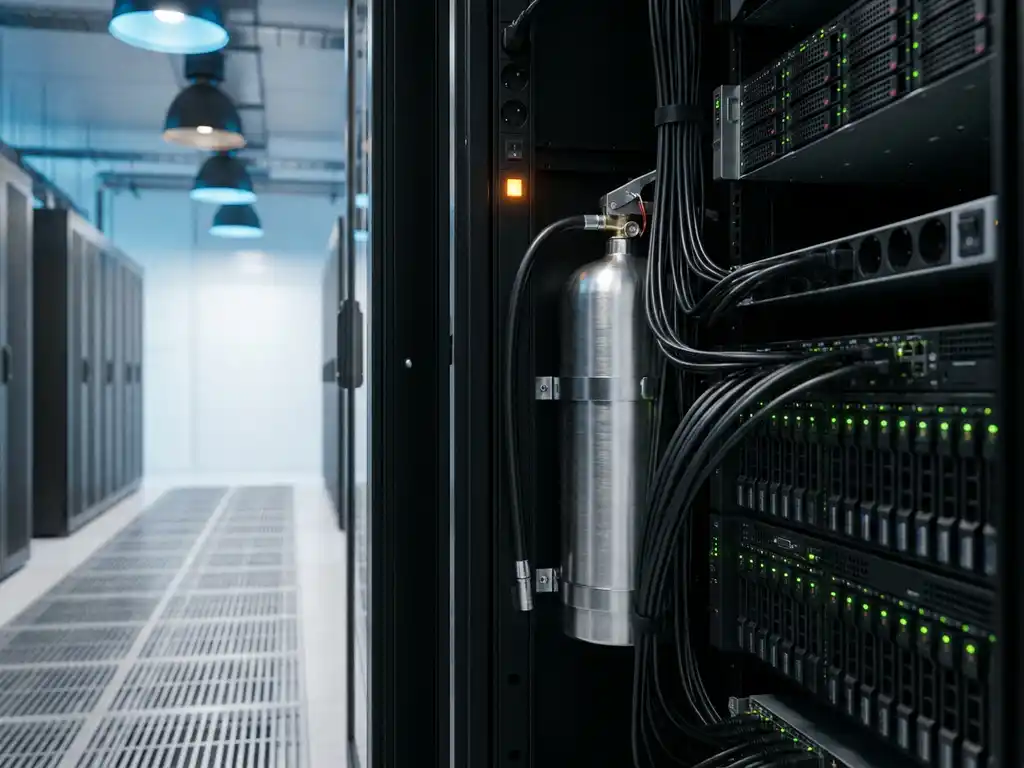
Yes, modern object-level fire suppression systems can be installed without shutting down operations. Systems designed for cabinet and enclosure protection are self-contained units that mount inside or directly onto the protected object, requiring no major infrastructure work, no pipe runs through walls or ceilings, and no interruption to the equipment running inside.
Installation flexibility is one of the defining advantages of object protection over room-level suppression. Because the system operates independently at the enclosure level, it can be fitted to an active server rack, switchgear cabinet, or battery system during normal business hours. There is no requirement to power down the equipment or clear the surrounding area during installation.
Systems can be mounted inside the protected enclosure or externally on top of or beside the cabinet using standard mounting kits. Once installed and commissioned, the unit is operational. Integration with an existing fire panel is possible through built-in relay outputs, which report system status without requiring additional wiring infrastructure. This means fire safety operations can be upgraded incrementally, one cabinet at a time, without any facility-wide disruption.
How do you maintain fire safety systems without frequent service interruptions?
You maintain fire safety systems without frequent service interruptions by choosing systems that require minimal ongoing maintenance after installation. Object-level suppression systems based on solid-state nitrogen generation are particularly low-maintenance because they have no pressurized cylinders to inspect, no moving parts subject to wear, and no chemical agents that degrade over time.
Traditional pressurized gas suppression systems require regular pressure checks, cylinder replacements, and certified technician visits. These maintenance cycles create recurring costs and, in some cases, brief operational windows where protection is reduced during servicing. By contrast, non-pressurized systems eliminate the inspection burden associated with stored high-pressure gas.
Once a non-pressurized nitrogen suppression unit is commissioned, it operates continuously without scheduled checkups. Status monitoring through relay outputs connected to an existing fire panel gives facility managers real-time visibility into system health without requiring physical inspection. This combination of passive reliability and active monitoring keeps fire risk reduction continuous and the maintenance burden close to zero.
What regulations require fire protection for electrical and ICT infrastructure?
Regulations requiring fire protection for electrical and ICT infrastructure vary by country and sector, but several frameworks consistently apply. In Europe, the EN 54 series covers fire detection and alarm systems, while IEC standards govern electrical installation safety. Sector-specific requirements, such as those in data center standards like EN 50600, and insurance underwriting guidelines, frequently mandate active suppression for enclosed electrical equipment.
Beyond mandatory compliance, organizations increasingly face pressure from insurers, clients, and sustainability frameworks to demonstrate that fire protection meets recognized testing standards. Systems validated by independent bodies such as CNPP in France or TÜV Nord in Germany carry weight in procurement decisions and regulatory audits.
It is also worth noting that the regulatory landscape around fire suppression agents is shifting. PFAS-containing extinguishing agents face growing restrictions under the EU’s REACH regulation and equivalent frameworks in other jurisdictions. Organizations that have not yet reviewed whether their current suppression systems contain PFAS face both compliance risk and potential liability. Transitioning to PFAS-free inert gas alternatives before mandated deadlines is increasingly seen as a strategic priority in fire risk management planning for 2026 and beyond.
How ExxFire helps reduce fire risk without disrupting operations
ExxFire provides combined fire detection and suppression systems purpose-built for the challenges described throughout this article. Their approach addresses every stage of the risk, from early detection to clean suppression, without requiring operational shutdowns or ongoing maintenance burdens.
- Aspirating smoke detection identifies fire at the pre-ignition stage, inside the enclosure, before damage occurs
- Non-pressurized nitrogen suppression extinguishes fire without chemical residue, protecting sensitive electronics and batteries
- PFAS-free technology ensures compliance with tightening environmental regulations and eliminates contamination risk
- Tool-free, self-installation means systems can be fitted to active cabinets without shutting down operations
- Maintenance-free operation after commissioning removes the recurring service burden of traditional pressurized systems
- Fire panel integration via built-in relays provides continuous status monitoring within existing infrastructure
- Tested and certified by CNPP France and DMT (TÜV Nord), meeting the standards demanded by insurers and regulators
Whether you are protecting a single server rack or a network of battery energy storage systems across multiple sites, ExxFire’s object-level systems deliver reliable fire suppression without downtime. Contact ExxFire to discuss the right fire safety solution for your critical infrastructure.