

How does inadequate ventilation increase fire risk?
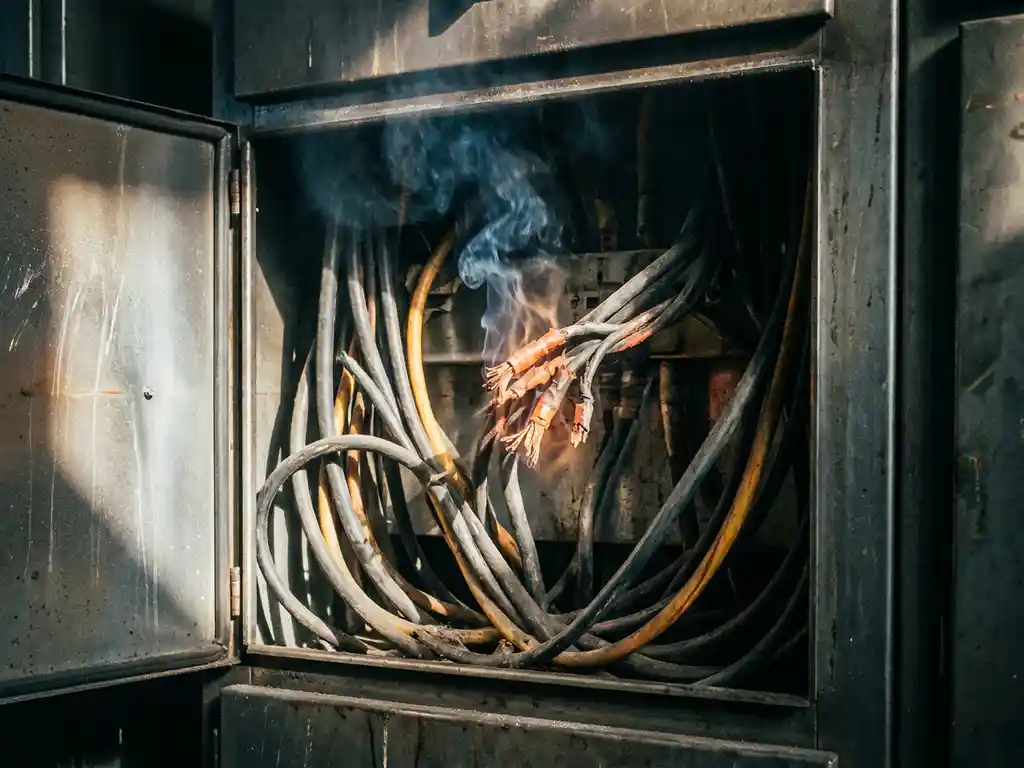
Inadequate ventilation increases fire risk by allowing heat to accumulate inside enclosed spaces, raising component temperatures beyond safe operating thresholds. When heat cannot escape, electrical components, insulation materials, and flammable substances are exposed to sustained thermal stress that can trigger ignition. This is a particular concern in environments housing electrical cabinets, server racks, and battery systems. The following sections break down the specific mechanisms, warning signs, and protective measures involved.
What happens to heat when ventilation is inadequate?
When ventilation is inadequate, heat generated by electrical components, machinery, or chemical reactions cannot dissipate and instead accumulates within the enclosure or room. This trapped thermal energy causes ambient temperatures to rise steadily, creating conditions where materials are exposed to heat levels far beyond their designed tolerances. The result is a self-reinforcing cycle: the hotter the environment, the less efficiently components operate, and the more heat they produce.
In sealed or poorly ventilated enclosures, this effect is amplified. Electrical cabinets and server racks generate substantial heat during normal operation. Without an adequate airflow pathway, that heat has nowhere to go. Temperatures inside a closed cabinet can exceed ambient room temperature by a significant margin, placing every component inside under continuous thermal stress. Over time, insulation degrades, solder joints weaken, and materials that would normally remain stable begin to break down at a molecular level, increasing their susceptibility to ignition.
Which environments are most at risk from poor ventilation?
Environments housing densely packed electrical or electronic equipment are most at risk from poor ventilation and the fire hazards it creates. This includes electrical switchgear cabinets, ICT server rooms, battery energy storage systems, power distribution units, and telecommunications enclosures. These are spaces where heat output is high, equipment is often enclosed, and the consequences of fire are severe.
Industrial facilities with high-voltage cabinets face particular exposure because the energy densities involved are substantial. Data centers and ICT rooms are similarly vulnerable: server hardware runs continuously, generates consistent heat, and is often housed in racks with limited natural airflow. Battery energy storage systems present a distinct challenge because the electrochemical processes within battery cells generate heat internally, and poor ventilation means that heat cannot be managed before it reaches dangerous levels. In all these environments, the combination of confined space, continuous heat generation, and high-value equipment creates conditions where poor ventilation is not just an inconvenience but a genuine fire risk.
How does heat buildup lead to ignition in electrical equipment?
Heat buildup leads to ignition in electrical equipment through a process of progressive material degradation. As temperatures rise, insulation on wiring and components begins to soften and eventually break down, increasing the likelihood of short circuits. A short circuit generates a sudden surge of electrical energy that can instantly ignite surrounding materials, particularly if those materials have already been weakened by prolonged heat exposure.
Beyond insulation failure, sustained heat causes thermal runaway in battery systems, where rising temperature accelerates the chemical reactions producing more heat, creating a feedback loop that can end in fire or explosion. In switchgear and electrical cabinets, overheated components can reach their autoignition temperature, the point at which a material ignites without a direct flame, if surrounding temperatures remain elevated long enough. Dust accumulation compounds the risk: fine particles that settle inside poorly ventilated cabinets act as an additional fuel source once temperatures climb. The fire risk in electrical cabinets is therefore not a single event but the outcome of a gradual, preventable deterioration process driven by unmanaged heat.
What are the early warning signs of a ventilation-related fire hazard?
Early warning signs of a ventilation-related fire hazard include unusual heat emanating from equipment surfaces, persistent burning or acrid odors, discoloration or scorching on cabinet panels, and unexplained component failures or system errors. These indicators suggest that internal temperatures are already elevated beyond normal operating conditions and that the risk of ignition is increasing.
Smoke, even in trace amounts, is one of the most critical early signals. Aspirating smoke detection technology is specifically designed to identify these microscopic particles before visible smoke or flame develops, giving operators time to respond before damage occurs. Other warning signs include:
- Fans or cooling systems running louder or more frequently than usual
- Thermal alarms or temperature monitoring alerts from building management systems
- Condensation or moisture irregularities near enclosures, which can indicate airflow disruption
- Frequent tripping of circuit breakers or thermal protection devices
- Visible dust accumulation on vents or intake grilles, restricting airflow
Recognizing these signs early is essential. By the time visible smoke or flame is present, significant damage to sensitive electronics may already be unavoidable. Regular inspection of ventilation pathways and heat management systems is a straightforward preventive measure that significantly reduces fire risk in electrical cabinets and similar environments.
How can fire suppression compensate when ventilation fails?
When ventilation fails and heat accumulates to dangerous levels, a purpose-built fire suppression system at the object level can detect the earliest signs of fire and respond before flames develop. Suppression does not replace adequate ventilation, but it provides a critical safety layer that protects equipment and limits damage when thermal management measures are insufficient or temporarily compromised.
Object-level suppression is particularly effective in enclosed environments where a fire can escalate rapidly. Systems that combine early smoke detection with immediate suppression at the source address the fire risk directly inside the enclosure, rather than waiting for a room-level detection system to respond. This approach limits the window between ignition and suppression, reducing both hardware damage and operational downtime.
For suppression to be effective in sensitive electrical environments, the extinguishing agent must be clean and leave no residue. Nitrogen-based suppression, which works by reducing oxygen levels within the enclosure, is well suited to this requirement because it does not damage electronics and poses no risk of secondary chemical contamination.
How ExxFire helps protect against ventilation-related fire risk
ExxFire’s fire suppression systems are specifically designed to address the fire hazards that develop inside closed enclosures when ventilation is inadequate. Key features of the solution include:
- Aspirating smoke detection: Identifies trace smoke particles at the earliest stage, before heat reaches ignition thresholds
- Non-pressurized nitrogen suppression: Reduces oxygen levels inside the enclosure using a clean inert gas that leaves no chemical residue and causes no secondary damage to sensitive electronics
- Object-level protection: Suppression occurs directly at the source, inside server racks, switchgear cabinets, battery energy storage systems, and other high-value enclosures up to 4.5 m³
- PFAS-free technology: A sustainable alternative to legacy gas suppression agents, fully aligned with tightening environmental regulations
- Easy installation and maintenance-free operation: Systems can be self-installed without special certification, with status reporting available via built-in relays to existing fire panels
- Certified performance: Tested and validated by CNPP France and DMT/TÜV Nord Germany
For organizations where poor ventilation fire hazards represent an operational and financial risk, ExxFire provides a proven, low-maintenance solution that safeguards critical equipment and ensures business continuity. Contact ExxFire to find out which system is right for your environment.
Related Articles
- How do you know if your building's fire risk assessment is out of date?
- How does fire risk affect building insurance premiums?
- Should facility managers choose a modular or fixed fire suppression system?
- What is the purpose of a fire suppression system?
- Can existing fire suppression systems be upgraded to reduce environmental impact?