

Are traditional fire suppression agents harmful to the environment?
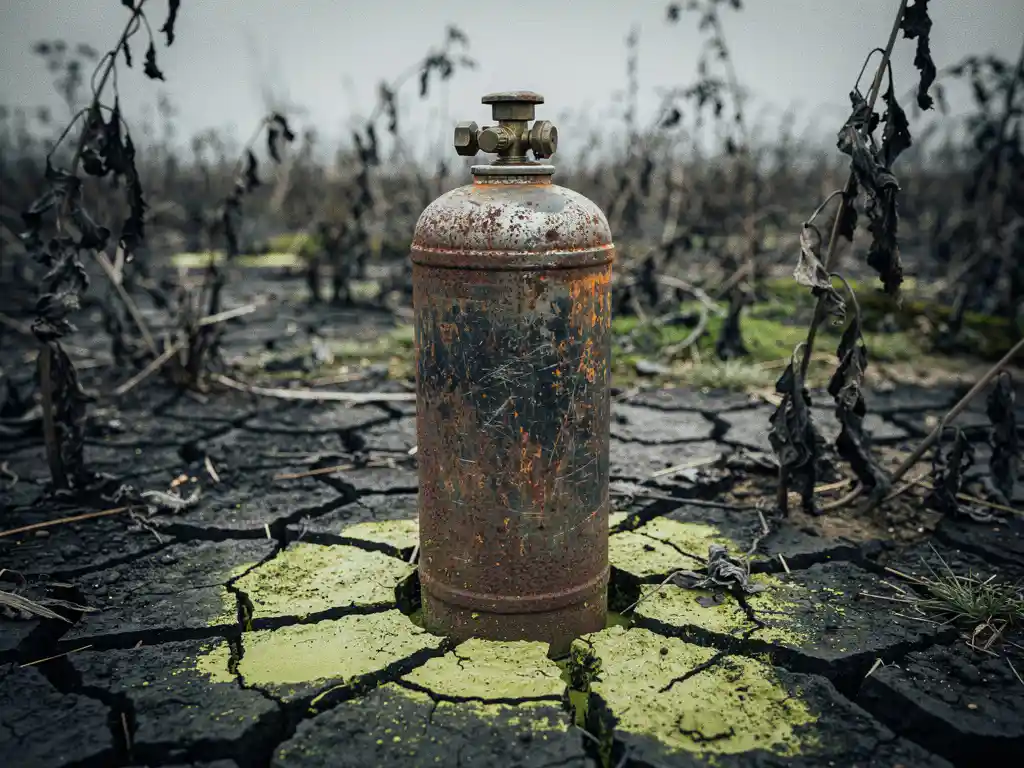
Many traditional fire suppression agents are harmful to the environment. Chemicals such as PFAS-based foams and certain halon-era compounds persist in ecosystems for decades, contaminating water sources and accumulating in living organisms. The environmental impact of fire extinguishing agents has become a pressing concern for regulators, facility managers, and sustainability-driven organisations alike. The questions below break down which agents pose the greatest risks, how regulations are responding, and what cleaner alternatives exist.
Which fire suppression agents cause the most environmental damage?
The most environmentally damaging fire suppression agents are aqueous film-forming foam (AFFF) containing PFAS chemicals, halon gases, and certain hydrofluorocarbon (HFC) blends. AFFF leaches toxic fluorinated compounds into soil and groundwater. Halons, although largely phased out under the Montreal Protocol, have an ozone-depleting potential that still affects the atmosphere today. HFCs carry high global warming potentials that contribute to climate change.
AFFF has been widely used in aviation, military, and industrial settings because of its effectiveness against flammable liquid fires. However, the PFAS compounds it contains do not break down naturally. Once released, they travel through water systems, accumulate in wildlife, and enter human food chains. Contamination events near military bases and airports have highlighted just how persistent and far-reaching this pollution can be.
Halon 1301 and Halon 1211, once standard in server rooms and aircraft, were banned for most new installations under the Montreal Protocol due to their ozone-depleting potential. Legacy systems still exist, and any accidental discharge continues to cause atmospheric harm. HFC-based agents such as HFC-227ea, while not ozone-depleting, carry a global warming potential many hundreds of times greater than carbon dioxide, raising serious concerns as climate targets tighten.
What are PFAS chemicals and why are they a problem in fire suppression?
PFAS (per- and polyfluoroalkyl substances) are a group of thousands of synthetic chemicals characterised by extremely strong carbon-fluorine bonds. In fire suppression, they are most commonly found in AFFF used to fight flammable liquid fires. Because PFAS compounds resist heat, water, and biological degradation, they accumulate in the environment and in living organisms rather than breaking down over time.
The environmental and health concerns surrounding PFAS fire suppression are significant. Exposure has been linked to immune system disruption, hormonal interference, and certain cancers in animal studies and epidemiological research. Even small quantities released during fire training exercises or emergency use can contaminate groundwater supplies that serve communities for years afterward.
The “forever chemical” label applied to PFAS reflects a fundamental problem: there is no natural mechanism that neutralises them at meaningful timescales. This makes PFAS-containing fire suppression agents uniquely problematic compared with agents that disperse or degrade after use. For organisations protecting electrical equipment and sensitive electronics, where a discharge does not involve a flammable liquid fire, there is no technical justification for using PFAS-based agents at all.
How do gaseous suppression agents compare in environmental impact?
Gaseous suppression agents vary considerably in their environmental profiles. Inert gases such as nitrogen, argon, and carbon dioxide have negligible direct environmental impact because they are naturally occurring atmospheric components. In contrast, synthetic chemical gases, including HFCs and HFC blends used in commercial products, carry high global warming potentials, while older halon-based agents cause ozone depletion.
Inert gases
Nitrogen, argon, and blended inert gas systems work by displacing oxygen within an enclosed space to a level that cannot sustain combustion. Because these gases already exist in the atmosphere in large quantities, releasing them during a suppression event adds no novel chemical burden to the environment. They leave no residue, cause no secondary contamination, and have a global warming potential of zero relative to carbon dioxide.
Synthetic chemical gases
HFC-based agents such as HFC-227ea (FM-200) and HFC-125 are effective fire suppressants but carry global warming potentials in the hundreds to thousands relative to carbon dioxide. Their use is increasingly restricted under climate legislation in multiple jurisdictions. Fluoroketone-based agents marketed as next-generation alternatives have lower global warming potentials than older HFCs but are still synthetic compounds whose long-term environmental fate is under ongoing scientific scrutiny. They also remain significantly more expensive than inert gas alternatives.
Are there fire suppression regulations targeting environmental harm?
Yes, a growing body of regulation specifically targets the environmental impact of fire suppression chemicals. The most significant frameworks include the Montreal Protocol (governing ozone-depleting halons), the EU F-Gas Regulation (restricting high-GWP fluorinated gases), and the EU REACH and PFAS restriction proposals targeting fluorinated compounds in firefighting foams. These regulations are tightening progressively, with several phase-out deadlines approaching in the coming years.
The European Union has been particularly active. The proposed universal PFAS restriction under REACH, developed by regulators from five EU member states, aims to phase out PFAS-containing products across a wide range of applications, including firefighting foams. Many EU member states have already introduced national bans on AFFF use in training exercises, and the trend toward stricter controls is accelerating across 2026 and beyond.
Outside Europe, the United States Environmental Protection Agency has moved to classify certain PFAS compounds as hazardous substances under the Superfund law, triggering liability for contaminated sites. Australia, Canada, and several Asian markets are introducing parallel restrictions. For organisations that operate internationally, the regulatory trajectory is clear: agents with persistent environmental profiles face increasing restrictions, and early transition to compliant alternatives reduces both compliance risk and reputational exposure.
What makes nitrogen a cleaner alternative to chemical suppression agents?
Nitrogen is a cleaner fire suppression alternative because it is an inert, naturally occurring gas that makes up approximately 78% of the atmosphere. When used to suppress a fire, it leaves no chemical residue, causes no secondary contamination of equipment or the surrounding environment, and has a global warming potential of zero. It contains no PFAS, no fluorinated compounds, and no ozone-depleting substances.
From a practical standpoint, nitrogen suppression works by reducing the oxygen concentration within a protected enclosure below the threshold needed to sustain combustion, typically around 13 to 15 percent by volume. This mechanism is purely physical, not chemical, which means there is no toxic by-product created during discharge. Sensitive electronics, precision instruments, and high-value components are not damaged by nitrogen exposure, and no cleanup of chemical residue is required after an activation event.
The sustainability case for nitrogen fire suppression is reinforced by the absence of regulatory risk. Unlike HFC-based agents or PFAS-containing foams, nitrogen faces no phase-out timelines, no import restrictions, and no liability concerns tied to environmental contamination. For organisations planning fire safety infrastructure with a long operational horizon, choosing a nitrogen-based system avoids the cost and disruption of future compliance-driven replacement.
How should organisations choose a fire suppression system to reduce environmental risk?
Organisations should evaluate fire suppression systems against three environmental criteria: the agent’s persistence in the environment, its global warming and ozone-depleting potential, and whether it contains any substances subject to current or anticipated regulatory restriction. Systems using inert gases such as nitrogen score well on all three criteria, while AFFF, halon, and high-GWP HFC systems carry increasing environmental and compliance risk.
Beyond the agent itself, the system design matters. A suppression system that activates early, protects a targeted enclosure, and uses only the gas necessary to extinguish a localised fire minimises environmental exposure compared with large-volume flooding systems that discharge significant quantities of chemical agent across an entire room. Object-level protection, where the suppression is delivered directly inside the equipment cabinet or enclosure at risk, is both more precise and more resource-efficient.
Organisations should also consider the full lifecycle of the system, including maintenance, recharge requirements, and end-of-life disposal. Some chemical agents require specialist handling for recharge and disposal, adding cost and environmental footprint over the system’s operational life. Inert gas systems based on solid-state or non-pressurised storage offer simpler maintenance profiles and do not require the handling of pressurised cylinders or hazardous chemical refills.
How ExxFire helps organisations eliminate harmful suppression agents
ExxFire provides a direct, certified alternative to chemical fire suppression agents for organisations protecting mission-critical equipment. Its integrated fire detection and suppression systems are built around non-pressurised nitrogen gas delivered through a patented Cool Gas Generator, making them one of the most environmentally responsible solutions available for enclosed equipment protection. Key features include:
- PFAS-free and fluorine-free: ExxFire systems use pure nitrogen, containing no PFAS, no HFCs, and no ozone-depleting substances, eliminating regulatory and environmental liability.
- Zero chemical residue: Nitrogen leaves no residue after discharge, protecting sensitive electronics and eliminating cleanup costs or secondary damage to high-value equipment.
- Early smoke detection integrated: Aspirating smoke detection triggers suppression before a fire develops, minimising the volume of agent used and reducing the risk of broader damage.
- Object-level protection: Systems are designed for closed enclosures such as server racks, switchgear cabinets, and Battery Energy Storage Systems up to 4.5 m³, with units interconnectable for larger volumes.
- Easy installation and low maintenance: Pre-engineered for self-installation without specialist certification, with no pressurised cylinders or hazardous chemical handling required.
- Independently tested and certified: Validated by CNPP France and DMT/TÜV Nord, giving procurement and compliance teams verified performance assurance.
For organisations actively replacing PFAS-containing or high-GWP suppression systems, ExxFire offers a technically proven, regulation-ready path forward. Contact ExxFire to discuss how its nitrogen-based systems can replace harmful agents in your facility while maintaining the highest standard of fire protection.