

How does poor wiring cause fires and what are the warning signs?
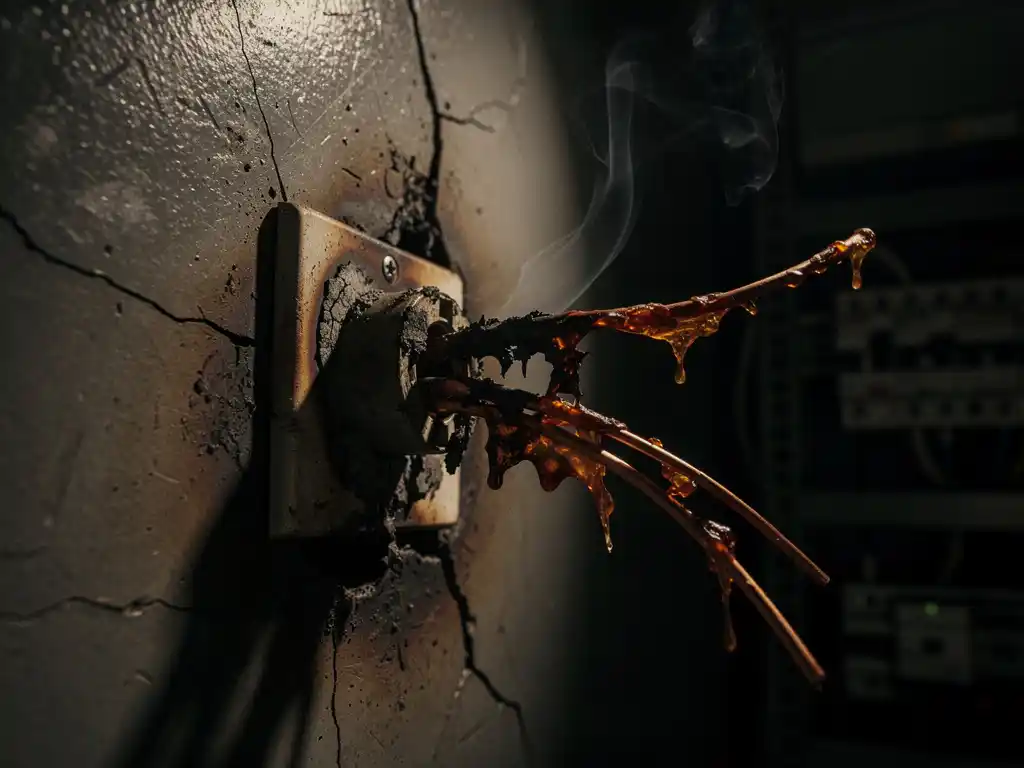
Poor wiring causes fires by generating excess heat that ignites surrounding materials. When electrical current flows through a wire that is damaged, undersized, or improperly connected, resistance increases and heat builds up at that point. Over time, that heat can reach the ignition temperature of insulation, dust, wood framing, or other nearby combustibles. The sections below unpack the specific mechanisms, warning signs, and protective steps every facility manager and infrastructure operator should know.
What happens inside a wire that causes a fire?
Inside a wire, a fire starts when electrical resistance at a fault point converts current into heat faster than that heat can dissipate. If the temperature at that point exceeds the ignition threshold of surrounding materials, combustion begins. This process can unfold slowly over months before any visible flame appears.
Under normal conditions, a properly sized conductor carries current with minimal resistance, generating only modest warmth. When something disrupts that balance, the physics shift rapidly. A loose terminal connection creates a high-resistance junction. A nicked or aged insulation layer allows current to arc to an adjacent conductor or metal surface. An overloaded circuit forces more current through a wire than its cross-section was designed to handle.
Each of these scenarios produces localized heat. Electrical insulation typically begins to degrade at sustained temperatures above 90 degrees Celsius, and many common building materials ignite well below 300 degrees Celsius. An arc fault, which is a discharge of electricity across a gap, can momentarily reach temperatures far exceeding those thresholds. This is why arc faults are responsible for a significant share of electrical wiring fires that occur without any prior visible warning.
What are the most common causes of electrical wiring fires?
The most common causes of electrical wiring fires are overloaded circuits, loose or corroded connections, damaged insulation, improper wiring installations, and aging infrastructure. Each of these conditions increases resistance or creates conditions where an arc can form, turning a routine electrical circuit into a fire hazard.
- Overloaded circuits: Connecting more load than a circuit was designed for forces excess current through conductors, generating heat along the entire run of wire.
- Loose connections: Terminals that were never tightened properly, or that have vibrated loose over time, create high-resistance contact points that arc and heat up repeatedly.
- Damaged insulation: Insulation that has been physically abraded, pinched by a cable tie, gnawed by rodents, or degraded by heat or chemicals exposes bare conductors to each other or to grounded surfaces.
- Incorrect wire gauge: Using a wire that is too thin for the circuit’s rated current causes the conductor itself to overheat, even without any external damage.
- Aging wiring systems: Wiring installed decades ago may use materials, such as aluminum branch circuit wiring or rubber insulation, that are more prone to failure under modern electrical loads.
- Poor workmanship: Connections made without proper tools, junction boxes left open, or cables routed through sharp metal edges all introduce failure points that may not manifest for years.
What are the warning signs of faulty wiring in a building?
The warning signs of faulty wiring include flickering or dimming lights, frequently tripping breakers or blown fuses, burning or plastic smells near outlets and panels, discolored switch plates or outlets, buzzing sounds from electrical fixtures, and warm surfaces around wiring enclosures. These signs of bad wiring should never be dismissed as minor inconveniences.
Flickering lights often indicate a loose connection somewhere in the circuit, which means arcing is already occurring intermittently. A breaker that trips repeatedly under normal load is telling you the circuit is undersized or that a fault is drawing excess current. A burning smell, even a faint one, is one of the most urgent indicators. Insulation that is overheating gives off a distinctive acrid or plastic odor before any visible damage appears.
Discoloration or scorch marks around an outlet or switch plate are physical evidence that heat has already been generated at that point. Buzzing or crackling sounds from a panel, outlet, or light fixture suggest active arcing. Any outlet or switch that feels warm to the touch, without a high-load appliance attached, warrants immediate investigation. In industrial and commercial environments, unexplained increases in energy consumption can also indicate resistive faults quietly wasting energy as heat inside enclosures.
Which types of equipment are most at risk from wiring faults?
Equipment most at risk from wiring faults includes electrical switchgear cabinets, server racks and ICT enclosures, battery energy storage systems, high-voltage distribution panels, and industrial control cabinets. These assets share a common characteristic: they concentrate high-density wiring and electrical connections inside enclosed spaces where heat has limited pathways to escape.
Switchgear and distribution panels handle large currents and contain dozens of termination points, each of which is a potential failure location. Server racks and ICT cabinets run continuous loads and generate their own heat, which accelerates insulation degradation and makes early fault detection harder. Battery energy storage systems introduce an additional risk because a thermal runaway event within a battery cell can interact with wiring faults to produce fires that are extremely difficult to extinguish with conventional methods.
Industrial control cabinets in manufacturing environments face additional stressors including vibration, dust ingress, and temperature cycling, all of which accelerate connection loosening and insulation wear. Telecom enclosures in remote or unmanned locations are particularly vulnerable because faults can develop for extended periods without anyone noticing the early warning signs described above.
How can electrical fires be detected before they spread?
Electrical fires can be detected before they spread through aspirating smoke detection, arc fault detection devices, thermal monitoring, and regular physical inspection of wiring and connections. Early detection is critical because electrical fires inside enclosed cabinets can reach dangerous temperatures within minutes of ignition, long before a conventional room-level smoke detector would activate.
Aspirating smoke detectors actively draw air samples from inside enclosures and can identify combustion particles at concentrations far below the threshold of standard point detectors. This means a fault that is smoldering inside a switchgear cabinet can be identified at the pre-ignition stage, before flames develop. Arc fault circuit interrupters detect the electrical signature of arcing and disconnect the circuit automatically, addressing the fault at its source.
Thermal imaging cameras used during scheduled maintenance can identify hot spots at connection points that are invisible to the naked eye. For unmanned or remote installations, continuous temperature monitoring with alerts integrated into a building management system provides an additional layer of protection. The combination of these technologies closes the detection gap that conventional fire alarm systems leave open for enclosed electrical equipment.
What should you do immediately if you suspect a wiring fire?
If you suspect a wiring fire, isolate the electrical supply to the affected area immediately, evacuate personnel, and alert the fire service. Do not use water on electrical fires. If a portable CO2 or dry powder extinguisher is immediately available and the fire is small and contained, it may be used, but only if you have been trained to do so and can exit safely.
The first priority is always to cut power. Switching off the relevant circuit breaker or isolating the distribution board removes the energy source driving the fault. This step also makes it safer for firefighters to enter the area. If the fire is inside a closed cabinet and you cannot safely isolate power, keep the cabinet closed. Keeping the enclosure closed limits the oxygen supply and slows combustion while you evacuate and wait for the fire service.
After any suspected wiring fire event, even one that was extinguished quickly, do not restore power until a qualified electrician has inspected the installation and identified the root cause. A fault that caused one ignition event will cause another if the underlying wiring problem is not corrected. Document what you observed, including any of the warning signs mentioned earlier, to support the investigation.
How ExxFire protects enclosed equipment from electrical wiring fires
ExxFire’s integrated fire detection and suppression systems are purpose-built to address the specific risk profile of enclosed electrical equipment, where poor wiring fire hazards are most concentrated and most dangerous. Rather than waiting for a fire to escape a cabinet and trigger a room-level detector, ExxFire acts at the source.
- Aspirating smoke detection: Continuously samples air from inside the enclosure to identify combustion particles at the earliest pre-ignition stage, well before visible smoke or flame develops.
- Non-pressurized nitrogen suppression: On detection, the patented Cool Gas Generator releases nitrogen directly inside the cabinet, displacing oxygen and extinguishing the fire without water, foam, or PFAS-containing agents that would damage sensitive electronics.
- No residue, no secondary damage: Nitrogen leaves no chemical residue, meaning protected equipment can often be returned to service quickly after an event, limiting downtime and protecting business continuity.
- Easy installation, low maintenance: Systems are pre-engineered for straightforward self-installation inside server racks, switchgear, battery energy storage systems, and high-voltage cabinets, with no special certification required for installation.
- Integration with existing infrastructure: Built-in relays allow the system to report status directly to an existing fire panel, ensuring compatibility without replacing current safety setups.
If your facility relies on electrical cabinets, server enclosures, or energy storage systems that currently have no dedicated fire suppression method, the electrical fire risk is real and preventable. Contact ExxFire to discuss how a combined detection and suppression system can be matched to your specific equipment and environment.
Related Articles
- What are the fire risks associated with lithium-ion batteries?
- How does drought influence fire management decisions?
- What are the fire safety compliance requirements for renewable energy installations?
- How do you prevent fires caused by candles?
- What is the EU REACH regulation and how does it affect fire protection?