

What are PFAS chemicals in fire extinguishing systems?
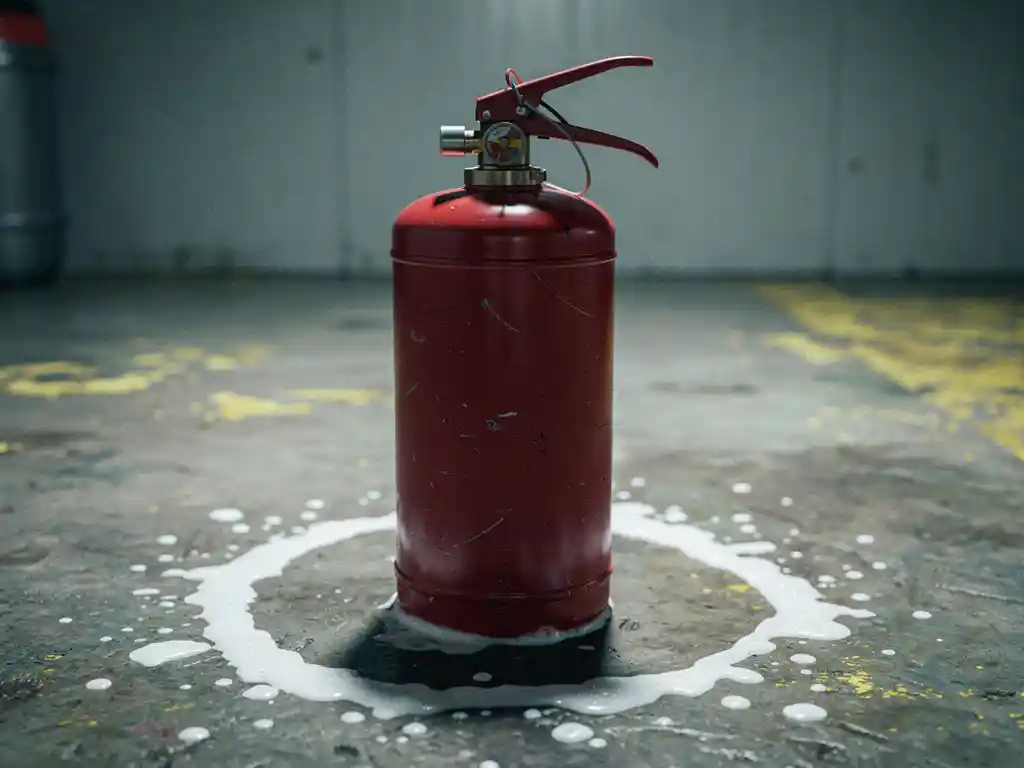
PFAS chemicals in fire extinguishing systems are per- and polyfluoroalkyl substances used as active ingredients in certain fire suppression agents, most notably aqueous film-forming foam (AFFF). These synthetic compounds create a highly effective film over flammable liquids, smothering fires rapidly. However, PFAS are persistent in the environment and in the human body, making them a serious health and regulatory concern. This article walks through why PFAS ended up in fire suppression in the first place, what the risks are, which agents contain them, and what cleaner alternatives now exist.
Why are PFAS chemicals used in fire suppression in the first place?
PFAS chemicals are used in fire suppression because their unique molecular structure makes them extraordinarily effective at extinguishing flammable liquid fires. The carbon-fluorine bond, one of the strongest in chemistry, gives PFAS-based agents exceptional thermal stability, low surface tension, and the ability to form a rapid aqueous film that cuts off the oxygen supply to a fire almost instantly.
For decades, military installations, airports, oil refineries, and industrial facilities relied on AFFF — aqueous film-forming foam — precisely because no other agent matched its speed and reliability against fuel fires. The performance advantage was significant enough that PFAS became the standard, even as early evidence of environmental persistence began to emerge. The fire suppression industry prioritized effectiveness, and regulators were slow to act. That combination allowed PFAS-containing agents to become deeply embedded in fire safety infrastructure worldwide.
What health and environmental risks do PFAS in fire systems pose?
PFAS chemicals in fire extinguishing systems pose serious health and environmental risks because they do not break down naturally. Known as “forever chemicals,” per- and polyfluoroalkyl substances accumulate in soil, groundwater, and living organisms over time. Human exposure has been linked to immune system disruption, thyroid dysfunction, elevated cholesterol, and certain cancers, particularly among firefighters and communities near training sites.
The environmental risk is compounded by how fire suppression systems release PFAS. During a discharge, foam or gas agents can contaminate the immediate environment, drainage systems, and surrounding soil. At fire training facilities where AFFF has been used repeatedly over years, groundwater contamination has been detected at significant distances from the original site. The persistence of PFAS means that even low-level, repeated exposure accumulates in biological tissue over time, making long-term risk difficult to quantify but impossible to ignore.
For businesses operating sensitive environments such as data centers, switchgear rooms, or battery energy storage facilities, the risk is not only to the environment but also to personnel who work near these systems and to the organization’s liability exposure as regulations tighten.
Which fire extinguishing agents contain PFAS?
The fire extinguishing agents most commonly associated with PFAS are aqueous film-forming foams (AFFF) and film-forming fluoroprotein foams (FFFP). Both rely on fluorosurfactants, which are PFAS compounds, to achieve their film-forming properties. These agents have been widely used in aviation, military, petrochemical, and industrial fire suppression for several decades.
Beyond foam-based agents, some older dry chemical and wet chemical suppression systems may also contain fluorinated compounds as stabilizers or performance enhancers. Certain fluorinated gases previously used in clean agent suppression systems, such as some halon replacements, also fall within the broader PFAS classification depending on their molecular structure.
It is worth noting that not all gaseous suppression agents contain PFAS. Inert gas systems using nitrogen, argon, or carbon dioxide do not contain fluorinated compounds at all. The PFAS problem is concentrated in foam-based and certain fluorinated clean agent systems, which is why the transition away from PFAS in fire suppression is largely focused on replacing AFFF and related foam technologies.
What regulations are restricting PFAS in fire suppression systems?
Regulations restricting PFAS in fire suppression systems are expanding rapidly across multiple jurisdictions. In the European Union, the REACH regulation has been progressively restricting specific PFAS compounds, and a broad PFAS restriction proposal covering thousands of substances is advancing through the regulatory process. Several EU member states have already implemented national bans on PFAS-containing firefighting foams ahead of EU-wide rules.
In the United States, the Environmental Protection Agency has set enforceable drinking water limits for key PFAS compounds, and the National Defense Authorization Act has mandated the phase-out of AFFF at military installations. Many individual US states have enacted their own restrictions on the purchase, use, and disposal of PFAS-containing fire suppression agents.
Internationally, the Stockholm Convention on Persistent Organic Pollutants has listed certain PFAS compounds for global elimination. As of 2026, the regulatory direction is unambiguous: PFAS in firefighting foam and related suppression systems is being phased out, and organizations that have not yet begun transitioning face increasing compliance risk, potential liability for environmental contamination, and the possibility of sudden regulatory deadlines that leave little time to act.
What are the PFAS-free alternatives for fire suppression?
PFAS-free alternatives for fire suppression include inert gas systems, fluorine-free foams (F3), water mist systems, and dry chemical agents that contain no fluorinated compounds. The right alternative depends on the type of fire risk, the environment being protected, and the sensitivity of the assets involved.
For facilities protecting flammable liquid risks at large scale, fluorine-free foams have improved significantly and are now certified for many of the same applications as AFFF, though they require careful selection to ensure performance equivalence. Water mist systems offer a PFAS-free option for certain enclosed spaces and machinery risks.
For environments protecting high-value electronics, ICT infrastructure, switchgear, and battery energy storage systems, inert gas suppression is widely regarded as the cleanest and most asset-safe option. Nitrogen-based systems, in particular, leave no chemical residue, cause no secondary damage to sensitive components, and pose no environmental contamination risk. This makes them a strong fit for enclosed environments where equipment protection and business continuity are the primary concern.
How do you transition an existing fire suppression system away from PFAS?
Transitioning an existing fire suppression system away from PFAS involves a structured assessment of the current system, identification of a suitable PFAS-free alternative, replacement or retrofitting of hardware, safe disposal of existing PFAS-containing agents, and staff retraining. The process is manageable with proper planning, and in many cases it can be completed without significant downtime.
The key steps in a successful transition are:
- Audit your current system: Identify which agents and components contain PFAS, and document the fire risks and asset types the system is designed to protect.
- Define your protection requirements: Clarify whether you are protecting flammable liquid risks, electrical enclosures, battery systems, or mixed environments, as this determines which PFAS-free technology is appropriate.
- Select a certified PFAS-free alternative: Choose a replacement system that has been independently tested and certified for your specific application. Certification by recognized bodies such as CNPP or TÜV Nord provides assurance that the system will perform as required.
- Plan the installation: Assess whether existing infrastructure such as pipework, detection systems, or control panels can be retained or must be replaced. Some modern PFAS-free systems are designed for straightforward self-installation, reducing cost and disruption.
- Dispose of PFAS agents responsibly: Work with a licensed waste contractor to ensure PFAS-containing foam concentrates and residues are disposed of in compliance with local environmental regulations.
- Retrain personnel: Ensure that facility managers, safety officers, and maintenance staff understand the new system’s operation, maintenance requirements, and emergency procedures.
Organizations protecting electrical enclosures or sensitive electronics should prioritize early action, since the combination of tightening PFAS regulations and the availability of high-performing inert gas alternatives means there is little reason to delay. Early transition also reduces liability exposure and positions the organization as a leader in sustainable fire safety practice.
How ExxFire helps with PFAS-free fire suppression
ExxFire provides a direct, certified alternative to PFAS-containing fire suppression systems for organizations protecting enclosed, high-value equipment. Its integrated fire detection and suppression systems are built entirely around non-pressurized nitrogen gas, a PFAS-free inert gas that leaves no chemical residue and causes no secondary damage to sensitive electronics, switchgear, or battery energy storage systems. Key features of ExxFire’s approach include:
- No PFAS, no fluorinated compounds: Nitrogen is a naturally occurring inert gas with no environmental persistence and no toxicity risk to personnel or surrounding ecosystems.
- Early detection integrated with suppression: Aspirating smoke detection identifies a developing fire at the earliest possible stage, triggering suppression before significant damage occurs and minimizing downtime.
- Certified performance: Systems are independently tested and certified by CNPP in France and DMT (part of TÜV Nord) in Germany, providing the documented compliance evidence that procurement managers and safety officers require.
- Easy installation and low maintenance: Pre-engineered for self-installation without special certification, ExxFire systems offer a low Total Cost of Ownership and minimal operational disruption during deployment.
- Scalable protection: Designed for closed enclosures up to 4.5 m³, with multiple units interconnectable for larger volumes, making the system adaptable to server racks, electrical cabinets, and BESS installations alike.
If your organization is ready to move away from PFAS-containing fire suppression and protect critical assets with a clean, certified, and sustainable solution, contact ExxFire to discuss the right system for your environment.