

What are the fire prevention standards for commercial buildings in 2026?
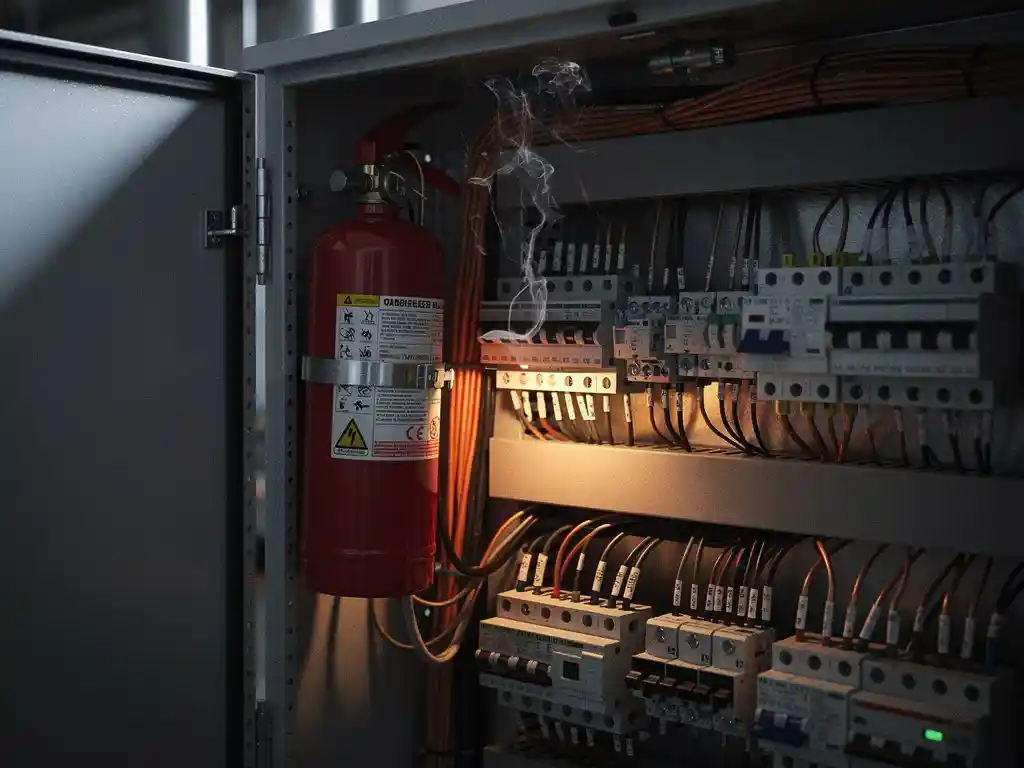
Fire prevention standards for commercial buildings in 2026 are governed by a combination of national fire codes, local building regulations, and sector-specific standards that together define minimum requirements for detection, suppression, and emergency response. In most jurisdictions, the National Fire Protection Association (NFPA) codes serve as the primary technical reference, alongside the International Fire Code (IFC) and regional legislation. The sections below address the most common compliance questions facility managers, safety officers, and building owners are asking right now.
Which fire codes apply to commercial buildings in 2026?
Commercial buildings in 2026 must comply with a layered set of fire codes that typically include NFPA 1 (Fire Code), NFPA 101 (Life Safety Code), and the International Fire Code (IFC), alongside any state or municipal amendments that apply to their specific jurisdiction. The applicable codes depend on building occupancy type, size, construction date, and intended use.
In the United States, most jurisdictions have adopted the IFC or a variant of NFPA 1, often with local amendments that tighten specific requirements. For buildings undergoing renovation or a change of use, retroactive compliance with updated fire codes may be triggered. In Europe, the picture is more fragmented, with national standards such as EN 54 governing fire detection and alarm systems, while suppression requirements vary by country and are often specified through building permits or insurance requirements.
Key codes and standards that apply across the broadest range of commercial occupancies include:
- NFPA 1: Comprehensive fire code covering fire prevention, hazardous materials, and emergency planning
- NFPA 101: Life Safety Code addressing means of egress, occupancy loads, and detection requirements
- NFPA 72: National Fire Alarm and Signaling Code, governing detection and notification systems
- NFPA 13: Standard for the Installation of Sprinkler Systems
- IFC (International Fire Code): Widely adopted model code updated on a three-year cycle
Because fire codes are amended regularly, building owners and facility managers should verify which edition their jurisdiction has adopted and whether any local amendments change specific thresholds or requirements.
What fire detection requirements must commercial buildings meet?
Commercial buildings must install fire detection systems that provide early warning to occupants and trigger automatic suppression or alarm responses before a fire can spread. Under NFPA 72 and equivalent international standards, most commercial occupancies require automatic smoke detection, manual pull stations, audible and visual notification devices, and a monitored fire alarm control panel connected to a central monitoring service or the fire department.
The specific type of detection technology required depends on the occupancy and the nature of the hazard. Standard ionization or photoelectric smoke detectors are acceptable in many general commercial spaces. However, environments housing sensitive electronics, server rooms, electrical switchgear, or battery systems often benefit from aspirating smoke detection (ASD), which draws air samples continuously and detects combustion particles at concentrations far below what conventional point detectors can register. This type of early-warning detection is particularly valuable in high-value equipment enclosures where a fire that goes undetected for even a few minutes can cause irreversible damage.
Beyond smoke detection, commercial buildings must also ensure:
- Heat detectors in areas where smoke detectors would produce false alarms (kitchens, dusty environments)
- Carbon monoxide detection where fuel-burning appliances are present
- Regular testing and maintenance of all detection devices in line with NFPA 72 inspection schedules
- Integration of detection systems with suppression systems and building management platforms
What fire suppression systems are required in commercial buildings?
Most commercial buildings above a certain size or occupancy threshold are required to install automatic fire sprinkler systems, typically governed by NFPA 13 or NFPA 13R. Sprinkler systems remain the most widely mandated suppression method for general commercial occupancies, but they are not the only option, and they are not always the most appropriate solution for every part of a building.
Areas containing sensitive electronics, electrical switchgear, server infrastructure, or battery systems present a specific challenge: water-based suppression causes significant collateral damage to equipment that may be more costly than the fire itself. In these environments, clean agent suppression systems, gaseous systems using inert gases such as nitrogen or argon, or localized suppression units designed for enclosed equipment are commonly specified instead.
Suppression system requirements are also driven by occupancy classification. Data centers, telecommunications facilities, industrial control rooms, and energy storage environments may be subject to additional standards beyond NFPA 13, including:
- NFPA 2001: Standard on Clean Agent Fire Extinguishing Systems, covering gaseous suppression agents
- NFPA 75: Standard for the Fire Protection of Information Technology Equipment
- NFPA 76: Standard for the Fire Protection of Telecommunications Facilities
- NFPA 855: Standard for the Installation of Stationary Energy Storage Systems
In all cases, suppression systems must be installed, inspected, and maintained by qualified personnel, and documentation of compliance must be available for fire safety inspections.
How are PFAS regulations changing fire suppression compliance?
PFAS regulations are fundamentally reshaping fire suppression compliance in 2026 by restricting or banning the use of aqueous film-forming foam (AFFF) and other fluorinated suppression agents that contain per- and polyfluoroalkyl substances. These so-called “forever chemicals” have been linked to environmental contamination and health risks, prompting regulatory action across the United States, the European Union, and many other jurisdictions.
In the EU, the restriction of PFAS under the REACH regulation is progressively eliminating fluorinated agents from fire suppression applications. In the US, several states have enacted legislation banning AFFF for training purposes and limiting its use in fixed suppression systems. At the federal level, the EPA and Department of Defense have both moved to phase out PFAS-containing agents, and this trajectory is expected to accelerate through 2026 and beyond.
For commercial building operators, this means that existing suppression systems using fluorinated agents may need to be reviewed for compliance, replaced ahead of regulatory deadlines, or substituted with PFAS-free alternatives. Inert gas systems using nitrogen or other non-fluorinated agents are increasingly recognized as technically sound and environmentally compliant replacements. These systems leave no chemical residue, pose no contamination risk, and are compatible with sensitive electronics, making them a practical choice for equipment-level protection in commercial and industrial settings.
What are the fire safety compliance obligations for battery energy storage systems?
Battery energy storage systems (BESS) installed in commercial buildings are subject to NFPA 855, the primary US standard governing stationary energy storage, as well as IFC Chapter 12 and relevant UL standards such as UL 9540 and UL 9540A. These standards address siting, separation distances, suppression requirements, ventilation, and emergency response planning for lithium-ion and other battery chemistries.
BESS fire safety compliance has become one of the most rapidly evolving areas of commercial fire regulation in 2026. Lithium-ion battery fires present a unique hazard because of thermal runaway, a self-sustaining exothermic reaction that conventional sprinkler systems struggle to suppress effectively. NFPA 855 requires that BESS installations include automatic suppression systems, smoke and heat detection, and in many cases, specialized suppression agents or strategies capable of managing thermal runaway events.
Key compliance obligations for BESS in commercial buildings include:
- Compliance with NFPA 855 installation and separation requirements based on energy capacity thresholds
- UL 9540A testing to assess fire propagation behavior of the specific battery system installed
- Automatic detection and suppression at the enclosure or system level
- Emergency response plans shared with local fire authorities
- Regular inspection and maintenance of suppression and detection systems
Authorities having jurisdiction (AHJs) increasingly require pre-installation review and approval for BESS projects, and insurance underwriters are applying their own requirements on top of code minimums. Early engagement with the AHJ and fire safety engineers is strongly recommended for any new BESS installation.
What happens if a commercial building fails fire safety inspection?
If a commercial building fails a fire safety inspection, the consequences range from mandatory corrective action notices and re-inspection fees to occupancy restrictions, fines, and in serious cases, forced closure until violations are remediated. The severity of the outcome depends on the nature of the deficiency, the jurisdiction, and whether the violations are classified as immediate life-safety hazards or lower-priority technical non-conformances.
Minor deficiencies, such as an expired fire extinguisher or a missing inspection tag on a suppression system, typically result in a notice of violation with a defined correction period. Major deficiencies, such as a non-functional suppression system, blocked exits, or missing detection coverage in a required area, may trigger immediate action, including occupancy suspension until the issue is resolved.
Beyond regulatory consequences, a failed inspection creates liability exposure. If a fire occurs in a building with documented, uncorrected violations, the building owner or operator may face civil liability for damages. Insurance coverage may also be voided or disputed if the insurer can demonstrate that the building was not maintained in compliance with applicable fire codes at the time of the loss.
The most effective way to avoid inspection failures is through a proactive compliance program that includes scheduled internal audits, documented maintenance records for all fire safety systems, and engagement with a qualified fire safety professional before the official inspection takes place.
How ExxFire helps with fire prevention compliance in commercial buildings
ExxFire’s integrated fire detection and suppression systems are engineered specifically for the compliance challenges that commercial building operators face in 2026, particularly in environments where sensitive electronics, electrical infrastructure, or battery energy storage systems require targeted, equipment-level protection.
ExxFire’s systems combine aspirating smoke detection with nitrogen-based suppression using the patented Cool Gas Generator technology, delivering early warning and immediate response within a single, pre-engineered unit. Key features that support compliance include:
- PFAS-free suppression: Nitrogen gas leaves no chemical residue and contains no fluorinated compounds, making ExxFire systems fully compatible with emerging PFAS restrictions under REACH and equivalent legislation
- Early smoke detection: Aspirating detection identifies combustion particles at very low concentrations, supporting compliance with detection requirements for high-value equipment enclosures under NFPA 72 and EN 54
- Enclosure-level protection: Systems protect closed enclosures such as server racks, switchgear cabinets, ICT cabinets, and BESS units up to 4.5 m³, with multiple units interconnectable for larger volumes
- Fire panel integration: Built-in relays allow the system to report status to an existing fire alarm control panel, ensuring seamless integration with building-wide fire safety infrastructure
- Certified and tested: Systems are tested and certified by CNPP in France and validated by DMT, part of TÜV Nord in Germany, supporting documentation requirements for inspections and insurance
- Easy installation: Pre-engineered for self-installation without special certification, reducing implementation cost and supporting a low Total Cost of Ownership
Whether you are upgrading an existing suppression system to eliminate PFAS-containing agents, protecting a new BESS installation, or ensuring your ICT infrastructure meets current fire detection standards, ExxFire offers a certified, clean, and compliant solution. Contact ExxFire to discuss your specific compliance requirements and find out which system configuration is right for your building.
Related Articles
- How does fire management protect ecosystems?
- How do you prevent fires in a multi-story building?
- How does poor wiring cause fires and what are the warning signs?
- What is the difference between fire prevention and fire protection?
- How does sustainable fire protection support corporate climate commitments?