

What are the fire prevention responsibilities of a building manager?
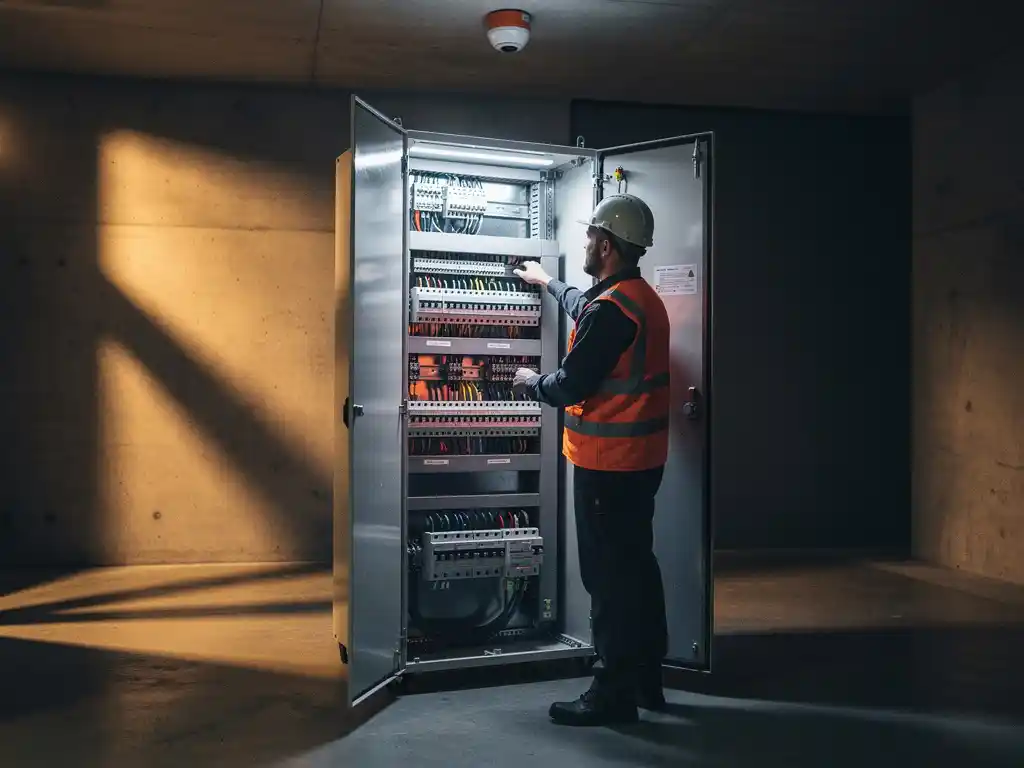
A building manager’s fire prevention responsibilities include conducting fire risk assessments, maintaining detection and suppression systems, ensuring staff receive adequate fire safety training, and meeting all legal compliance obligations. These duties exist to protect both people and property, and they apply to anyone who manages or controls a building used for business or public purposes. The sections below break down each core responsibility in detail.
What legal fire safety duties does a building manager hold?
Building managers are legally required to take reasonable steps to prevent fire, protect occupants, and ensure the building complies with applicable fire safety legislation. In most jurisdictions, this means conducting regular fire risk assessments, keeping escape routes clear, installing appropriate detection and suppression systems, and maintaining documented records of all fire safety measures. Failure to meet these obligations can result in fines, enforcement notices, or criminal liability.
In the European Union and the UK, fire safety compliance for non-domestic premises is governed by national regulations that place the duty of care squarely on the “responsible person” — typically the building manager, owner, or employer. This responsible person must not only implement fire safety measures but also review and update them whenever significant changes occur in the building’s use, layout, or occupancy.
Key legal fire safety duties typically include:
- Carrying out and documenting a fire risk assessment
- Implementing and maintaining fire detection and warning systems
- Ensuring adequate means of escape and emergency lighting
- Providing appropriate firefighting equipment
- Appointing and training fire wardens or marshals
- Keeping records and making them available for inspection
- Reviewing safety measures regularly and after any significant change
Non-compliance is not simply a paperwork issue. Regulatory authorities have the power to prohibit building use entirely if fire safety standards are not met, making legal compliance a fundamental operational concern for any building manager.
What is included in a building fire risk assessment?
A building fire risk assessment is a structured evaluation that identifies potential ignition sources, materials that could fuel a fire, and the people who may be at risk. It then evaluates existing precautions and determines whether additional measures are needed. The assessment must be documented and reviewed periodically, or whenever the building’s conditions change.
A thorough fire risk assessment typically covers five core steps:
- Identify fire hazards: Locate sources of ignition (electrical equipment, heating systems), fuel (combustible materials, waste), and oxygen supply.
- Identify people at risk: Consider all occupants, including those with mobility limitations, lone workers, and visitors unfamiliar with the building layout.
- Evaluate and act: Assess whether existing measures adequately control identified risks and determine what additional controls are needed.
- Record, plan, and train: Document findings, create an emergency plan, and ensure all relevant personnel are informed and trained.
- Review and revise: Revisit the assessment regularly and after any significant change, such as a renovation, change in building use, or a fire incident.
For buildings that house sensitive equipment — such as server rooms, electrical switchgear, or battery storage systems — the risk assessment must give particular attention to the fire risks specific to those environments. Electrical faults, overheating components, and thermal runaway in battery systems represent distinct hazard profiles that require targeted suppression strategies beyond standard building-wide measures.
How does a building manager ensure fire detection systems are maintained?
A building manager ensures fire detection systems are maintained by scheduling regular inspections, testing alarms and detectors at defined intervals, keeping service records, and acting promptly on any faults or alerts. Most fire safety regulations require that detection systems are serviced at least annually by a competent person, with more frequent checks for high-risk environments.
Maintenance responsibilities typically include:
- Weekly or monthly functional tests of fire alarm call points and sounders
- Annual full inspection and servicing by a qualified engineer
- Immediate investigation and repair of any system faults
- Keeping a logbook of all tests, faults, and maintenance actions
- Ensuring detection coverage is reviewed if the building layout changes
Beyond standard smoke detectors, building managers overseeing environments with enclosed electrical equipment should consider whether aspirating smoke detection is appropriate. Aspirating systems actively draw air samples from within cabinets and enclosures, detecting smoke at a much earlier stage than conventional point detectors — often before visible smoke or heat has developed. Early detection in these environments significantly reduces the risk of equipment damage and unplanned downtime.
Integration with a central fire panel is also an important maintenance consideration. Systems that report status via built-in relays allow facility teams to monitor detection and suppression readiness from a single point, simplifying oversight and ensuring no fault goes unnoticed.
What fire safety training are building managers responsible for?
Building managers are responsible for ensuring that all staff receive fire safety training appropriate to their role, that fire wardens are trained to a higher standard, and that training is repeated regularly and whenever significant changes occur. Training must cover how to raise the alarm, evacuation procedures, the location and basic use of firefighting equipment, and actions to avoid in a fire situation.
Training responsibilities generally include:
- Induction training: All new employees or regular building users must receive basic fire safety information before working in the building.
- Refresher training: Annual refresher sessions keep knowledge current and reinforce evacuation procedures.
- Fire warden training: Designated wardens need more detailed instruction covering evacuation coordination, sweep procedures, and communication with emergency services.
- Practical drills: Regular evacuation drills test whether procedures work in practice and identify gaps before a real emergency occurs.
- Equipment familiarization: Staff should know the location of fire extinguishers and understand which type is appropriate for which class of fire.
Building managers should document all training activities, including attendance records and drill outcomes. This documentation serves as evidence of compliance during inspections and provides a basis for improving procedures over time.
When should a building manager upgrade or replace fire suppression equipment?
A building manager should upgrade or replace fire suppression equipment when it reaches the end of its service life, when a fire risk assessment identifies that existing systems are inadequate for current hazards, when regulations change, or when the building’s use or layout has significantly changed. Outdated or non-compliant equipment not only fails to protect assets but can also expose the organization to legal liability.
Specific triggers for upgrading suppression equipment include:
- Introduction of new high-value or sensitive equipment not covered by existing systems
- Changes to fire safety regulations, particularly around banned substances such as PFAS-containing agents
- Equipment reaching manufacturer-recommended end of life
- A near-miss incident or actual fire that reveals gaps in protection
- Expansion or reconfiguration of the building that changes fire risk profiles
- Sustainability or environmental compliance requirements driving a shift away from legacy suppression agents
In 2026, the phase-out of PFAS-containing fire suppression agents is an active regulatory priority across Europe and other markets. Building managers currently relying on systems that use fluorinated compounds face both compliance deadlines and reputational risk. Transitioning to inert gas-based alternatives eliminates chemical residue concerns and aligns with broader environmental obligations without compromising suppression effectiveness.
How ExxFire supports building managers with fire safety compliance
ExxFire provides building managers with a practical, certified solution that directly addresses the detection, suppression, and compliance responsibilities outlined above. Its integrated fire detection and suppression systems combine aspirating smoke detection with non-pressurized nitrogen gas suppression, protecting enclosed equipment such as server racks, electrical cabinets, and battery storage systems at the source of risk.
Key advantages for building managers include:
- Early detection: Aspirating smoke detection identifies fire risk at a pre-combustion stage, enabling faster response and reducing equipment damage.
- Clean suppression: Nitrogen gas leaves no chemical residue, protecting sensitive electronics and eliminating the need for costly post-incident cleanup.
- PFAS-free compliance: ExxFire’s systems contain no fluorinated compounds, making them fully aligned with current and upcoming PFAS regulations.
- Easy installation and low maintenance: Systems are pre-engineered for self-installation without specialist certification, reducing the Total Cost of Ownership.
- Fire panel integration: Built-in relays report system status to existing fire panels, supporting centralized monitoring and simplified compliance documentation.
- Independent certification: Systems are tested and certified by CNPP in France and DMT (part of TÜV Nord) in Germany, providing verified performance assurance.
For building managers looking to strengthen their fire prevention responsibilities while meeting modern environmental and regulatory standards, contact ExxFire to discuss the right system for your specific environment.
Related Articles
- What is the role of heat detection in early fire prevention?
- What is the difference between a fire extinguisher and a sprinkler system?
- What is the purpose of a fire suppression system?
- What is active fire protection and how is it different from passive?
- How do you transition from PFAS-based to PFAS-free fire suppression?