

What is patented suppression technology and how does it differ from standard systems?
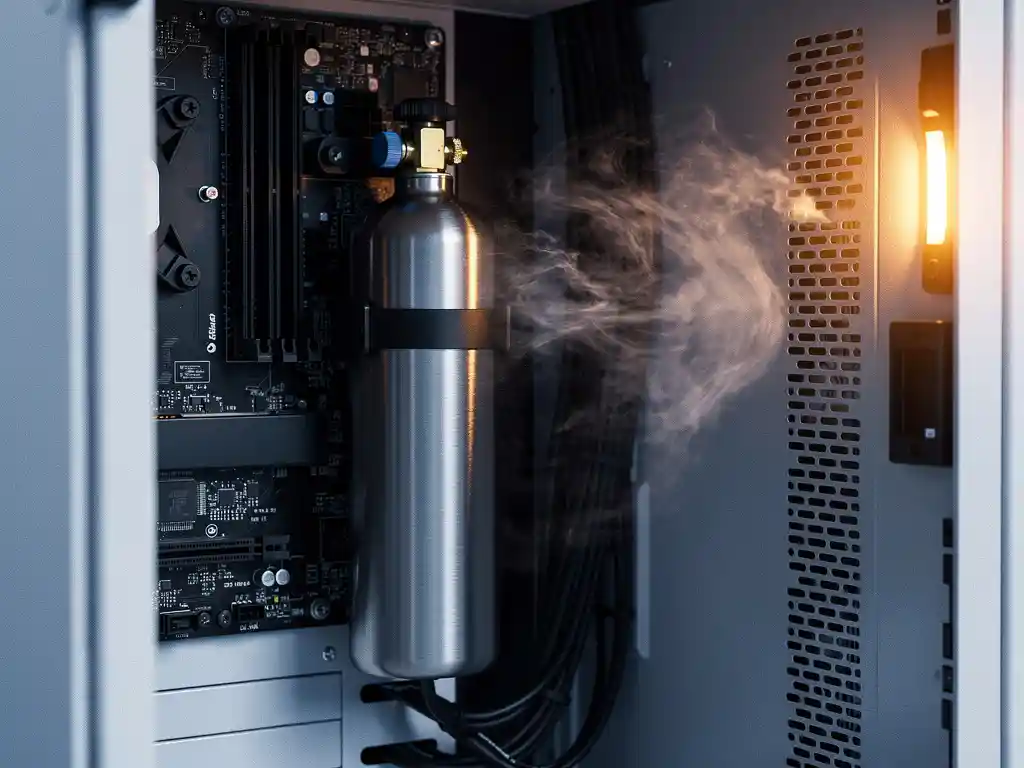
Patented suppression technology uses a proprietary mechanism, protected by intellectual property rights, to detect and extinguish fires in ways that standard off-the-shelf systems cannot replicate. The defining difference lies not just in the agent used, but in how the system integrates detection, triggering, and suppression into a single engineered solution with verified performance characteristics. The sections below unpack each dimension of that difference, from how the technology works to what it costs over time.
How does patented fire suppression technology actually work?
Patented fire suppression technology works by combining early smoke detection with an automated suppression response, using a proprietary delivery mechanism that releases a suppression agent directly at the source of ignition. The system activates before a fire develops into a full thermal event, targeting the protected enclosure rather than flooding an entire room or zone.
In nitrogen-based patented systems, the suppression agent is stored in a solid, non-pressurized state inside a gas generator. When the detection element identifies smoke particles, the generator converts the solid compound into nitrogen gas and discharges it into the protected enclosure. Because the gas is generated on demand rather than stored under pressure, the system avoids the mechanical risks and maintenance requirements associated with traditional pressurized cylinders.
The detection component is typically an aspirating smoke detector, which actively draws air samples from inside the enclosure and analyzes them for combustion particles. This approach catches fire signatures at a much earlier stage than conventional point detectors, which wait for smoke to drift passively to a sensor. The combination of aspirating detection and targeted gas release is what makes these systems effective for protecting high-value, enclosed equipment like electrical cabinets and server racks.
What makes a fire suppression system ‘patented’ versus standard?
A patented fire suppression system incorporates one or more novel technical innovations that have been formally registered and legally protected. Standard systems use established, widely available technologies such as wet pipe sprinklers, conventional CO2 cylinders, or pre-engineered clean agent systems that any manufacturer can produce. A patented system, by contrast, is built around a specific mechanism or combination of mechanisms that competitors cannot legally replicate.
The patent itself is not a quality mark, but it is evidence that an independent authority has assessed the technology as genuinely novel and non-obvious. For buyers, this matters because it signals that the system offers a technical approach not available elsewhere in the market. It also creates accountability: the patent holder must be able to demonstrate that the protected mechanism performs as claimed, and third-party certification bodies can verify this independently.
In practice, patented systems tend to differ from standard ones in one or more of the following ways:
- The suppression agent or its storage state (for example, solid-state nitrogen versus pressurized gas cylinders)
- The triggering mechanism and how it integrates with detection
- The delivery method and how the agent reaches the fire source
- The enclosure design and how it contains the suppression event
What are the key differences between nitrogen and conventional suppression agents?
Nitrogen suppresses fire by reducing the oxygen concentration inside a protected enclosure below the threshold required for combustion, without leaving any chemical residue. Conventional agents such as halon replacements, hydrofluorocarbons, or foam-based systems suppress fire through chemical interference or physical coating, and many leave residues that can damage sensitive electronics or require environmental remediation.
The practical differences become significant when the protected asset is high-value or sensitive:
- Residue: Nitrogen leaves nothing behind. Chemical agents often leave powder, foam, or molecular residues that can corrode circuit boards or contaminate mechanical components.
- Environmental profile: Nitrogen is an inert gas that makes up approximately 78% of the atmosphere. Many conventional agents contain per- and polyfluoroalkyl substances (PFAS), which are persistent environmental pollutants now subject to tightening regulatory restrictions across the EU and globally.
- Safety for personnel: At the concentrations used in enclosed equipment suppression, nitrogen displaces oxygen locally within the cabinet. This is a targeted effect, not a room-flooding event, which reduces risk to anyone working nearby.
- Re-ignition risk: Inert gas suppression removes oxygen from the fire triangle. Chemical agents that work by flame interruption can allow re-ignition if the agent disperses before the heat source cools.
The shift away from PFAS-containing agents is accelerating in 2026, driven by regulatory pressure in Europe and increasing procurement requirements from large industrial operators. PFAS-free fire suppression is no longer a niche preference but a mainstream specification requirement in many sectors.
Which environments and assets are best suited for patented suppression systems?
Patented suppression systems based on targeted nitrogen release are best suited for enclosed, high-value assets where a localized fire response is more appropriate than a room-level system. The ideal applications are environments where fire damage to the asset itself, rather than structural fire spread, is the primary risk.
The most common applications include:
- Electrical switchgear and high-voltage cabinets: Arc faults and insulation failures are common ignition sources; early suppression prevents cascading damage to connected systems.
- ICT and server cabinets: Data loss and hardware replacement costs make early, clean suppression essential.
- Battery energy storage systems (BESS): Lithium-ion thermal runaway is a specific and growing risk; targeted nitrogen suppression can interrupt the early stages before the event escalates.
- Industrial control panels and automation equipment: Downtime costs in manufacturing and process industries make rapid, residue-free suppression a strong operational requirement.
These environments share a common characteristic: the asset inside the enclosure is worth far more than the enclosure itself, and any suppression agent that damages the asset in the process of extinguishing the fire defeats the purpose. Patented industrial fire suppression systems address this by ensuring the suppression event is clean, contained, and targeted.
How do patented suppression systems compare on total cost of ownership?
Patented suppression systems typically have a higher upfront unit cost than standard systems, but their total cost of ownership (TCO) is often lower when installation, maintenance, and post-activation costs are factored in. The comparison depends on the specific system, but several structural cost advantages apply to non-pressurized nitrogen systems in particular.
Installation costs
Non-pressurized systems do not require the same certified installation procedures as high-pressure cylinder systems. Many patented nitrogen systems are pre-engineered for self-installation, meaning facilities do not need to engage specialist contractors for every deployment. This reduces both the initial cost and the lead time for getting systems operational.
Maintenance and inspection costs
Pressurized gas systems require regular cylinder inspections, pressure checks, and periodic recharging. Non-pressurized solid-state systems have a simpler maintenance profile because the agent is stable in its stored state and does not require pressure monitoring. This reduces the ongoing cost of compliance with fire safety maintenance schedules.
Post-activation costs are also significantly lower when the suppression agent leaves no residue. With chemical or foam-based systems, cleanup, component replacement, and environmental disposal of the agent can exceed the cost of the fire damage itself. Nitrogen leaves the enclosure clean, meaning equipment can often be inspected, reset, and returned to service without full replacement.
What certifications and standards apply to patented fire suppression systems?
Patented fire suppression systems must meet the same certification and testing requirements as any other suppression technology, and in some cases face additional scrutiny because the technology is novel. Third-party testing and certification is the primary mechanism by which buyers can verify performance claims independently of the manufacturer.
Relevant certifications and standards include:
- CNPP (Centre National de Prévention et de Protection), France: A recognized European testing body for fire suppression systems, providing independent performance verification.
- TÜV Nord / DMT, Germany: Provides technical safety assessments and certification relevant to industrial applications, including electrical enclosure protection.
- EN 15004: The European standard for gaseous fire extinguishing systems, covering design, installation, and maintenance requirements.
- ATEX directives: For systems deployed in potentially explosive atmospheres, ATEX compliance is a mandatory requirement across EU member states.
- FM Global standards: Widely referenced in industrial and insurance contexts, particularly for facilities with FM Global property insurance.
- NFPA 2001: The North American standard for clean agent fire extinguishing systems, relevant for international deployments.
When evaluating a patented system, buyers should request the actual test reports rather than relying on summary claims. Certification by a named, accredited body against a specific standard provides a verifiable basis for procurement decisions and supports regulatory compliance documentation.
How ExxFire’s patented technology addresses fire suppression challenges
ExxFire’s integrated fire detection and suppression systems put the principles described in this article into a tested, deployable product. The systems are built around the patented Cool N2 Gas Generator technology, which stores nitrogen in a solid, non-pressurized state and converts it to gas on activation. Combined with aspirating smoke detection, the result is a complete fire detection and suppression solution for enclosed assets.
Key features of ExxFire’s approach include:
- Early smoke detection through aspirating detectors that sample air from inside the protected enclosure
- PFAS-free nitrogen suppression that leaves no chemical residue on sensitive electronics
- Non-pressurized storage, eliminating the maintenance and safety requirements of cylinder-based systems
- Pre-engineered design for self-installation in enclosures up to 4.5 m³, with units interconnectable for larger volumes
- Built-in relay outputs for integration with existing fire panels and building management systems
- Independent certification by CNPP France and DMT, part of TÜV Nord
ExxFire systems are suited to switchgear, ICT cabinets, battery energy storage systems, and high-voltage enclosures across industrial, commercial, and critical infrastructure environments. If you are evaluating suppression options for enclosed high-value assets, contact ExxFire directly to discuss which system configuration fits your specific application and compliance requirements.