

What fire suppression options meet EU environmental standards in 2026?
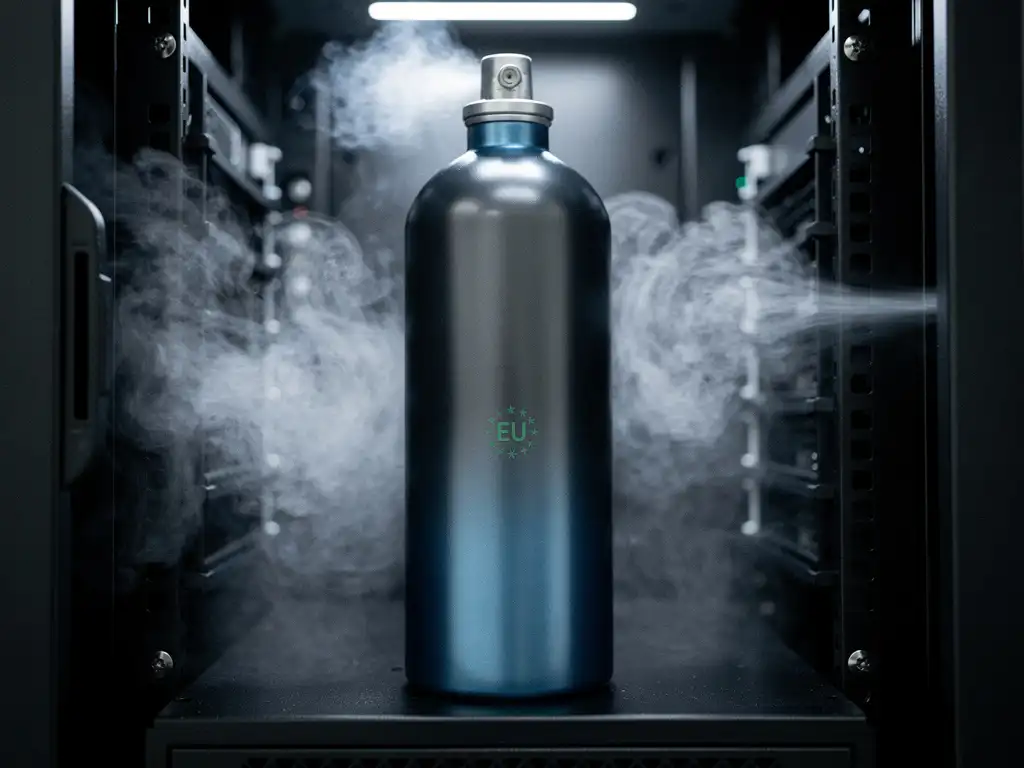
Fire suppression systems that meet EU environmental standards in 2026 must be free from PFAS (per- and polyfluoroalkyl substances) and other regulated chemical agents. Inert gas systems, particularly those using nitrogen, currently represent the most compliant and future-proof option available. The sections below address the specific regulations, comparisons, and practical considerations that matter most for organizations operating in Europe.
Which fire suppression agents are being phased out under EU law?
Several fire suppression agents are being phased out under EU law, primarily those containing PFAS compounds, including AFFF (aqueous film-forming foam) and many fluorinated clean agents such as HFCs and HFOs used in gaseous suppression systems. The EU’s PFAS restriction proposal under REACH, alongside the F-Gas Regulation, targets these substances due to their persistence in the environment and potential harm to human health.
AFFF-based foam systems have faced the most immediate pressure. These foams contain fluorinated surfactants that are classified as persistent pollutants, meaning they do not break down in soil or water. Their use is already restricted or banned in several EU member states, with broader EU-wide restrictions tightening progressively through 2026 and beyond.
Fluorinated gaseous agents, including some commonly marketed as “clean agents,” are also under scrutiny. While they leave no physical residue, many have high global warming potential (GWP) or fall within the PFAS chemical family. The EU’s evolving regulatory framework increasingly treats these agents as environmentally unacceptable, pushing organizations to seek alternatives that do not rely on fluorinated chemistry at all.
What does PFAS-free mean in the context of fire suppression?
In fire suppression, PFAS-free means the suppression agent contains no per- and polyfluoroalkyl substances, a broad class of synthetic chemicals linked to environmental persistence and health risks. A PFAS-free system uses agents such as inert gases, water mist, or dry powder that do not introduce fluorinated compounds into the protected environment or the wider ecosystem.
The distinction matters because PFAS contamination can occur not only from foam-based systems but also from certain gaseous agents and even system components such as seals or hoses that contain fluoropolymers. A genuinely PFAS-free suppression solution addresses the agent itself and, where possible, the materials used in system construction.
For organizations protecting sensitive electronics, PFAS-free suppression is particularly important. Many fluorinated agents, even when they evaporate without visible residue, can deposit trace chemical films on circuit boards and components. Inert gases such as nitrogen leave absolutely no chemical residue, making them both environmentally compliant and safe for high-value equipment.
How does inert gas suppression compare to chemical agents for EU compliance?
Inert gas suppression is significantly more compliant with EU environmental regulations than chemical agents. Inert gases such as nitrogen, argon, and carbon dioxide are naturally occurring substances with no global warming potential and no PFAS content. They do not trigger restrictions under REACH, the F-Gas Regulation, or the EU’s proposed universal PFAS restriction, making them a durable long-term choice.
Chemical suppression agents, by contrast, face an increasingly hostile regulatory environment in Europe. Even agents marketed as environmentally preferable alternatives to older HFCs often contain fluorinated compounds that fall within the PFAS definition. As the EU broadens its restrictions, organizations that invested in these “transitional” chemical agents may find themselves facing another round of system replacement within a few years.
From a practical standpoint, inert gas systems also avoid the disposal and handling requirements that apply to regulated chemical agents. Nitrogen, for example, is non-toxic, non-corrosive, and requires no special disposal protocols. This simplifies compliance management and reduces the administrative burden on facility managers and health and safety teams.
What fire suppression standards apply to electrical cabinets and BESS in Europe?
In Europe, fire suppression for electrical cabinets and Battery Energy Storage Systems (BESS) is governed by a combination of standards including IEC 62305, IEC 62933 (for BESS), EN 54 (for fire detection components), and sector-specific guidance from bodies such as VdS and CFPA Europe. These standards define performance requirements for detection sensitivity, suppression effectiveness, and system reliability within enclosed electrical environments.
For electrical switchgear and ICT cabinets, the key requirement is that suppression agents must not cause secondary damage to live equipment. This rules out water-based systems in most cases and places inert gas and dry chemical systems at the forefront. Inert gas systems that suppress fire by reducing oxygen concentration within the enclosure are well-suited to these environments, provided the enclosure is sufficiently sealed to maintain the suppression concentration.
BESS fire protection presents additional complexity because lithium-ion battery fires involve thermal runaway, which can reignite after initial suppression. European guidance increasingly emphasizes early detection combined with rapid suppression at the cell or module level, rather than relying solely on room-level or enclosure-level systems. Aspirating smoke detection, which can identify combustion byproducts at trace levels before visible smoke or flame develops, is widely recommended as the detection method of choice for BESS installations.
Should organizations replace existing suppression systems before 2026 deadlines?
Organizations using PFAS-containing or high-GWP suppression systems should seriously evaluate replacement before current and upcoming EU deadlines. While not all existing systems face an immediate hard cutoff in 2026, the regulatory trajectory is clear: restrictions are tightening, and the window for compliant use of many chemical agents is narrowing. Proactive replacement avoids emergency procurement, rushed installation, and potential compliance gaps.
The business case for early replacement extends beyond regulatory compliance. Systems based on restricted agents may become difficult to service as suppliers withdraw products from the EU market. Replacement parts, refill agents, and trained technicians for legacy systems will become increasingly scarce and expensive. Organizations that delay face not only compliance risk but also operational risk if their suppression system cannot be maintained.
There is also a reputational dimension. Many of ExxFire’s clients operate in sectors where sustainability credentials are scrutinized by customers, investors, and regulators. Continuing to operate PFAS-based suppression systems, even where technically still permitted, can conflict with corporate environmental commitments and ESG reporting requirements. Replacing these systems proactively signals a genuine commitment to environmental responsibility.
What should facility managers look for in a compliant suppression system?
Facility managers evaluating fire suppression systems for EU compliance in 2026 should prioritize four core criteria: the agent must be PFAS-free and have no global warming potential; the system must carry recognized third-party certification; it must be appropriate for the specific hazard and enclosure type; and it must offer a low Total Cost of Ownership through easy installation and minimal ongoing maintenance.
Certification is non-negotiable. Systems tested and validated by accredited bodies such as TÜV Nord, CNPP France, or equivalent European testing organizations provide documented evidence of performance and compliance. This documentation is increasingly required by insurers and by procurement processes within large organizations and public institutions.
Beyond the agent and certification, facility managers should evaluate:
- Detection capability: Early smoke detection, ideally aspirating detection that identifies pre-fire conditions, reduces response time and limits damage
- Residue profile: The suppression agent must leave no chemical residue that could damage sensitive electronics or require costly post-fire cleanup
- Scalability: The system should protect the specific enclosure volume and allow expansion if infrastructure grows
- Integration: Compatibility with existing fire panels and building management systems simplifies compliance reporting and alarm management
- Maintenance requirements: Low-maintenance systems reduce lifecycle costs and the risk of systems falling out of compliance due to neglected servicing
Pressurized systems introduce additional complexity around storage, periodic inspection, and pressure vessel regulations. Non-pressurized alternatives simplify both installation and ongoing compliance, particularly in environments where specialist contractors are not readily available.
How ExxFire supports EU-compliant fire suppression
ExxFire’s combined fire detection and suppression systems are built specifically to meet the requirements that EU environmental standards demand in 2026 and beyond. The systems use non-pressurized nitrogen gas generated on demand through the patented Cool Gas Generator technology, making them fully PFAS-free, residue-free, and free from global warming potential. Key features that support compliance include:
- PFAS-free inert gas suppression using nitrogen, with no fluorinated compounds in the agent or suppression process
- Aspirating smoke detection that identifies combustion byproducts at trace levels, enabling early intervention before a fire develops
- Third-party certification by CNPP France and DMT Dortmund, part of TÜV Nord, providing documented compliance evidence for insurers and regulators
- Non-pressurized design that eliminates pressure vessel regulations and simplifies installation without requiring specialist certification
- Built-in relay outputs for integration with existing fire panels and building management infrastructure
- Scalable protection for enclosures up to 4.5 m³, with multiple units interconnectable for larger volumes such as BESS installations and switchgear rooms
If your organization is assessing whether its current fire suppression setup meets EU environmental standards, or planning a replacement before regulatory deadlines tighten further, contact ExxFire to discuss the right solution for your specific environment.
Related Articles
- How does fire management differ between countries?
- How do prescribed fires benefit grassland ecosystems?
- How does off-gas detection work in battery storage systems?
- What are the fire detection standards for telecom infrastructure in 2026?
- How do children accidentally cause fires and how can parents prevent them?