
What is the purpose of a fire suppression system?
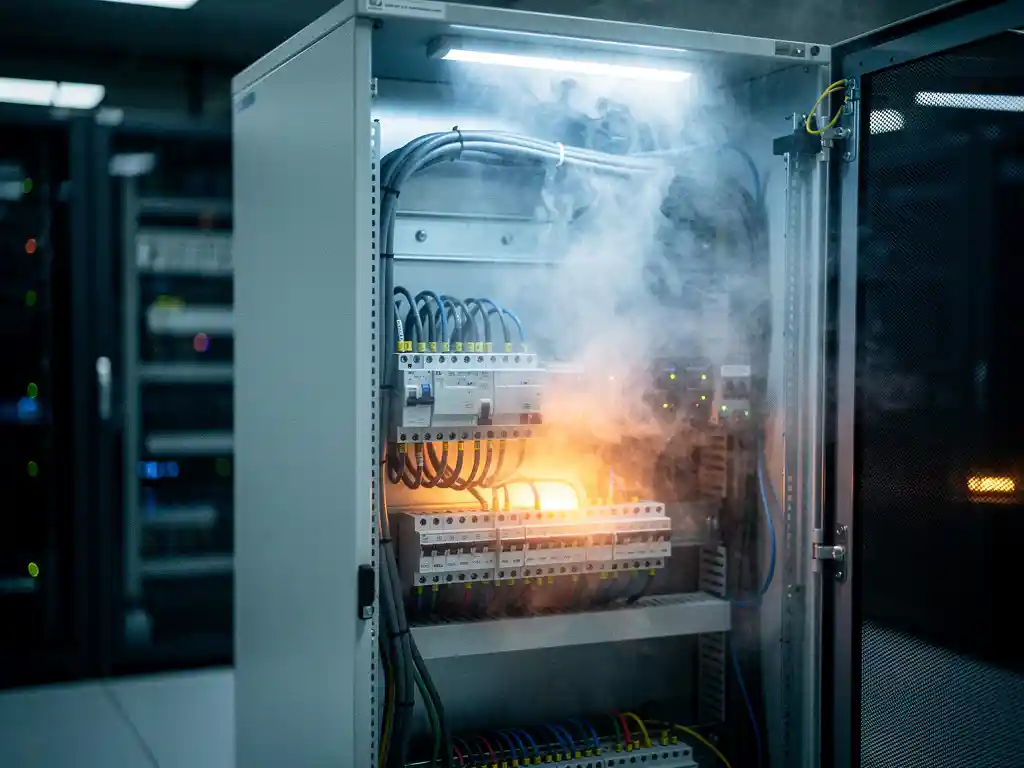
A fire suppression system is designed to detect and extinguish a fire automatically, limiting damage before it can spread. Its core purpose is to protect people, property, and critical assets by responding to a fire event faster than any manual intervention could. The sections below answer the most common questions about how these systems work, where they are used, and what makes them the right choice for protecting sensitive equipment.
How does a fire suppression system actually work?
A fire suppression system works by automatically detecting the early signs of a fire and releasing a suppression agent to extinguish or control it before the fire grows. Most systems combine a detection component with a suppression mechanism, so the response is triggered without human involvement. The speed of this automated reaction is what makes suppression systems fundamentally different from portable extinguishers.
Detection typically relies on smoke sensors, heat detectors, or aspirating smoke detection technology, which continuously samples air from within a protected space. When a threshold is reached, the system activates and discharges the suppression agent directly into the protected zone. In enclosed environments such as electrical cabinets or server racks, this targeted approach means the agent reaches the source of ignition quickly and efficiently.
The suppression agent itself varies by system type, but in all cases it works by removing one or more elements of the fire triangle: heat, fuel, or oxygen. Inert gas systems, for example, reduce oxygen concentration to a level that cannot sustain combustion, while water-based systems cool the fuel below its ignition point.
What types of fire suppression systems are available?
Fire suppression systems fall into several broad categories based on the suppression agent they use. The most common types are water-based systems, gaseous suppression systems, foam systems, and dry chemical systems. Each is suited to different environments and risk profiles.
- Water-based systems: The most widely deployed type, including sprinklers. Effective for general building protection but unsuitable for electrical equipment or water-sensitive environments.
- Gaseous suppression systems: Use inert gases such as nitrogen or argon, or chemical agents, to suppress fire without leaving residue. Well-suited to data centers, server rooms, and electrical enclosures.
- Foam systems: Applied to flammable liquid risks such as fuel storage or aircraft hangars, where foam blankets the fuel surface to cut off oxygen.
- Dry chemical systems: Use powdered agents to interrupt the chemical chain reaction of combustion. Common in industrial and commercial kitchens, but leave significant residue.
- Nitrogen-based generator systems: A newer category that stores nitrogen in a solid, non-pressurized state and releases it on activation. These systems are particularly relevant for protecting individual enclosures and high-value equipment.
Choosing the right type depends on the nature of the hazard, the sensitivity of the assets being protected, environmental requirements, and the physical configuration of the space.
What’s the difference between a fire suppression system and a sprinkler system?
The key difference is that a fire suppression system is a broad category that includes many agent types, while a sprinkler system is one specific type that uses water. Sprinklers are designed for general occupancy protection and activate when heat melts a fusible element in each sprinkler head. A suppression system, by contrast, may use gas, foam, or other agents and is often engineered for a specific hazard or enclosure.
Sprinkler systems are reliable and cost-effective for large open spaces such as warehouses, offices, and retail environments. However, they are not appropriate where water would cause additional damage, such as inside server racks, electrical switchgear, or battery storage units. In these environments, a water discharge could destroy the very equipment it was meant to protect.
Suppression systems designed for sensitive equipment use agents that leave no residue and cause no secondary damage. This distinction is critical for operators of mission-critical infrastructure, where the cost of equipment damage following a suppression event can rival the cost of the fire itself.
Where are fire suppression systems most commonly installed?
Fire suppression systems are most commonly installed wherever the risk of fire is elevated, where assets are high in value or criticality, or where a standard sprinkler system would be inappropriate. Common installation environments include data centers, electrical switchgear rooms, telecommunications infrastructure, industrial manufacturing facilities, and battery energy storage systems.
Beyond these specialist environments, suppression systems are also widely used in:
- Server rooms and ICT cabinets in corporate and government facilities
- Healthcare and pharmaceutical environments where uninterrupted operations are essential
- High-voltage cabinets in energy and utility infrastructure
- Archive and library storage where water damage would be catastrophic
- Commercial kitchens, where cooking oil fires require specialist foam or wet chemical agents
- Vehicles and mobile equipment where portability and compact design are required
In each of these contexts, the suppression system is chosen because it matches both the fire risk profile and the operational requirements of the environment, including the need to avoid downtime or collateral damage during a suppression event.
What suppression agent is safest for sensitive electronics?
Inert gas agents, particularly nitrogen, are the safest suppression agents for sensitive electronics. They extinguish fire by reducing oxygen concentration without leaving any chemical residue, moisture, or particulate matter. This means that after a suppression event, electronic components remain clean and undamaged, and systems can often be restored to operation quickly once the fire hazard has been addressed.
Historically, halon was used in data centers and control rooms because of its effectiveness and clean discharge. However, halon is now banned under the Montreal Protocol due to its ozone-depleting properties. Many replacement chemical agents, including certain hydrofluorocarbons, have since come under regulatory scrutiny because of their PFAS content or high global warming potential.
Nitrogen stands out as an environmentally neutral alternative. It is naturally abundant, non-toxic, non-corrosive, and leaves no residue whatsoever. For operators seeking a suppression solution that protects electronics without causing secondary damage and that meets current and anticipated environmental regulations, nitrogen-based systems represent the most future-proof choice available in 2026.
When is a fire suppression system legally required?
Legal requirements for fire suppression systems vary by country, building type, occupancy classification, and the nature of the hazard present. In general, automatic suppression systems are required by building codes or fire safety regulations when a building exceeds a certain size, height, or occupancy load, or when it contains specific high-risk uses such as fuel storage, commercial cooking, or critical infrastructure.
In many jurisdictions, data centers, server rooms, and electrical substations above a defined capacity are subject to specific fire protection requirements that go beyond general sprinkler provisions. Energy storage systems, particularly large-scale battery installations, are increasingly subject to dedicated fire safety standards as regulators respond to the growing deployment of lithium-ion technology.
Beyond legal minimums, many organizations install suppression systems voluntarily because the cost of a fire event, including equipment replacement, downtime, and reputational impact, far exceeds the cost of protection. Insurance requirements and industry standards such as those set by FM Global or local equivalents also drive adoption in environments where legal mandates do not yet exist.
If you are uncertain about the requirements that apply to your specific facility or jurisdiction, consulting a certified fire safety specialist is the most reliable way to ensure compliance and adequate protection.
How ExxFire helps protect your critical assets from fire
ExxFire provides integrated fire detection and suppression systems built specifically for the environments where standard suppression solutions fall short. If your operations depend on server racks, electrical cabinets, switchgear, or battery energy storage systems, ExxFire’s approach addresses both the detection and suppression challenge in a single, pre-engineered solution.
Key features of ExxFire’s systems include:
- Aspirating smoke detection: Continuously samples air inside the protected enclosure to identify smoke at the earliest possible stage, before a fire can develop fully.
- Nitrogen-based suppression: Uses a patented Cool Gas Generator that stores nitrogen in a solid, non-pressurized state and releases it directly into the enclosure on activation, leaving zero chemical residue.
- PFAS-free and environmentally neutral: Nitrogen is a naturally occurring inert gas with no ozone-depleting potential, no global warming contribution, and no regulatory risk from PFAS restrictions.
- Easy self-installation: Systems are pre-engineered for straightforward installation without specialist certification, reducing both installation cost and time.
- Integration with existing fire panels: Built-in relays allow the system to report status to your existing fire safety infrastructure, ensuring seamless compatibility.
- Tested and certified: Validated by CNPP France and DMT, part of TÜV Nord, providing documented assurance of performance.
ExxFire’s systems are designed to protect enclosures up to 4.5 m³, with multiple units interconnectable for larger volumes, making them scalable to a wide range of installation sizes. If you are ready to protect your mission-critical equipment with a clean, certified, and environmentally responsible fire suppression solution, contact ExxFire to discuss the right configuration for your environment.