

What is fire prevention and why does it matter?
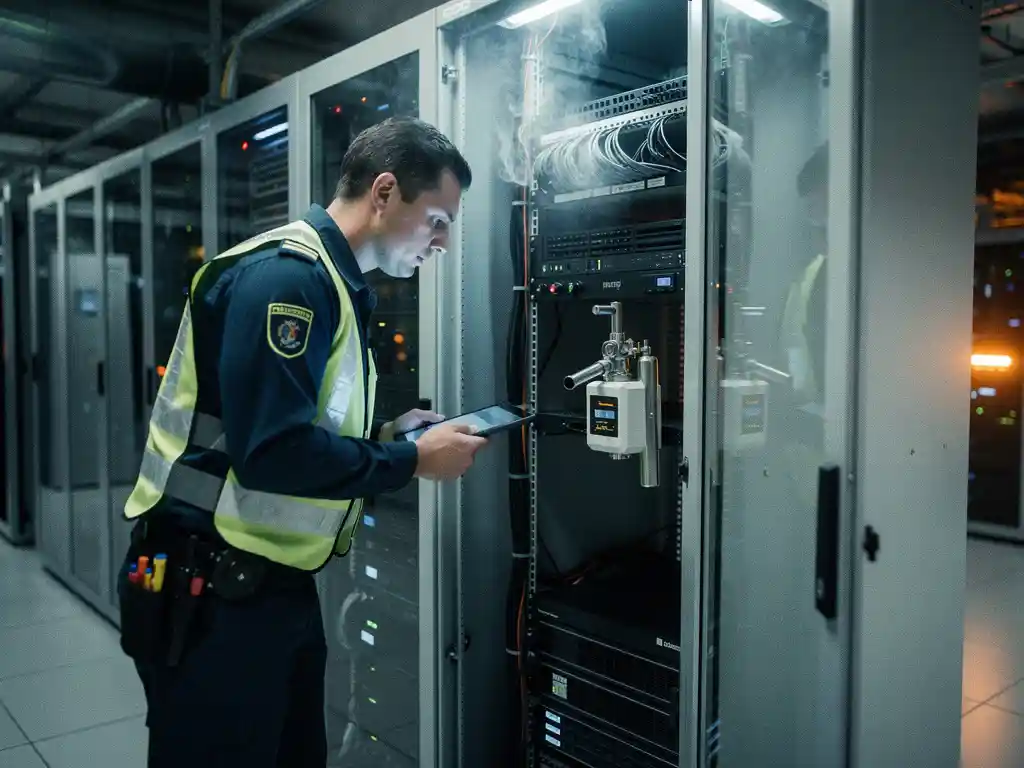
Fire prevention is the practice of identifying and eliminating fire hazards before a fire starts, reducing the likelihood of ignition and limiting the conditions that allow fire to spread. It is a foundational pillar of fire safety that applies to every environment — from homes and offices to industrial facilities and data centers. This article unpacks the most important questions around fire prevention, fire detection, and fire suppression to help businesses protect their assets and people.
What are the main goals of fire prevention?
The main goals of fire prevention are to stop fires from starting, limit their spread if they do occur, and protect lives, property, and operational continuity. Fire prevention, in practice, encompasses risk assessment, hazard elimination, staff training, equipment maintenance, and compliance with safety regulations.
Fire prevention works on three levels. The first is eliminating ignition sources — faulty wiring, overloaded circuits, flammable material storage, and poor housekeeping are all controllable risks. The second is reducing fuel availability, meaning combustible materials are stored, handled, and disposed of properly. The third is ensuring that detection and response systems are in place so that if prevention fails, the damage is contained quickly.
For businesses, fire risk management adds a fourth dimension: protecting operational continuity. Downtime caused by fire damage — even a small, localized fire inside a server rack or electrical cabinet — can result in significant financial loss, data loss, and reputational harm. Fire prevention, therefore, is not just a safety obligation; it is a business continuity strategy.
What are the most common causes of fire in commercial and industrial settings?
The most common causes of fire in commercial and industrial settings are electrical faults, overheating equipment, human error, flammable material mishandling, and poor maintenance practices. Electrical fires are particularly prevalent because they can originate inside sealed enclosures where they go undetected until significant damage has occurred.
In environments with high concentrations of electronic equipment — such as server rooms, telecom facilities, and manufacturing plants — the fire hazard profile is distinct:
- Electrical arcing and short circuits inside switchgear, cabinets, and battery systems
- Thermal runaway in lithium-ion Battery Energy Storage Systems (BESS), which can escalate rapidly
- Overloaded circuits caused by increased power demands on aging infrastructure
- Dust accumulation on electrical components, which creates an insulating layer that causes overheating
- Human error during maintenance, installation, or modification of electrical systems
Understanding these root causes is the first step in building an effective fire protection strategy. Many industrial fires are preventable through regular inspection, thermal imaging surveys, and the installation of early detection systems inside at-risk enclosures.
What’s the difference between fire prevention and fire suppression?
Fire prevention focuses on stopping a fire from starting, while fire suppression focuses on extinguishing or controlling a fire that has already ignited. The two are complementary disciplines within a complete fire safety framework — prevention reduces probability, suppression limits consequence.
Prevention measures include risk assessments, electrical maintenance, staff training, safe storage of flammable materials, and regular equipment inspections. These actions are proactive and ongoing.
Suppression, by contrast, is reactive. It activates when a fire is detected and delivers an extinguishing agent — water, gas, foam, or inert gas — to the fire source. The goal of suppression is to extinguish the fire as quickly as possible, minimizing damage and preventing spread.
A critical point often overlooked is the difference between object-level suppression and room-level suppression. Room-level systems flood an entire space with suppression agent, which can cause collateral damage to sensitive equipment. Object-level suppression targets the specific enclosure where the fire originates, containing the damage at the source before it spreads to the wider environment. For high-value electronics, this distinction is significant.
How does early fire detection reduce damage to critical equipment?
Early fire detection reduces damage to critical equipment by identifying the earliest signs of fire — typically smoke particles — before visible flames or heat develop. The sooner a fire is detected, the sooner suppression can be triggered, limiting the window in which damage occurs and dramatically reducing the cost and scope of recovery.
In enclosed equipment such as server racks, switchgear, and electrical cabinets, fires often begin as slow, smoldering events that produce smoke long before any flame appears. Aspirating smoke detection technology is designed to actively draw air samples from inside the enclosure and analyze them for smoke particles at extremely low concentrations. This allows detection at the earliest possible stage — sometimes minutes or even hours before a conventional heat or optical detector would trigger.
For mission-critical environments, this early warning window is invaluable. It means suppression can be activated while the fire is still confined to the source enclosure, avoiding damage to surrounding equipment, preventing data loss, and keeping downtime to a minimum. The difference between detecting a fire at the smoldering stage versus the open-flame stage can be the difference between replacing a single component and replacing an entire system.
What types of fire suppression are safest for sensitive electronics?
The safest types of fire suppression for sensitive electronics are clean agent gas systems, particularly those using inert gases such as nitrogen or argon. These agents extinguish fire by displacing oxygen without leaving any chemical residue, moisture, or corrosive byproducts that could damage electronic components.
Water-based systems are generally unsuitable for electronics environments — the water itself causes as much damage as the fire. CO2 systems are effective but pose serious safety risks to personnel and can cause thermal shock to equipment. Foam-based systems leave residue that is difficult to clean and can contaminate sensitive components.
Inert gas suppression avoids all of these problems:
- No chemical residue: Electronics remain clean and operational after suppression
- No moisture: No corrosion or short-circuit risk from the suppression agent itself
- Environmentally safe: Inert gases such as nitrogen have zero global warming potential and contain no PFAS compounds
- Non-destructive: Suppression can occur inside a live enclosure without causing additional hardware damage
The growing movement to phase out PFAS-containing fire suppression agents makes inert gas systems an increasingly important choice for organizations that are both sustainability-conscious and compliance-driven. Nitrogen-based suppression, in particular, represents the cleanest and most environmentally responsible option currently available.
Who is responsible for fire prevention in a business?
Fire prevention in a business is the shared responsibility of multiple roles, but ultimate accountability typically rests with the employer or the designated responsible person — usually a facility manager, health and safety officer, or senior operations leader. In most jurisdictions, this responsibility is codified in fire safety legislation that requires businesses to conduct fire risk assessments and implement appropriate prevention and protection measures.
In practice, fire prevention responsibility is distributed across several functions:
- Facility managers oversee physical fire safety measures, equipment maintenance, and compliance with building regulations
- Health and safety officers conduct risk assessments, manage training programs, and ensure regulatory compliance
- IT and infrastructure directors are responsible for fire protection within data centers, server rooms, and ICT environments
- Procurement managers play a role in selecting fire detection and suppression systems that meet safety, environmental, and cost requirements
- All employees share a duty to follow fire safety procedures, report hazards, and avoid behaviors that create fire risk
Effective fire risk management requires these roles to work in coordination. A fire safety strategy that lives only in a policy document but is not embedded in daily operations, equipment procurement, and infrastructure design will always leave gaps. The most resilient organizations treat fire prevention as an operational discipline, not a compliance checkbox.
How ExxFire helps with fire prevention and protection
ExxFire provides integrated fire detection and suppression systems purpose-built for the environments where fire prevention matters most: server rooms, switchgear cabinets, Battery Energy Storage Systems, high-voltage enclosures, and other mission-critical equipment. The systems combine aspirating smoke detection with patented Cool Gas Generator nitrogen suppression technology, activating at the earliest sign of fire before damage can escalate.
Key features of ExxFire’s approach to fire protection include:
- Early smoke detection using aspirating technology that identifies fire at the smoldering stage, inside the enclosure
- Nitrogen-based suppression that leaves zero chemical residue and causes no damage to sensitive electronics
- Non-pressurized, solid-state gas storage that eliminates the risks associated with pressurized gas cylinders
- PFAS-free technology that meets the highest environmental and regulatory standards
- Easy self-installation without special certification, reducing Total Cost of Ownership
- Compatibility with existing fire panels via built-in relays, ensuring seamless integration into current infrastructure
- Certification by CNPP France and TÜV Nord, providing independent validation of system performance
Whether you are looking to protect a single server rack or a network of electrical cabinets across multiple sites, ExxFire’s systems deliver reliable, clean, and sustainable fire protection at the object level. Contact ExxFire today to discuss the right solution for your environment and take the first step toward comprehensive fire risk management.
Related Articles
- How does fire risk vary between urban and rural properties?
- What is meant by a certified fire suppression system?
- How do you measure the carbon footprint of a fire suppression system?
- How does green fire protection align with EU taxonomy requirements?
- Why are data centers switching to green fire suppression systems?