

Why is fire management important?
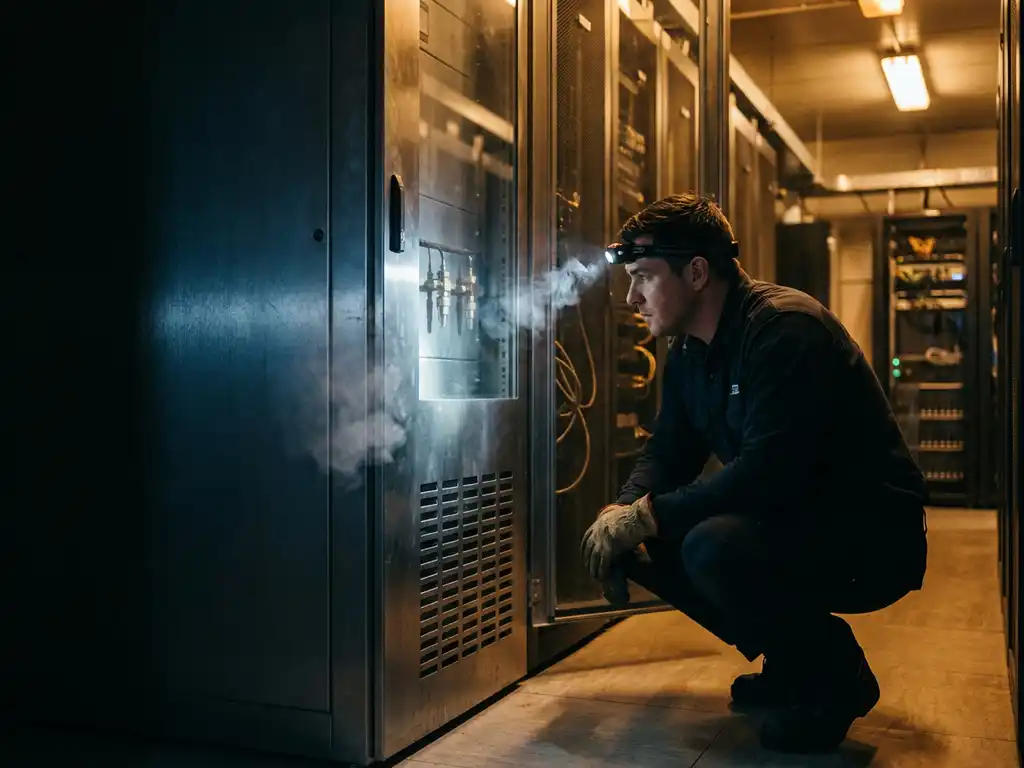
Fire management is important because it protects lives, assets, and business continuity by preventing fires from starting, detecting them early when they do, and suppressing them before they cause serious damage. Without a structured approach to fire risk management, organizations face equipment loss, costly downtime, and safety failures that can have lasting operational and financial consequences. The questions below unpack each dimension of fire management in detail.
What does fire management actually involve?
Fire management is the coordinated set of practices, systems, and protocols an organization uses to identify fire risks, prevent ignition, detect fires at the earliest possible stage, and suppress them effectively when they occur. It combines physical fire protection systems with procedural controls and ongoing risk assessment to keep people, equipment, and facilities safe.
In practice, fire management operates across three distinct layers. The first is prevention, which means identifying and eliminating conditions that could cause a fire to start. The second is detection, which involves continuously monitoring environments so that any sign of combustion, including smoke at concentrations too low for humans to notice, triggers an alert. The third is suppression, where an appropriate agent or system extinguishes the fire before it spreads.
For organizations that rely on mission-critical equipment, fire management also includes business continuity planning. A fire that destroys a server rack or an electrical cabinet does not just cause physical damage; it can halt operations, trigger compliance failures, and generate replacement and recovery costs that far exceed the value of the hardware itself. Effective fire management treats all of these consequences as risks to be managed, not just the fire itself.
What are the biggest risks of inadequate fire management?
The biggest risks of inadequate fire management are uncontrolled equipment loss, prolonged operational downtime, safety hazards to personnel, regulatory non-compliance, and environmental damage from fire suppressants or combustion byproducts. For businesses operating critical infrastructure, any one of these consequences can be severe enough to threaten long-term viability.
Hardware and data loss is one of the most immediate risks. In environments such as data centers, telecommunications facilities, or industrial control rooms, a single fire event can destroy equipment that took years to configure and represents millions in capital investment. Unlike physical structures, the data and operational settings stored on that equipment may be irreplaceable.
Downtime is often the more costly consequence. Every hour a system is offline translates directly into lost revenue, missed service obligations, and damaged customer relationships. In industries with strict uptime requirements, such as healthcare, energy, and financial services, even brief interruptions carry significant penalties.
Regulatory and environmental risks are also growing. Organizations that rely on outdated suppression agents containing PFAS compounds face increasing scrutiny as environmental regulations tighten across Europe and beyond. Inadequate fire management that relies on harmful agents exposes businesses to both environmental liability and reputational damage.
How does early fire detection reduce damage to critical equipment?
Early fire detection reduces damage to critical equipment by identifying the earliest signs of combustion, typically smoke particles at concentrations far below what standard detectors register, and triggering suppression before flames or heat have time to develop. The sooner a fire event is detected, the smaller the suppression response needs to be and the less damage occurs.
Aspirating smoke detection is one of the most effective technologies for this purpose. Rather than waiting for smoke to drift toward a ceiling-mounted detector, aspirating systems actively draw air samples from inside a cabinet or enclosure and analyze them continuously. This means detection can occur within seconds of the first electrical fault or overheating component, long before a visible flame appears.
The difference between detecting a fire at the smoldering stage versus the open-flame stage is significant. At the smoldering stage, a targeted suppression response can protect the affected enclosure while leaving surrounding equipment untouched. At the open-flame stage, the fire has already caused thermal and chemical damage that may be irreversible, and suppression requires far greater intervention.
For sensitive electronics, early detection also means suppression agents can be deployed in a controlled, measured way. When a system responds to early-stage smoke rather than a fully developed fire, less suppression agent is needed, reducing any risk of secondary damage to components from the agent itself.
What types of environments need dedicated fire management systems?
Environments that need dedicated fire management systems are those where standard building-level fire protection is insufficient to protect the specific assets inside them. This includes data centers, server rooms, electrical switchgear cabinets, battery energy storage systems, telecommunications enclosures, industrial control panels, and high-voltage distribution units.
The common factor across all of these environments is that the equipment inside them is either high in value, critical to operations, or both. A general building fire suppression system is designed to protect the structure and its occupants. It is not designed to detect an electrical fault developing inside a sealed cabinet, nor to suppress it without damaging sensitive components in the process.
Battery energy storage systems present a particularly demanding case. BESS installations involve large arrays of lithium-based cells that can experience thermal runaway, a self-sustaining heat and gas-generation process that standard suppression approaches struggle to address effectively. Dedicated object-level fire protection that detects heat and smoke at the source is essential in these environments.
Industrial facilities with high-voltage switchgear face similar challenges. An arc fault or insulation failure inside a cabinet can escalate rapidly. Without a suppression system positioned close to the potential ignition point, the fire can spread to adjacent cabinets and infrastructure before a building-level system even activates.
What’s the difference between fire suppression and fire prevention?
Fire prevention focuses on eliminating conditions that allow fires to start, while fire suppression addresses fires that have already ignited. Prevention is proactive; suppression is reactive. Both are essential components of a complete fire management strategy, and neither is sufficient on its own.
Fire prevention in an industrial or ICT context includes measures such as proper cable management to prevent overheating, regular inspection of electrical connections, temperature monitoring of equipment, and ensuring adequate ventilation inside enclosures. The goal is to reduce the probability that ignition conditions ever develop.
Fire suppression takes over when prevention has not been enough. A suppression system’s role is to extinguish or control a fire quickly, limiting damage and preventing it from spreading. The effectiveness of suppression depends heavily on how quickly it activates, which is why suppression systems are almost always paired with detection systems that can trigger them at the earliest possible moment.
In practice, the line between prevention and suppression is not always sharp. Early smoke detection, for example, can alert operators to an overheating component before any fire has started, enabling them to take preventive action. In this way, a well-designed detection and suppression system contributes to prevention as much as it does to response.
How do you choose the right fire suppression agent for sensitive equipment?
Choosing the right fire suppression agent for sensitive equipment requires selecting an agent that extinguishes fire effectively without causing secondary damage to electronics, leaving chemical residues, or introducing new environmental or safety risks. For most applications involving high-value electronics, inert gases are the preferred choice because they suppress fire by reducing oxygen levels without any chemical reaction with the protected equipment.
The key criteria for evaluating suppression agents in sensitive environments are:
- Residue-free action: Agents that leave chemical or powder residue can damage circuit boards, connectors, and sensitive components, often causing as much harm as the fire itself.
- Non-corrosive properties: Some agents react with metals or coatings under heat, accelerating equipment degradation even after the fire is out.
- Environmental profile: PFAS-containing agents are facing regulatory restrictions in many jurisdictions. Choosing a PFAS-free agent protects both the environment and the organization’s compliance position.
- Storage safety: Highly pressurized agent storage introduces its own risks in confined spaces. Non-pressurized storage options reduce the hazard profile significantly.
- Suitability for enclosed volumes: Agents must be able to reach effective concentrations within the specific volume being protected, whether a single cabinet or a larger interconnected enclosure.
Nitrogen is widely regarded as one of the safest and most effective agents for protecting electronics. It is inert, leaves no residue, causes no chemical damage, and presents no PFAS-related environmental risk. When stored in a non-pressurized solid state and released as a cool gas, it can suppress fires inside sealed enclosures without any of the secondary damage risks associated with chemical agents or high-pressure gas systems.
How ExxFire helps with fire management
ExxFire provides integrated fire detection and suppression systems purpose-built for the environments and challenges described throughout this article. Their approach combines aspirating smoke detection with non-pressurized nitrogen suppression in a single, self-contained unit that protects at the object level, directly at the source of risk.
- Early smoke detection: Aspirating detection identifies fire at the smoldering stage, triggering suppression before flames or heat damage develop.
- Nitrogen-based suppression: The patented Cool Gas Generator releases nitrogen from a solid, non-pressurized state, leaving no chemical residues and causing no secondary damage to electronics.
- PFAS-free and environmentally responsible: ExxFire systems offer a clean alternative to legacy chemical agents, supporting environmental compliance and sustainability goals.
- Easy installation and maintenance-free operation: Systems are pre-engineered for straightforward self-installation, require no ongoing maintenance checks, and can report status to existing fire panels via built-in relays.
- Scalable protection: Units protect enclosures up to 4.5 m³ and can be interconnected in groups of up to eight for larger volumes, covering everything from a single server rack to a full switchgear installation.
- Tested and certified: Systems are validated by CNPP in France and DMT in Germany, part of TÜV Nord, providing independent confirmation of performance.
If you are responsible for protecting mission-critical equipment and want to understand which fire protection system is right for your environment, contact ExxFire directly to discuss your specific application.