

What is the difference between fire prevention and fire protection?
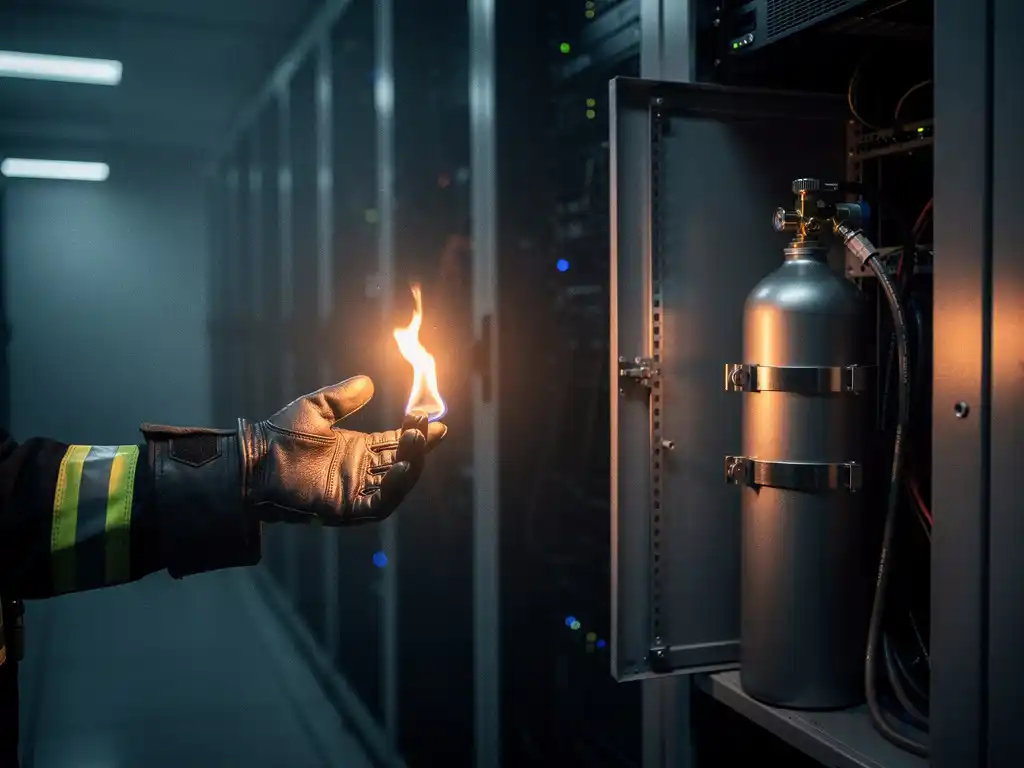
Fire prevention and fire protection are related but distinct concepts in fire safety. Fire prevention focuses on stopping fires from starting in the first place, while fire protection covers the systems, structures, and measures that limit the damage when a fire does occur. Both are essential, and the most effective fire safety strategies combine them.
What does fire prevention actually involve?
Fire prevention refers to proactive measures taken to eliminate or reduce the conditions that allow fires to ignite. The goal is to stop a fire before it starts by removing ignition sources, managing fuel loads, and ensuring safe operating conditions for equipment and processes.
In practice, fire prevention includes a wide range of activities and controls:
- Regular inspection and maintenance of electrical systems, machinery, and heating equipment
- Proper storage and handling of flammable materials
- Staff training on fire hazard awareness and safe working practices
- Housekeeping procedures that prevent the accumulation of combustible waste
- Risk assessments that identify and address potential ignition sources before they become dangerous
Fire prevention is fundamentally about reducing risk at the source. It requires ongoing commitment rather than a one-time installation, making it a continuous operational responsibility rather than a product or system you can simply purchase.
What does fire protection cover that prevention doesn’t?
Fire protection covers the systems, structures, and plans that limit the consequences of a fire once it has started. Where fire prevention aims to stop ignition, fire protection accepts that fires can and do occur, and focuses on containing damage, enabling safe evacuation, and suppressing the fire before it spreads.
Fire protection encompasses two broad categories: active and passive measures. Active protection includes fire detection systems, suppression systems, and sprinklers. Passive protection includes fire-resistant building materials, compartmentalization, and fire doors. Together, these measures define how a building or facility responds to a fire event.
The distinction matters for businesses because prevention alone is never sufficient. Equipment faults, human error, and unforeseen events mean that even well-managed environments face fire risk. Fire protection ensures that when prevention fails, the consequences are controlled and business continuity is preserved.
What is the difference between active and passive fire protection?
Active fire protection requires a triggered response to a fire, either automatically or manually. Passive fire protection works continuously without activation, using physical building elements to slow fire spread and maintain structural integrity.
Active fire protection
Active systems detect and respond to fire. Examples include smoke detectors, heat sensors, fire alarm panels, sprinkler systems, and gas suppression systems. These systems either alert occupants, alert the fire service, or directly suppress the fire. Their effectiveness depends on correct installation, regular testing, and reliable triggering under real fire conditions.
Passive fire protection
Passive protection is built into the fabric of a building. Fire-resistant walls, floors, and ceilings, fire doors, intumescent seals around cable penetrations, and compartmentalization all fall under this category. These elements do not respond to fire; they simply slow its progression and contain it to a defined area, buying time for evacuation and active suppression to take effect.
In a comprehensive fire safety strategy, active and passive protection work together. Passive measures contain the fire while active systems detect and suppress it. Neither is a substitute for the other.
How does early fire detection fit into a fire protection strategy?
Early fire detection is the trigger point for the entire active fire protection response. The sooner a fire is detected, the sooner suppression can begin, the less damage occurs, and the greater the chance of protecting both people and assets. Detection is not optional; it is the foundation on which every other active protection measure depends.
Modern detection technologies go well beyond traditional heat or optical smoke detectors. Aspirating smoke detection, for example, continuously samples air from within an enclosure and can identify combustion particles at concentrations far below what conventional detectors can sense. This allows a suppression response to begin at the earliest possible stage, often before visible flames develop.
For businesses protecting mission-critical equipment such as server racks, switchgear cabinets, or battery energy storage systems, early detection is especially important. A fire that is caught at the smoldering stage causes far less hardware damage and downtime than one that is detected only after flames have spread. Integrating detection directly with suppression, rather than relying on two separate systems, further reduces response time and eliminates the coordination gap between alarm and action.
Should businesses prioritize fire prevention or fire protection?
Businesses should invest in both, but they serve different purposes and neither can substitute for the other. Fire prevention reduces the likelihood of a fire starting; fire protection limits the consequences when one does. A strategy built on prevention alone is vulnerable to the unexpected, while protection without prevention accepts unnecessary risk.
In practice, the balance depends on the nature of the risk. In environments with high electrical loads, dense cabling, or lithium-ion battery systems, the ignition risk is inherent to the technology itself and cannot be fully eliminated through prevention. In these settings, robust fire protection, particularly early detection and targeted suppression, becomes the more critical investment.
For most businesses, the right approach is to use prevention to reduce frequency and protection to reduce severity. A thorough fire risk assessment will identify where each type of measure delivers the most value, and where gaps in the current setup leave assets or operations exposed.
What fire safety regulations require businesses to have in place?
Fire safety regulations vary by country and sector, but most jurisdictions require businesses to conduct fire risk assessments, maintain means of escape, install appropriate detection and alarm systems, and keep records of inspections and maintenance. In many countries, these requirements are backed by legal obligations that place responsibility directly on the business owner or facility manager.
In the European Union, the regulatory landscape is shaped by national building codes and workplace safety directives. Businesses operating in sectors such as energy storage, healthcare, data infrastructure, and industrial manufacturing often face additional sector-specific requirements on top of general fire safety law. Increasing regulatory pressure around PFAS-containing substances is also reshaping which suppression technologies are considered compliant, pushing organizations toward inert gas and other clean agent alternatives.
Key areas that regulations typically address include:
- Fire risk assessment documentation and review cycles
- Detection and alarm system installation and testing standards
- Suppression system requirements for specific occupancy types or hazard classes
- Staff training and emergency procedure documentation
- Compliance with product standards for installed fire safety equipment
Staying compliant requires more than a one-time installation. Regulations evolve, and businesses that rely on older suppression technologies may find themselves facing non-compliance as standards tighten, particularly around environmental impact and chemical safety.
How ExxFire supports your fire prevention and protection strategy
ExxFire provides integrated fire detection and suppression systems designed specifically for the environments where early intervention matters most. The systems combine aspirating smoke detection with non-pressurized nitrogen gas suppression, delivering a coordinated response that stops fires at the smoldering stage before hardware damage or downtime can occur.
Key features that make ExxFire systems effective across both fire detection and suppression requirements:
- Aspirating smoke detection that identifies combustion particles at very early stages, long before conventional detectors would trigger
- Nitrogen gas suppression that leaves no chemical residue, protecting sensitive electronics and eliminating the risk of secondary damage to hardware
- PFAS-free technology that meets current and emerging environmental regulations without compromising suppression performance
- Pre-engineered systems for closed enclosures such as server racks, switchgear cabinets, and battery energy storage systems, with easy self-installation and low ongoing maintenance
- TÜV Nord and CNPP-certified performance, giving procurement managers and safety officers the documentation they need for compliance and procurement approval
- Built-in relay outputs that connect to existing fire panels, ensuring the system integrates with your current fire safety infrastructure
Whether you are protecting a single electrical cabinet or a large-scale BESS installation, ExxFire’s systems are designed to close the gap between detection and suppression, keeping your critical assets protected and your operations running. Contact ExxFire to discuss the right fire protection solution for your environment.