

What is the purpose of fire management?
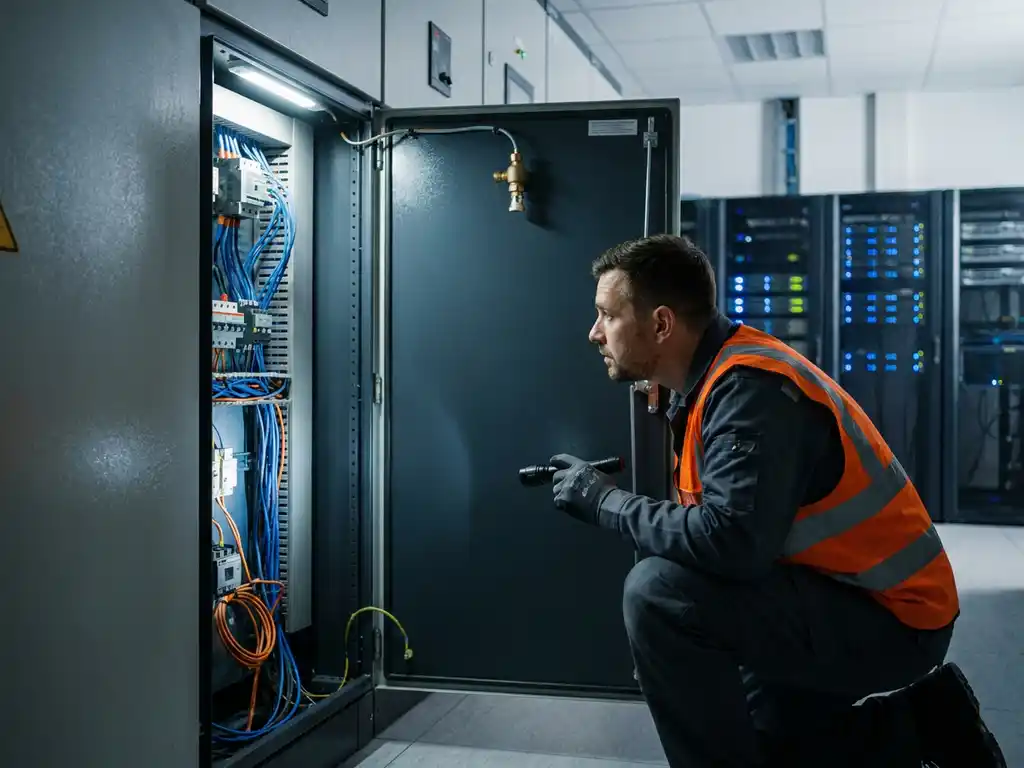
The purpose of fire management is to protect lives, assets, and operational continuity by systematically detecting, containing, and suppressing fire before it causes irreversible harm. It combines prevention strategies, early detection technologies, and suppression methods into a coordinated approach that reduces both the likelihood and the impact of fire incidents. The sections below unpack the key questions that define fire management in practice.
How does fire management protect people and assets?
Fire management protects people and assets by creating layered defenses that interrupt a fire at the earliest possible stage. Rather than waiting for a fire to grow uncontrolled, a well-designed fire management strategy detects heat or smoke at the source, triggers suppression automatically, and limits the spread of damage to the immediate area. This protects personnel through early warning and protects assets by containing fire before it escalates.
For physical assets, the protection logic is straightforward: the sooner a fire is detected and suppressed, the less damage occurs. In environments housing sensitive electronics, server racks, or high-voltage switchgear, even a small fire can destroy irreplaceable hardware and trigger costly downtime. Effective fire management reduces both the direct cost of damage and the indirect cost of operational disruption.
For people, fire management works through a combination of detection alerts, evacuation systems, and suppression agents that reduce toxic smoke and heat. The goal is to give occupants enough time to exit safely while limiting the conditions that make a fire life-threatening.
What are the main components of a fire management system?
A fire management system consists of four core components: detection, alerting, suppression, and monitoring. These components work together as an integrated system, with each layer reinforcing the others to ensure that a fire is identified, communicated, and controlled as quickly as possible.
- Fire detection: Sensors, smoke detectors, or aspirating detection systems that identify the presence of smoke, heat, or combustion gases at the earliest stage.
- Alerting and notification: Alarms, control panels, and relay outputs that communicate the fire event to occupants, operators, and connected building management systems.
- Suppression: The mechanism that extinguishes or controls the fire, ranging from sprinkler systems to gaseous suppression agents deployed directly at the source.
- Monitoring and reporting: Ongoing status reporting that confirms system readiness, flags faults, and logs activation events for compliance and review purposes.
In modern fire safety applications, these components are increasingly delivered as a single integrated unit. Combined detection and suppression systems, for example, embed all four functions into one device designed to protect a specific enclosure or piece of equipment, reducing complexity and installation time.
What is the difference between fire prevention and fire suppression?
Fire prevention focuses on eliminating the conditions that allow a fire to start, while fire suppression focuses on extinguishing a fire that has already ignited. Prevention is proactive; suppression is reactive. Both are essential elements of a complete fire risk management strategy, but they operate at different stages of the fire lifecycle.
Fire prevention includes measures such as proper cable management to avoid heat buildup, regular inspection of electrical equipment, separation of flammable materials, and staff training on fire hazards. The objective is to reduce ignition risk before any fire event occurs.
Fire suppression, by contrast, is the response mechanism that activates once a fire has been detected. Suppression systems deliver an extinguishing agent, whether water, foam, gas, or inert nitrogen, to the fire source to reduce heat, displace oxygen, or chemically interrupt combustion. In mission-critical environments, suppression systems are designed to act automatically and rapidly, minimizing the window between ignition and control.
The distinction matters for planning: organizations that rely only on suppression without investing in prevention face a higher ignition frequency, while those that invest only in prevention without suppression have no fallback when prevention measures fail.
Why is early fire detection critical in mission-critical environments?
Early fire detection is critical in mission-critical environments because the window between ignition and serious damage is extremely short. In enclosed spaces housing electronics, batteries, or high-voltage equipment, a fire can destroy hardware within seconds and trigger cascading failures across connected systems. Detecting fire at the smoke stage, before open flames develop, is the difference between a contained incident and a total loss.
Standard point detectors respond to smoke or heat once it reaches a sensor. In tightly packed enclosures such as server racks or electrical cabinets, this can already mean significant internal damage has occurred. Aspirating smoke detection addresses this by continuously drawing air samples from within the protected space and analyzing them for trace combustion particles, identifying a developing fire far earlier than conventional detectors.
The business case for early detection is equally strong. Hardware replacement, data recovery, regulatory reporting, and operational downtime all carry substantial costs. Early detection paired with automatic suppression limits the damage radius, reduces recovery time, and preserves business continuity in a way that late-stage detection simply cannot.
What types of fire suppression agents are used in fire management?
Fire suppression agents used in fire management include water, foam, dry chemical powder, CO2, clean agent gases, and inert gases such as nitrogen. The choice of agent depends on the type of fire hazard, the sensitivity of the protected environment, and environmental compliance requirements. For electronics and mission-critical equipment, non-damaging, residue-free agents are strongly preferred.
- Water and foam: Effective for general fire risks but damaging to electronics and unsuitable for electrical hazards.
- CO2: Displaces oxygen to suppress fire but requires full room flooding and poses a risk to occupants if used in occupied spaces.
- Clean agent gases (HFCs, FKs): Effective and fast-acting, but many contain PFAS compounds, raising environmental and regulatory concerns as restrictions tighten globally in 2026.
- Inert gases (nitrogen, argon, IG-541): Naturally occurring gases that reduce oxygen concentration below the combustion threshold. They leave no chemical residues, cause no damage to sensitive equipment, and carry no environmental liability.
The shift away from PFAS-containing agents is accelerating as regulatory frameworks tighten across Europe and beyond. Nitrogen-based suppression represents the leading PFAS-free alternative, combining clean extinguishing performance with full compatibility for electronics-rich environments.
How does fire management support business continuity?
Fire management supports business continuity by minimizing the duration and severity of fire-related disruptions. When detection and suppression systems respond automatically at the source of a fire, they limit hardware damage, preserve data integrity, reduce repair costs, and allow operations to resume faster than would be possible after an uncontrolled fire event.
For organizations where downtime carries direct financial, reputational, or regulatory consequences, fire management is not a peripheral safety measure but a core operational risk control. A fire that destroys a switchgear cabinet, a battery energy storage system, or a server rack can halt production lines, disable communications infrastructure, or interrupt power supply for hours or days.
Object-level fire protection, which secures individual cabinets or enclosures rather than relying solely on room-level systems, adds a critical layer of resilience. By suppressing a fire at its origin before it spreads to adjacent equipment, object protection limits the blast radius of any incident and keeps surrounding infrastructure operational.
Fire risk management also supports continuity indirectly through compliance. Many industries require documented fire protection measures as a condition of insurance, certification, or operational licensing. Meeting these requirements through certified, tested systems reduces legal exposure and ensures that business operations remain uninterrupted by regulatory intervention.
How ExxFire supports fire management for critical environments
ExxFire delivers integrated fire detection and suppression systems purpose-built for the environments where fire management matters most. For organizations protecting server racks, electrical cabinets, battery energy storage systems, and other mission-critical enclosures, ExxFire’s approach addresses every dimension of effective fire management:
- Early detection: Aspirating smoke detection identifies combustion at the pre-flame stage, providing the earliest possible warning inside closed enclosures.
- Automatic suppression: The patented Cool Gas Generator releases non-pressurized nitrogen gas directly at the fire source, extinguishing it without water, foam, or PFAS-containing agents.
- No residue, no damage: Nitrogen leaves no chemical residue, ensuring sensitive electronics and components remain undamaged after suppression.
- Easy installation and low maintenance: Systems are pre-engineered for self-installation without special certification, and require no ongoing maintenance once commissioned.
- System integration: Built-in relays report system status directly to existing fire panels, fitting seamlessly into broader fire safety infrastructure.
- Certified and tested: All systems are tested and certified by CNPP in France and DMT in Germany, part of TÜV Nord.
Whether you are upgrading from a PFAS-containing system, protecting a new installation, or building a fire risk management strategy from the ground up, ExxFire provides a clean, certified, and low-maintenance solution. Contact ExxFire to discuss the right fire management system for your environment.
Related Articles
- How do you communicate fire risks to employees effectively?
- How do you test a fire suppression system for regulatory compliance?
- What are PFAS chemicals in fire extinguishing systems?
- How does ESG compliance affect fire protection decisions in 2026?
- Are traditional fire suppression agents harmful to the environment?