

What role does human error play in fire risk?
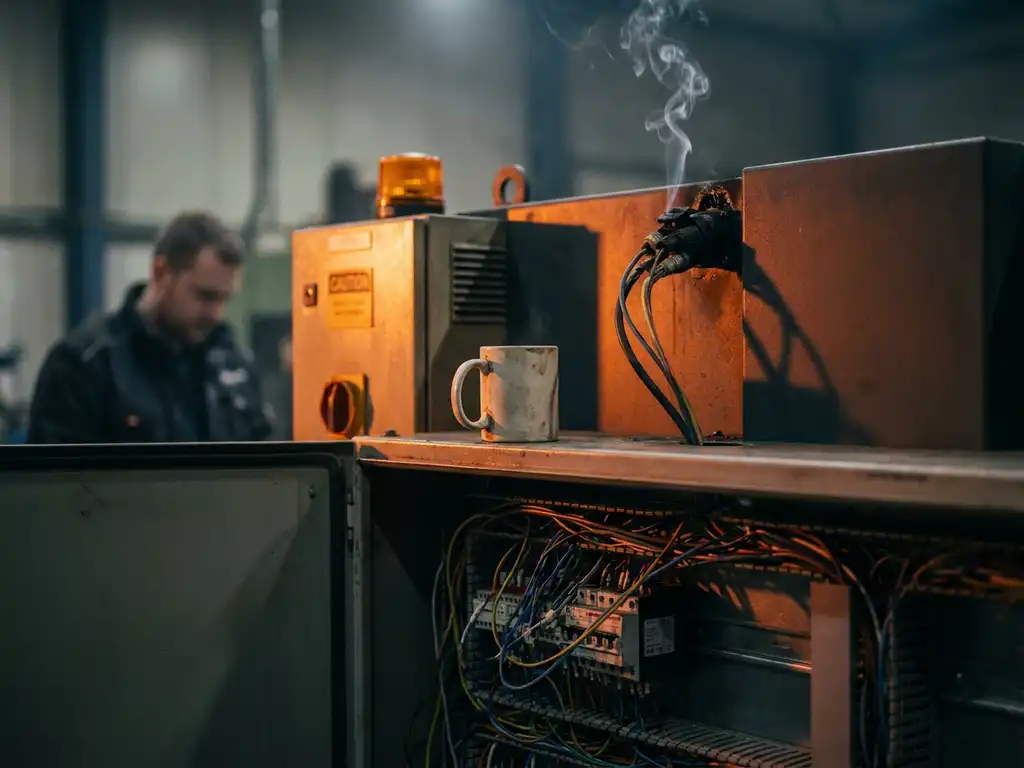
Human error is one of the leading causes of workplace fires, responsible for a significant share of fire incidents across industries worldwide. Mistakes in how people handle equipment, follow procedures, or maintain electrical systems create conditions where fires can ignite and spread. Understanding where these errors occur and why they happen is the first step toward meaningful fire risk management.
What types of human error most commonly cause fires?
The most common types of human error that cause fires include improper use of electrical equipment, neglecting maintenance schedules, mishandling flammable materials, and ignoring early warning signs. These errors are not limited to careless workers – they occur across all levels of an organization and in virtually every industry that relies on powered equipment or complex infrastructure.
Electrical misuse is consistently among the top contributors to fire risk. This includes overloading circuits, using damaged cables, and leaving equipment running unattended for extended periods. In environments with server racks, switchgear, or battery systems, even a single overlooked fault can create conditions for thermal runaway or electrical arcing.
Maintenance-related errors are equally significant. When routine inspections are skipped or deferred, small faults accumulate. A loose connection that would have been caught during a scheduled check can quietly deteriorate into a fire hazard. The same applies to improper storage of combustible materials near heat sources, which is a straightforward but frequently overlooked fire safety mistake.
Finally, inadequate response to early warnings plays a major role. Smoke alarms that are ignored, fault indicators that go unreported, or temporary fixes that become permanent all represent human decisions that elevate fire risk over time.
How does human error compare to other leading causes of fire?
Human error is consistently ranked alongside electrical faults and arson as one of the primary causes of fire in commercial and industrial settings. While spontaneous combustion and equipment failure do occur independently, the majority of fire incidents involve a human decision or omission somewhere in the chain of events – making human error a cross-cutting factor in most fire risk causes.
Electrical fires, for example, are often categorized separately from human error, yet the root cause frequently traces back to a person: an engineer who bypassed a safety protocol, a facilities manager who delayed replacing aging wiring, or an installer who made a connection incorrectly. In this sense, human error amplifies the risk associated with other fire causes rather than sitting alongside them as a fully independent category.
This overlap is important for fire risk management. Organizations that focus only on equipment upgrades without addressing human behavior and procedural compliance are addressing symptoms rather than root causes.
Which environments carry the highest human error fire risk?
Environments with complex electrical infrastructure, high equipment density, and time-pressured operations carry the highest human error fire risk. Data centers, industrial manufacturing facilities, energy storage installations, and telecommunications infrastructure are particularly exposed because they combine high-value equipment with operational complexity and frequent human interaction.
In data centers, technicians regularly work inside active racks and cabinets, creating opportunities for accidental disconnections, improper cable management, and overlooked heat buildup. In manufacturing environments, workers interact with high-voltage switchgear and power distribution units under production pressure, where shortcuts in procedure become more likely.
Battery Energy Storage Systems (BESS) represent a growing area of concern. As these installations scale up to support renewable energy grids, the risk of thermal events triggered by human error during installation, commissioning, or maintenance increases proportionally. Healthcare and pharmaceutical facilities also carry elevated risk because their sensitive environments demand precise equipment handling that leaves little margin for error.
Why do trained workers still make fire-risk mistakes?
Trained workers still make fire-risk mistakes because training addresses knowledge gaps but does not eliminate the behavioral and organizational factors that drive errors. Fatigue, time pressure, distraction, and normalization of deviance – where small rule violations become routine because nothing has gone wrong yet – are all well-documented contributors to workplace fire safety mistakes that persist even in experienced teams.
Normalization of deviance is particularly insidious. When a worker bypasses a safety step repeatedly without incident, the behavior gradually becomes accepted as normal. Over time, the team’s collective risk tolerance rises, and the gap between written procedure and actual practice widens. By the time a fire occurs, the deviation has been standard practice for months or years.
Cognitive overload is another factor. In complex environments where workers manage multiple systems simultaneously, attention is finite. A technician focused on resolving a network fault may not register an abnormal temperature reading on a nearby cabinet. This is not negligence – it is a predictable outcome of working in high-demand environments without adequate support systems in place.
Organizations that treat fire prevention as a one-time training event rather than an ongoing operational discipline will continue to see human error drive fire risk regardless of how qualified their staff are.
How can organizations reduce human error fire risk?
Organizations can reduce human error fire risk by combining procedural controls, environmental design, and automated detection systems that do not rely on human vigilance to function. No single measure eliminates human error entirely, but layering complementary approaches significantly reduces the likelihood and impact of fire-risk mistakes in the workplace.
- Standardize procedures: Written, step-by-step protocols for high-risk tasks reduce reliance on individual judgment and create accountability checkpoints.
- Build in redundancy: Design systems so that a single human error does not directly produce a catastrophic outcome. Physical safeguards, interlocks, and automatic shutoffs absorb individual mistakes.
- Conduct regular audits: Periodic reviews of actual working practices against documented procedures reveal where normalization of deviance has taken hold before a fire incident exposes it.
- Invest in early detection: Automated smoke and heat detection systems that alert operators to developing risks before flames appear give organizations time to respond – even when human attention is elsewhere.
- Foster a reporting culture: Workers who feel safe reporting near-misses and minor faults provide organizations with early warning signals. Penalizing error reporting drives risk underground.
- Reduce maintenance burden: Systems that require minimal ongoing intervention reduce the number of opportunities for maintenance-related errors to occur.
What happens when human error triggers a fire in mission-critical equipment?
When human error triggers a fire in mission-critical equipment, the consequences extend well beyond the immediate physical damage. Server racks, switchgear cabinets, battery storage systems, and high-voltage infrastructure can be destroyed within minutes, taking with them the data, power distribution, or operational capacity they supported. Downtime in these environments is rarely measured in hours – it can extend to days or weeks depending on the complexity of replacement and reconfiguration.
The financial impact compounds quickly. Hardware replacement costs are significant, but the indirect costs – lost productivity, regulatory penalties, reputational damage, and potential liability – often exceed the direct losses. For organizations operating in sectors like healthcare, finance, or energy, a fire in a critical system can trigger cascading failures across interconnected infrastructure.
There is also the question of irreversibility. Unlike many operational disruptions, fire damage to sensitive electronics is often permanent. Even equipment that survives a fire event may be compromised by smoke, heat, or suppression agent residues, requiring full replacement rather than repair. This makes the case for prevention and early suppression far stronger than relying on post-fire recovery.
The closer fire suppression is deployed to the potential source of ignition, the smaller the damage radius when human error does occur. Object-level protection – securing the equipment itself rather than relying solely on room-level systems – is the most direct way to limit the impact of a fire triggered by a human mistake.
How ExxFire helps reduce the consequences of human error fire risk
ExxFire’s integrated fire detection and suppression systems are designed specifically to protect mission-critical equipment at the object level, providing a reliable safety layer that operates independently of human vigilance. For organizations where human error fire risk is a genuine operational concern, ExxFire offers a practical and proven solution.
- Early smoke detection: Aspirating smoke detection identifies developing fires at the earliest possible stage, before flames take hold – giving organizations time to respond even when human attention has been elsewhere.
- Automatic suppression: Non-pressurized nitrogen gas suppression activates without requiring human intervention, ensuring that a fire triggered by human error is contained before it spreads.
- No chemical residues: Nitrogen leaves no residue on sensitive electronics, meaning suppression does not compound the damage caused by the initial fault.
- Maintenance-free operation: Once installed and commissioned, ExxFire systems require no further maintenance or check-ups, eliminating an entire category of maintenance-related human error.
- Easy installation: Systems are pre-engineered for self-installation without special certification, reducing the risk of installation errors that could compromise protection.
- PFAS-free and environmentally responsible: ExxFire’s patented technology offers a clean alternative to legacy suppression agents, supporting compliance and sustainability goals.
For organizations looking to strengthen their fire risk management strategy, ExxFire’s fire suppression systems provide a reliable, low-maintenance layer of protection that works even when human error occurs. Contact ExxFire to find out how object-level protection can be integrated into your existing infrastructure.
Related Articles
- What are the fire risks during building renovation or construction?
- What are the biggest challenges in modern fire management?
- What are the most common fire safety standard violations in industry?
- How do wildfires start and what can homeowners do to prevent them?
- How does inert gas fire suppression work?