

Why is fire prevention important in the workplace?
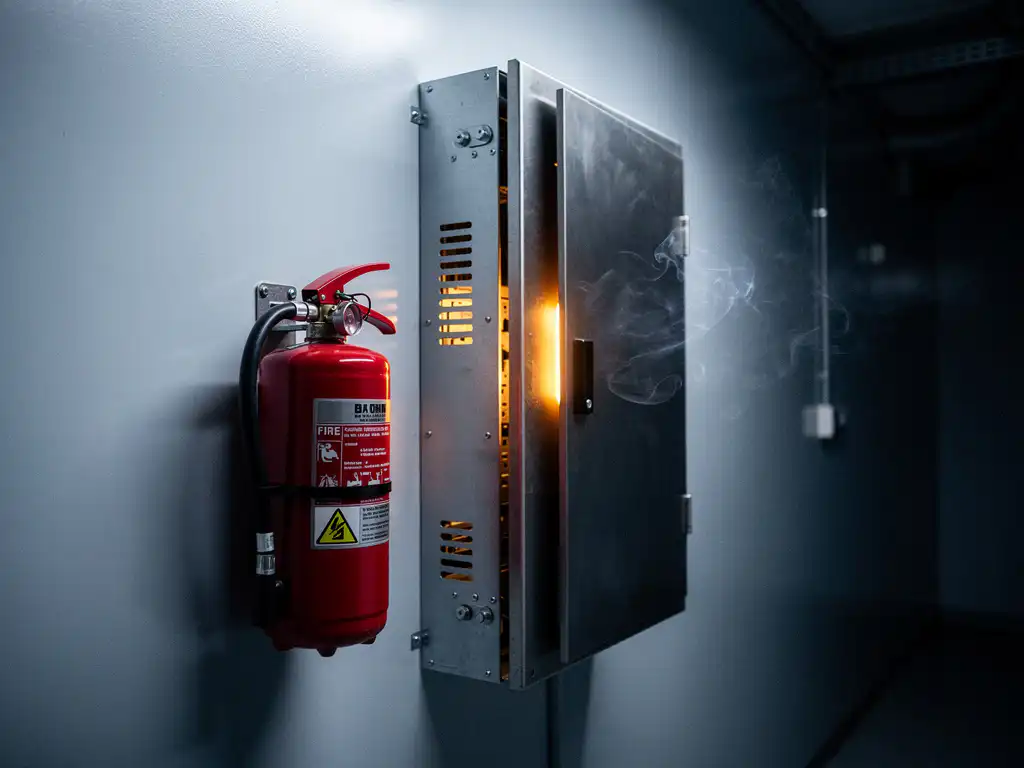
Fire prevention in the workplace is important because it protects employees from injury, prevents costly damage to equipment and facilities, and ensures business operations continue without interruption. Every year, workplace fires cause significant harm that is largely preventable through proper planning, early detection, and the right suppression measures. The questions below unpack the most critical aspects of workplace fire safety, from identifying hazards to choosing the right protection for sensitive equipment.
What are the most common causes of workplace fires?
The most common causes of workplace fires include electrical faults, overheating equipment, flammable materials stored improperly, and human error. Electrical issues alone account for a substantial share of workplace fire incidents, making regular inspection and maintenance of electrical infrastructure one of the most effective fire prevention measures an organization can take.
Understanding where fire hazards at work originate helps organizations prioritize their risk management efforts. The most frequently identified causes include:
- Electrical faults and overloaded circuits in switchgear cabinets, server racks, and industrial machinery
- Overheating equipment, particularly in data centers, battery energy storage systems, and high-voltage enclosures
- Improper storage of flammable or combustible materials near heat sources
- Human error, including negligent use of heating devices or failure to follow safety protocols
- Arson and deliberate ignition, which remains a risk in unsecured or poorly monitored facilities
In environments where mission-critical equipment operates continuously, even a minor electrical fault can escalate rapidly. Switchgear cabinets and battery systems are particularly vulnerable because they generate heat during normal operation and are often enclosed, which can accelerate fire development if a fault goes undetected.
What are the consequences of a workplace fire?
The consequences of a workplace fire range from immediate physical harm to employees to long-term financial and reputational damage for the organization. Beyond the immediate emergency, the downstream effects of a fire can threaten business continuity for weeks or months, especially when critical infrastructure is destroyed.
The most serious consequences include:
- Injury and loss of life among employees, contractors, or emergency responders
- Destruction of equipment and assets, including servers, electrical systems, and production machinery
- Operational downtime, which can be catastrophic for organizations dependent on continuous processes
- Financial losses from hardware replacement, facility repair, and lost productivity
- Regulatory and legal consequences if fire safety obligations were not met
- Reputational damage affecting client trust and stakeholder confidence
For industries such as data hosting, telecommunications, healthcare, and energy, even a brief outage caused by fire damage can translate into significant contractual penalties and loss of customer trust. The importance of fire prevention in the workplace is therefore not just a matter of compliance but a core element of operational resilience.
What does fire prevention in the workplace actually involve?
Fire prevention in the workplace involves identifying and reducing fire hazards, establishing clear emergency procedures, maintaining fire safety equipment, and training staff to respond appropriately. It is an ongoing process rather than a one-time action, requiring regular review as equipment, personnel, and processes change.
Effective workplace fire prevention typically includes the following elements:
- Fire risk assessments conducted regularly to identify hazards and evaluate existing controls
- Housekeeping practices that prevent the accumulation of combustible materials
- Maintenance of electrical systems to prevent faults and overloads
- Installation and testing of fire detection systems appropriate to the environment
- Fire suppression systems positioned at the most likely points of ignition
- Staff training and fire drills to ensure everyone knows how to respond
- Clear evacuation routes and signage maintained and unobstructed at all times
Prevention is most effective when it is layered. No single measure eliminates all risk, but combining early detection, suppression capability, and well-trained staff creates a robust defense against workplace fire risk.
What legal obligations do employers have for fire safety?
Employers are legally required to assess fire risks in their workplace, implement appropriate prevention and protection measures, and ensure employees are informed and trained on fire safety procedures. The specific regulations vary by country, but the underlying obligations are broadly consistent across most jurisdictions.
In the European Union and the United Kingdom, employers must comply with fire safety legislation that mandates:
- Conducting and documenting a fire risk assessment
- Implementing fire prevention measures identified through that assessment
- Providing adequate fire detection and warning systems
- Ensuring means of escape are maintained and clearly marked
- Appointing a responsible person for fire safety management
- Training employees on fire safety procedures and evacuation plans
Failure to meet these obligations can result in enforcement action, fines, and, in serious cases, criminal prosecution. Beyond legal compliance, organizations increasingly face pressure from insurers and clients to demonstrate that fire safety regulations are being actively followed and that fire prevention measures are current and effective.
In 2026, regulatory scrutiny around fire safety is also expanding to cover specific technologies. The phase-out of PFAS-containing substances under EU chemical regulation is pushing organizations to review whether their existing fire suppression systems contain restricted compounds and to consider compliant alternatives.
How does early fire detection prevent major workplace damage?
Early fire detection prevents major workplace damage by identifying smoke or heat at the earliest possible stage, before a fire has the chance to grow and spread. The faster a fire is detected, the more time there is to suppress it at the source, protecting equipment, limiting structural damage, and keeping personnel safe.
In environments with high-value or sensitive equipment, the difference between early and late detection can mean the difference between a contained incident and a total loss. Traditional smoke detectors respond to visible smoke, which may only appear once a fire has already developed significantly. More advanced systems, such as aspirating smoke detection, draw air samples continuously and can identify smoke particles at concentrations far below what triggers a conventional detector.
Early detection delivers several critical advantages:
- Suppression can be triggered automatically at the point of origin, before fire spreads beyond the enclosure
- Emergency services can be alerted sooner, reducing response time
- Personnel can be evacuated before conditions become dangerous
- Damage is contained to a smaller area, reducing repair costs and downtime
In enclosed environments such as electrical cabinets or server racks, early detection is especially critical. These enclosures can trap heat and accelerate fire development, meaning that a fault left undetected for even a short period can cause irreversible damage to hardware worth tens of thousands of euros.
What fire suppression methods are best for protecting sensitive equipment?
The best fire suppression methods for protecting sensitive equipment are clean agent or inert gas systems that extinguish fire without leaving chemical residues or causing water or foam damage. For electronics, electrical cabinets, and battery systems, gaseous suppression is strongly preferred over conventional sprinkler or powder-based systems.
Water-based suppression systems are unsuitable for most sensitive electronic environments because water causes immediate and often irreparable damage to components. Powder systems are similarly problematic, leaving residues that contaminate equipment and require extensive cleaning before systems can be restored. The ideal suppression method for mission-critical environments must be:
- Residue-free, leaving no chemical or physical contamination on electronics
- Non-conductive, so it can be applied while equipment may still be energized
- Environmentally acceptable, avoiding substances subject to regulatory restriction
- Targeted, suppressing fire at the source rather than flooding an entire room
Inert gases such as nitrogen are particularly well-suited to these requirements. Nitrogen is non-toxic, leaves no residue, and does not damage electronics or other sensitive components. It is also free from PFAS and other restricted substances, making it a compliant and future-proof choice as fire safety regulations tighten.
How ExxFire helps protect workplaces from fire damage
ExxFire provides combined fire detection and suppression systems specifically engineered for the environments where conventional fire protection falls short. For organizations protecting switchgear cabinets, server racks, ICT enclosures, battery energy storage systems, and other mission-critical equipment, ExxFire’s approach addresses both detection and suppression within a single integrated solution.
Key features of ExxFire’s systems include:
- Aspirating smoke detection that identifies smoke at the earliest stage, long before conventional detectors would trigger
- Non-pressurized nitrogen gas suppression via the patented Cool Gas Generator technology, which leaves no residue and causes no damage to sensitive electronics
- PFAS-free inert gas, making it a compliant alternative to chemical suppression systems under current and upcoming EU regulations
- Pre-engineered design for easy self-installation inside closed enclosures up to 4.5 m³, with units interconnectable for larger volumes
- Built-in relay output for seamless integration with existing fire panels and building management systems
- Certification by CNPP France and DMT (TÜV Nord), ensuring independently validated performance
With over 500 systems installed across 40 countries and clients including Novartis, Siemens, and the European Space Operations Centre, ExxFire has a proven track record in protecting high-value assets and ensuring business continuity. If your organization is reviewing its fire suppression approach or looking to replace PFAS-containing systems with a cleaner, certified alternative, contact ExxFire to discuss the right solution for your environment.
Related Articles
- How does fire management support water catchment protection?
- What are the fire detection standards for telecom infrastructure in 2026?
- How does a smoke detector help prevent fire deaths?
- What are the most effective fire prevention habits for families?
- How does nitrogen fire suppression compare to traditional sprinkler systems?