

What is global warming potential in fire suppression?
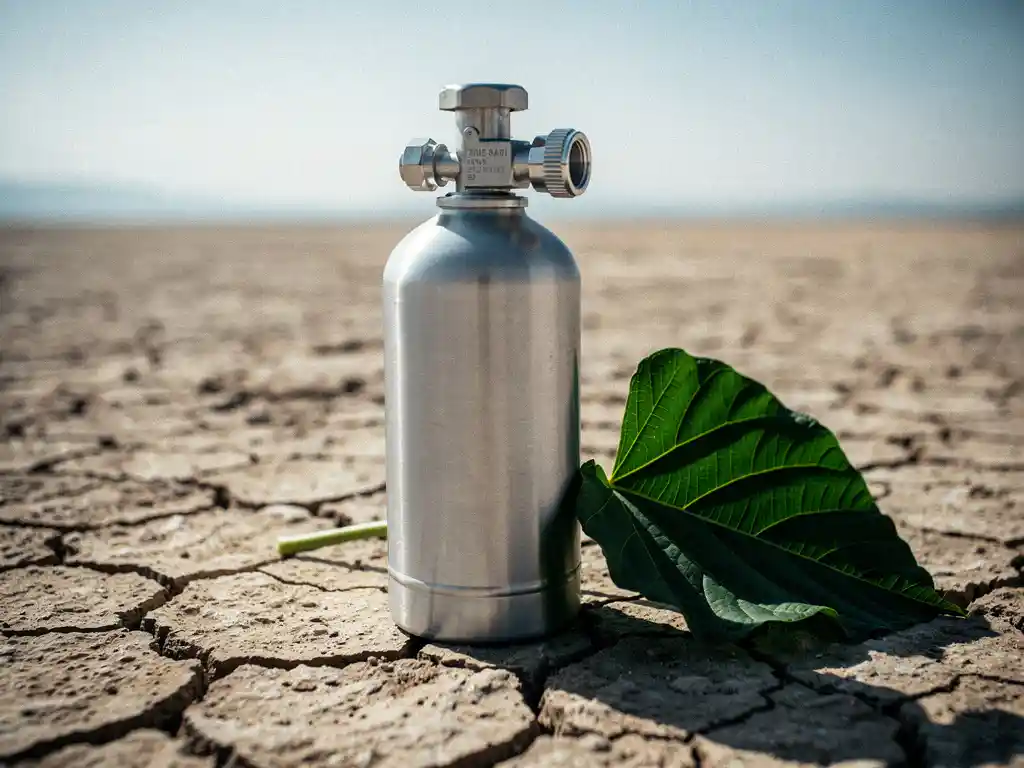
Global warming potential (GWP) in fire suppression refers to how much a suppression agent contributes to atmospheric warming relative to carbon dioxide over a defined time period, typically 100 years. In fire safety, GWP is a critical environmental metric because many traditional chemical suppression agents are potent greenhouse gases that persist in the atmosphere long after release. This article unpacks how GWP is measured, which agents carry the highest impact, and how to make smarter, greener choices when selecting a fire suppression system.
How is global warming potential measured in fire suppression agents?
Global warming potential is measured by comparing how much heat a substance traps in the atmosphere over 100 years relative to carbon dioxide, which is assigned a baseline GWP of 1. A fire suppression agent with a GWP of 2,000, for example, traps 2,000 times more heat per kilogram than CO2 over that same period. The higher the number, the greater the long-term climate impact.
For fire suppression agents specifically, GWP is assessed at the point of discharge. Even a single activation event releases the full charge of the agent into the atmosphere, making the per-kilogram GWP figure highly relevant. Regulatory bodies and environmental agencies use GWP values alongside other factors such as atmospheric lifetime and ozone depletion potential to classify agents and determine whether their use should be restricted or phased out.
It is worth noting that GWP is not the only environmental metric. Ozone depletion potential (ODP), toxicity, and the presence of persistent chemicals like PFAS are equally important considerations when evaluating the full environmental footprint of a suppression agent.
Which fire suppression agents have the highest GWP?
Hydrofluorocarbons (HFCs) and perfluorocarbons (PFCs) used in clean agent fire suppression systems carry some of the highest GWP values in the industry. Agents such as HFC-227ea (FM-200) have a GWP of around 3,220, while HFC-125 reaches approximately 3,500. FK-5-1-12 (Novec 1230) has a lower GWP of around 1, but has faced scrutiny due to PFAS classification concerns.
Halon, which was widely used before international bans, had a GWP of around 7,140 and an extremely high ozone depletion potential. While halon is now prohibited under the Montreal Protocol in most applications, legacy systems still exist in some facilities. The continued use of HFC-based alternatives has drawn increasing regulatory attention precisely because their GWP values remain significantly elevated compared to inert gas alternatives.
What regulations restrict high-GWP fire suppression gases?
The primary regulatory framework restricting high-GWP fire suppression gases is the EU F-Gas Regulation, which progressively phases down the use of fluorinated greenhouse gases across Europe. Under this regulation, substances with a GWP above 2,500 are already banned in many new applications, and the phase-down schedule continues to tighten. Similar frameworks exist in other regions, including the US EPA’s Significant New Alternatives Policy (SNAP) program.
The Kigali Amendment to the Montreal Protocol, which entered into force in 2019, extended international climate commitments to cover HFCs globally, accelerating the transition away from high-GWP agents in countries that have ratified it. In 2026, regulatory pressure continues to intensify, with the revised EU F-Gas Regulation pushing organizations to audit their existing suppression infrastructure and transition to compliant alternatives ahead of upcoming deadlines.
Beyond climate regulations, PFAS restrictions under the EU’s REACH regulation and national chemical legislation are increasingly affecting fire suppression agents classified as per- or polyfluoroalkyl substances. Organizations that rely on PFAS-containing agents face not only environmental liability but also growing compliance risk as these substances are targeted for phase-out.
What is the difference between inert gas and chemical suppression agents in terms of GWP?
Inert gas fire suppression agents have a GWP of zero. Gases such as nitrogen, argon, and carbon dioxide are naturally occurring atmospheric components that do not contribute to greenhouse warming when released. Chemical suppression agents, by contrast, are synthesized compounds that can carry GWP values ranging from a few hundred to several thousand times that of CO2.
This distinction is fundamental when evaluating environmentally friendly fire suppression options. Inert gases extinguish fire by reducing the oxygen concentration in a protected space below the level needed for combustion, without introducing any synthetic compounds into the atmosphere. Chemical agents typically work through heat absorption or chemical chain interruption, but the trade-off is the release of fluorinated or other greenhouse-active compounds.
From a sustainability standpoint, inert gas systems represent the cleaner baseline. Nitrogen in particular is abundant, non-toxic, non-reactive with sensitive electronics, and leaves no residue after discharge. For organizations protecting high-value equipment in enclosed spaces, nitrogen-based suppression combines near-zero environmental impact with the practical advantage of causing no secondary damage to the protected assets.
Does low GWP mean a fire suppression system is truly environmentally safe?
Low GWP is an important indicator, but it does not guarantee that a fire suppression system is fully environmentally safe. A complete environmental assessment must also consider ozone depletion potential, PFAS classification, toxicity, and how the system is manufactured, maintained, and disposed of over its lifecycle.
FK-5-1-12, for instance, has a GWP close to 1, which appears excellent on paper. However, it belongs to the class of per- and polyfluoroalkyl substances, making it subject to PFAS restrictions that are entirely separate from GWP-based regulations. A suppression agent can score well on climate impact while still posing significant environmental and regulatory risks due to its chemical persistence in soil and water.
Similarly, CO2 suppression systems have a GWP of 1 but introduce serious safety risks in occupied spaces due to asphyxiation hazards, which limits their applicability. True environmental safety in fire suppression requires evaluating the full profile: GWP, chemical persistence, toxicity, residue, and the broader lifecycle footprint of the system itself.
How do you choose a fire suppression system with low environmental impact?
Choosing a fire suppression system with low environmental impact means prioritizing agents with a GWP of zero or near-zero, no PFAS classification, no ozone depletion potential, and no toxic residue. Inert gas systems based on nitrogen or argon consistently meet all of these criteria and are widely recognized as the most sustainable suppression technology available for enclosed equipment protection.
When evaluating options, consider the following criteria:
- GWP value: Select agents with a GWP of zero or as close to zero as possible.
- PFAS status: Confirm the agent is not classified as a per- or polyfluoroalkyl substance.
- Residue and damage risk: Choose agents that leave no chemical residue to protect sensitive electronics.
- Regulatory compliance: Verify the system meets current and forthcoming F-Gas and REACH requirements.
- Certification: Look for systems independently tested and certified by recognized bodies such as TÜV Nord or CNPP.
- Total Cost of Ownership: Factor in installation complexity, maintenance requirements, and the cost of potential downtime or equipment replacement.
The operational context also matters. For enclosed environments such as server racks, switchgear cabinets, or battery energy storage systems, a localized suppression approach targeting the object directly is more effective and more efficient than room-flooding systems that require larger agent volumes.
How ExxFire helps with environmentally responsible fire suppression
ExxFire’s integrated fire detection and suppression systems are built around non-pressurized nitrogen gas, delivering a GWP of zero with no PFAS content and no chemical residue. For organizations seeking a genuinely sustainable fire safety solution, ExxFire addresses every dimension of environmental responsibility in a single, certified system.
Key features of ExxFire’s approach include:
- Zero GWP nitrogen suppression: Nitrogen is a naturally occurring inert gas that leaves no atmospheric warming impact upon release.
- PFAS-free technology: ExxFire’s Cool Gas Generator technology contains no per- or polyfluoroalkyl substances, eliminating PFAS compliance risk.
- No residue, no secondary damage: Nitrogen discharge causes no harm to sensitive electronics, reducing the total cost of a fire event to near zero.
- Early detection integrated: Aspirating smoke detection triggers suppression at the earliest sign of a fire, minimizing both damage and agent use.
- Certified and tested: Systems are independently validated by CNPP in France and DMT, part of TÜV Nord in Germany.
- Easy installation, low maintenance: Pre-engineered for self-installation without special certification, keeping total cost of ownership low.
Whether you are protecting server racks, electrical cabinets, or battery energy storage systems, ExxFire provides a fire suppression solution that is clean, compliant, and built for the future of sustainable fire safety. Contact ExxFire to discuss how its nitrogen-based systems can replace your current suppression setup with a solution that meets today’s environmental and regulatory standards.
Related Articles
- How does vegetation affect fire management?
- How do you measure the effectiveness of a fire management strategy?
- What is the difference between fire detection and fire suppression?
- What is off-gas detection and how does it prevent fires?
- What is the difference between inert gas and chemical suppression agents?