

How do inert gas fire suppression systems reduce greenhouse gas emissions?
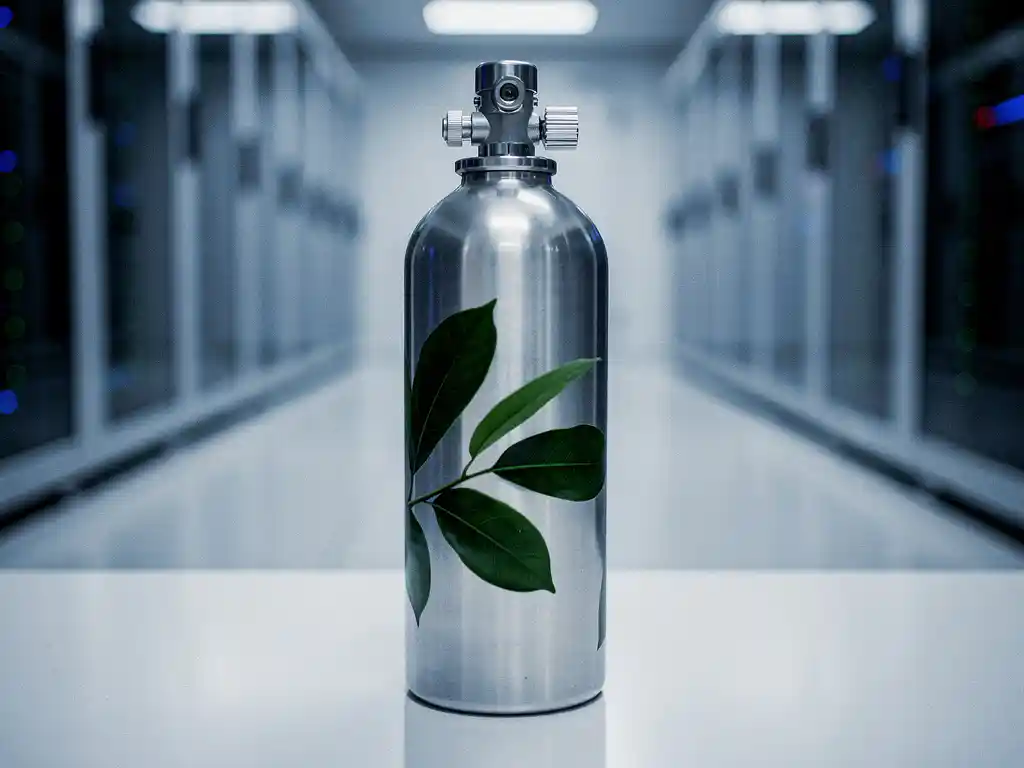
Inert gas fire suppression systems reduce greenhouse gas emissions because they use naturally occurring, climate-neutral gases like nitrogen instead of synthetic chemical agents with high global warming potential. Unlike hydrofluorocarbons or PFAS-based suppression agents, nitrogen has a global warming potential of zero and leaves no harmful residues in the atmosphere. The sections below explore the environmental case for inert gas systems in detail, from regulatory compliance to practical switching considerations.
What makes inert gas fire suppression systems environmentally friendly?
Inert gas fire suppression systems are environmentally friendly because they use gases that occur naturally in the atmosphere, carry no global warming potential, and leave no toxic residues after discharge. Nitrogen, the most widely used inert suppression agent, makes up approximately 78% of the air we breathe and returns to the atmosphere without any chemical transformation or lasting environmental impact.
What distinguishes inert gas systems from chemical alternatives is not just what they contain, but what they avoid. Traditional suppression agents often rely on synthetic compounds engineered to interrupt combustion chemistry. While effective at extinguishing fires, many of these compounds persist in the environment long after discharge, accumulating in soil, water, and living organisms. Inert gases suppress fire through a fundamentally different mechanism: they reduce the oxygen concentration in a protected space to a level where combustion cannot continue, without introducing any foreign chemistry into the environment.
For organizations protecting sensitive electronics, server rooms, switchgear cabinets, or battery energy storage systems, this matters beyond environmental compliance. A suppression agent that leaves no residue also means no secondary damage to equipment, no decontamination costs, and a faster return to normal operations after a fire event.
How do HFCs and PFAS in fire suppression contribute to greenhouse gas emissions?
Hydrofluorocarbons (HFCs) and per- and polyfluoroalkyl substances (PFAS) used in fire suppression contribute to greenhouse gas emissions because they are potent synthetic compounds that persist in the atmosphere for decades and trap heat at rates far exceeding carbon dioxide. When discharged during a fire event or system test, these agents release their full climate load directly into the atmosphere.
HFCs were widely adopted as replacements for ozone-depleting halon systems, but their climate impact has become a growing regulatory concern. Many HFC-based suppression agents carry global warming potentials that are hundreds or even thousands of times greater than CO2, measured over a 100-year horizon. A single discharge of an HFC system in a server room can represent a significant climate burden equivalent to several tonnes of CO2.
PFAS compounds present a compounding problem. Beyond their global warming contribution, they are classified as persistent organic pollutants, meaning they do not break down in the environment. PFAS accumulate in ecosystems, groundwater, and human tissue. Regulatory pressure on PFAS across the European Union and beyond has accelerated significantly, with many jurisdictions moving toward outright bans or severe restrictions on PFAS-containing products, including fire suppression systems. Organizations still operating PFAS-based systems face both environmental liability and regulatory risk as these restrictions tighten through 2026 and beyond.
What is the global warming potential of nitrogen compared to other fire suppression agents?
Nitrogen has a global warming potential of zero, making it the most climate-neutral option available for fire suppression. By comparison, many synthetic suppression agents carry global warming potentials ranging from several hundred to several thousand times that of CO2, measured over a 100-year period. This difference is not marginal; it represents a fundamental distinction in environmental impact.
The reason nitrogen scores zero on the global warming potential scale is straightforward: it is not a greenhouse gas. It does not absorb or re-emit infrared radiation in the way that CO2, methane, or synthetic fluorinated compounds do. When nitrogen is discharged into a protected enclosure, it displaces oxygen to suppress a fire and then gradually disperses back into the surrounding air as an entirely unremarkable component of the atmosphere.
This stands in direct contrast to fluorinated suppression agents, which are specifically engineered to be chemically stable. That stability, useful during storage, becomes a liability in the environment, where the same compounds persist and accumulate. For organizations with net-zero commitments or science-based emissions targets, the choice of suppression agent is increasingly part of the sustainability calculation, not just a safety specification.
Are inert gas fire suppression systems compliant with current environmental regulations?
Yes, inert gas fire suppression systems are fully compliant with current environmental regulations and are increasingly positioned as the preferred solution under evolving legislation. Regulatory frameworks targeting fluorinated gases and PFAS compounds are tightening across major markets, and inert gas systems avoid the substances these regulations restrict.
In the European Union, the F-Gas Regulation restricts and phases down the use of hydrofluorocarbons across a range of applications, including fire protection. Separately, the EU’s PFAS restriction proposal under REACH represents one of the broadest chemical restrictions in history, targeting thousands of per- and polyfluoroalkyl substances. Systems relying on these compounds face increasing compliance burdens, mandatory reporting requirements, and in some cases, phase-out timelines that are already underway.
Nitrogen-based suppression systems fall outside the scope of these restrictions entirely. Nitrogen is not a fluorinated gas, not a PFAS compound, and is not subject to the phase-down schedules that affect synthetic agents. For procurement managers and health and safety officers building long-term infrastructure plans, this regulatory clarity reduces future compliance risk and avoids the cost of retrofitting or replacing systems as regulations evolve.
How does a non-pressurized nitrogen system reduce environmental risk compared to pressurized alternatives?
A non-pressurized nitrogen system reduces environmental risk by eliminating the risk of accidental discharge caused by pressure vessel failure, mechanical stress, or temperature fluctuation. Pressurized systems store suppression agents under high pressure, which creates an ongoing risk of unintended release during storage, transport, maintenance, or in the event of physical damage to the system.
When a pressurized system discharges unintentionally, the environmental consequences depend on the agent stored. For HFC or PFAS-based pressurized systems, an accidental release means the full climate and chemical burden of the agent enters the environment without any fire event to justify it. For nitrogen stored in a non-pressurized solid-state form, the risk profile is fundamentally different.
Non-pressurized nitrogen storage also simplifies logistics and reduces maintenance complexity. There are no pressure checks, no cylinder recertification schedules tied to pressure vessel regulations, and no risk of pressurization-related leakage over time. This translates to a lower total environmental footprint across the full system lifecycle, from installation through to decommissioning.
What should organizations consider when switching to an inert gas suppression system for sustainability goals?
When switching to an inert gas suppression system for sustainability goals, organizations should evaluate the global warming potential of their current agent, assess regulatory exposure under F-Gas and PFAS legislation, and confirm that the replacement system is independently tested and certified for their specific application. Sustainability goals must align with operational requirements, not replace them.
Key considerations include:
- Agent compatibility with protected assets: Inert gas systems that leave no residue are particularly suited to sensitive electronics, battery systems, and high-value equipment where chemical damage from suppression is as costly as fire damage itself.
- Regulatory timeline awareness: Organizations operating in the EU or supplying regulated markets should map their current suppression agents against active and pending restrictions to understand replacement urgency.
- Certification and testing: Switching to a greener agent does not reduce the need for rigorous independent testing. Systems should carry certification from recognized bodies to validate both suppression performance and safety standards.
- Total cost of ownership: Sustainability transitions are more viable when the replacement system also reduces operational costs. Easy installation, low maintenance requirements, and long service life contribute to a lower TCO alongside the environmental benefit.
- Integration with existing infrastructure: A replacement system should connect with existing fire alarm panels and building management systems without requiring a complete infrastructure overhaul.
Organizations should also consider whether the replacement system is free from future regulatory risk. A suppression agent that is compliant today but subject to pending restrictions creates the same transition problem in a few years’ time. Choosing a genuinely inert, naturally occurring gas eliminates that uncertainty entirely.
How ExxFire supports your switch to environmentally friendly fire suppression
ExxFire’s integrated fire detection and suppression systems are built around non-pressurized nitrogen gas, offering a PFAS-free, zero global warming potential alternative to synthetic suppression agents. Designed specifically for closed enclosures such as server racks, switchgear cabinets, and battery energy storage systems, ExxFire systems combine aspirating smoke detection with suppression in a single, pre-engineered unit that requires no special certification to install.
Key features that support sustainability and operational goals include:
- Zero global warming potential: Nitrogen gas leaves no atmospheric burden and no chemical residue on protected equipment.
- PFAS-free suppression: Fully compliant with current and anticipated EU restrictions on fluorinated and persistent chemical agents.
- Non-pressurized storage: Eliminates the risk of accidental discharge and removes pressure vessel maintenance requirements.
- Independent certification: Systems are tested and certified by CNPP in France and validated by DMT, part of TÜV Nord in Germany.
- Seamless integration: Built-in relays allow connection to existing fire panels, protecting your current infrastructure investment.
- Low total cost of ownership: Easy self-installation and minimal maintenance reduce lifecycle costs alongside environmental impact.
If your organization is evaluating a move away from HFC or PFAS-based suppression, contact ExxFire to discuss which system configuration fits your enclosures, compliance requirements, and sustainability targets.