

How does fire suppression system design affect environmental performance?
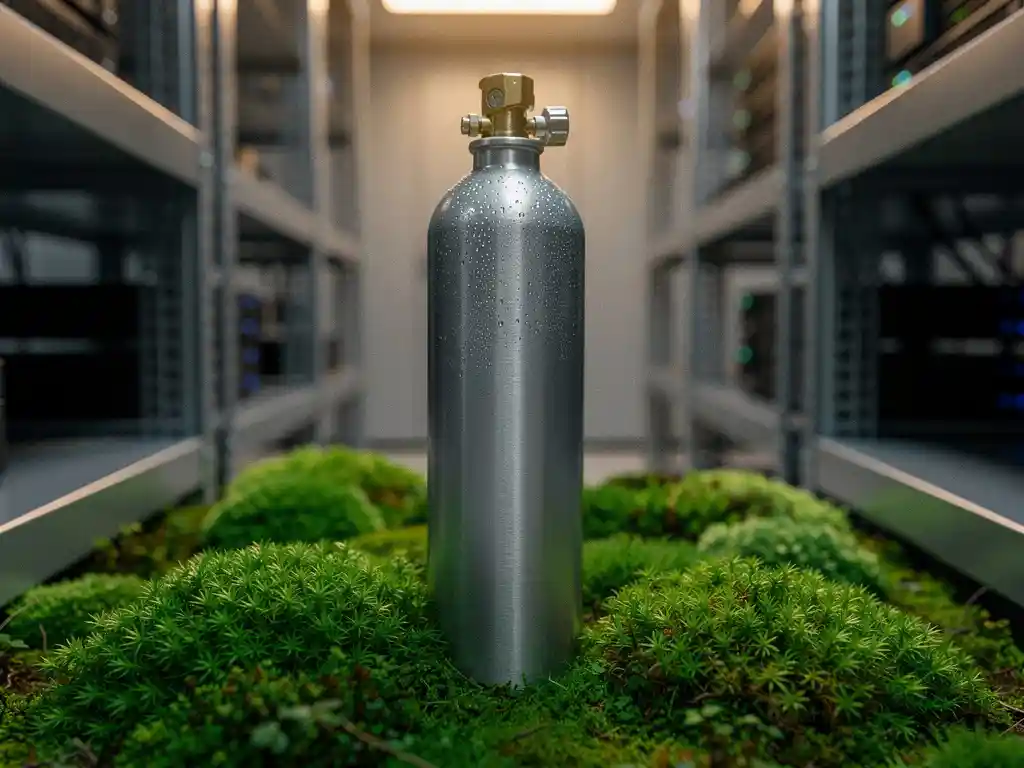
Fire suppression system design has a direct and significant impact on environmental performance. The choice of suppression agent, the scale at which it is deployed, and the physical configuration of the system together determine how much chemical burden a suppression event places on the environment. Facility managers and safety engineers who understand this relationship are better positioned to specify systems that protect both their assets and the planet.
Which fire suppression agents cause the most environmental damage?
The agents that cause the most environmental damage in fire suppression are halon-based compounds, hydrofluorocarbons (HFCs), and per- and polyfluoroalkyl substances (PFAS). Halon depletes the ozone layer and has been banned under the Montreal Protocol in most applications. HFCs have a high global warming potential, and PFAS compounds are persistent in ecosystems, accumulating in soil, water, and living organisms with no natural breakdown pathway.
PFAS-containing agents, including many aqueous film-forming foams (AFFF) and certain fluorinated clean agents, have drawn particular regulatory scrutiny in recent years. Their persistence in the environment has earned them the label “forever chemicals,” and their use is now restricted or under active phase-out in the European Union and several other jurisdictions. Even a single suppression event using a PFAS-based agent can release compounds that remain in the local environment for decades.
Chemical dry powders present a different category of concern. While they are not persistent in the same way as PFAS, they cause significant secondary damage to electronics and sensitive equipment, often making hardware unrecoverable and generating substantial electronic waste as a result.
How does system design determine which agent gets used?
Fire suppression system design determines agent selection primarily through the type of hazard being protected, the enclosure size, and the suppression mechanism chosen at the design stage. A total flooding system designed to fill an entire room requires a large volume of agent, which typically pushes designers toward gaseous agents stored under high pressure. Object-level or enclosure-based designs, by contrast, can use smaller quantities of agent delivered precisely where ignition is most likely.
The physical configuration of a system shapes its environmental profile before a single drop or gram of agent is ever released. A system engineered around a specific enclosure, such as a server rack or electrical cabinet, can be optimized for minimal agent volume. This reduces both the environmental burden of production and the release quantity if suppression is triggered. Pressurized systems also carry a risk of unintended discharge, which can release agent into the environment without any fire event occurring.
Agent selection is also influenced by compatibility requirements. Sensitive electronics cannot tolerate residue-leaving agents, which naturally steers designers toward cleaner alternatives. This compatibility constraint, when built into the design brief from the outset, tends to produce systems with a lower environmental footprint by default.
What makes inert gas a more sustainable suppression option?
Inert gas fire suppression is more sustainable because inert gases such as nitrogen, argon, and their blends are naturally occurring atmospheric components with zero ozone depletion potential and zero global warming potential. They do not produce toxic byproducts during discharge, leave no chemical residue on equipment, and do not contribute to PFAS contamination in soil or water systems.
Nitrogen, the most commonly used inert suppression gas, makes up approximately 78% of the Earth’s atmosphere. When released during a suppression event, it disperses without leaving a persistent environmental trace. This stands in direct contrast to synthetic chemical agents, which must be manufactured through energy-intensive industrial processes and which carry disposal and containment obligations throughout their lifecycle.
From a lifecycle perspective, inert gas systems also avoid the regulatory complexity associated with chemical agents. They are not subject to the phase-out schedules that affect HFC-based systems, and they do not require the specialist disposal procedures that PFAS-containing agents demand. This makes inert gas a genuinely future-proof choice from both a compliance and an environmental standpoint.
How does object-level protection reduce environmental footprint compared to total flooding?
Object-level fire suppression reduces environmental footprint by concentrating agent delivery inside a specific enclosure rather than flooding an entire room or zone. This dramatically reduces the volume of suppression agent required, which lowers both the manufacturing impact and the quantity released during a suppression event. It also reduces the risk of collateral damage to unaffected equipment in the same space.
Total flooding systems must fill the entire protected volume to achieve the suppression concentration required. In a large data hall or industrial facility, this means releasing hundreds or thousands of kilograms of agent. Even with a low-impact agent, the sheer volume involved multiplies the environmental consequence. Object-level systems, by targeting the enclosure where ignition is most likely, achieve suppression with a fraction of that volume.
There is also a secondary environmental benefit to object-level protection. By limiting fire damage to the immediate source, these systems reduce the likelihood that surrounding equipment is destroyed and must be replaced. Avoided hardware replacement means avoided manufacturing, avoided transport, and avoided electronic waste. The environmental savings extend well beyond the suppression event itself.
Are there regulations driving greener fire suppression system design?
Yes, regulations in multiple jurisdictions are actively pushing fire suppression system design toward greener alternatives. The European Union’s PFAS restriction proposals under REACH, combined with the existing F-Gas Regulation targeting high-GWP fluorinated gases, are creating a compliance environment in which many legacy suppression agents face phase-out timelines. In 2026, these regulatory pressures are accelerating procurement decisions across industries.
The Montreal Protocol phased out halon globally for most applications, and successor agreements have continued to tighten restrictions on ozone-depleting and climate-warming substances. In the United States, the EPA’s Significant New Alternatives Policy (SNAP) program has approved and restricted various suppression agents based on environmental criteria. Similar frameworks operate in Australia, Canada, and across Southeast Asia.
Beyond chemical restrictions, sustainability reporting obligations are also influencing procurement. Organizations subject to ESG disclosure requirements are increasingly required to account for the environmental impact of their operational infrastructure, including fire safety systems. This creates a business case for greener suppression design that goes beyond regulatory compliance alone.
What should facility managers prioritize when specifying an environmentally compliant system?
Facility managers specifying an environmentally compliant fire suppression system should prioritize agent type first, followed by deployment method, certification, and lifecycle cost. Selecting a PFAS-free, zero-GWP suppression agent eliminates the most significant sources of environmental liability. Choosing object-level protection over total flooding reduces agent volume and collateral damage. Certified systems provide documented assurance that environmental claims are independently verified.
A practical specification checklist should include:
- Agent compliance: Confirm the system uses a PFAS-free agent with zero ozone depletion potential and zero global warming potential
- Deployment efficiency: Prioritize enclosure-level or object-level protection to minimize agent volume
- Residue impact: Select agents that leave no chemical residue, protecting both equipment and the surrounding environment
- Certification: Require third-party testing and certification from recognized bodies such as TÜV Nord or CNPP
- Regulatory alignment: Verify the system complies with current REACH, F-Gas, and local environmental regulations
- Lifecycle cost and maintenance: Factor in the total cost of ownership, including agent replacement, inspection requirements, and end-of-life disposal
Pressurized systems deserve additional scrutiny. Non-pressurized alternatives reduce the risk of accidental discharge and the associated unplanned environmental release, making them preferable where the application permits.
How ExxFire supports environmentally responsible fire suppression system design
ExxFire’s combined fire detection and suppression systems are built around the principles that define environmentally responsible design. Every element of the system, from agent selection to deployment method, is engineered to minimize environmental impact without compromising protection performance. Key features include:
- PFAS-free nitrogen suppression: ExxFire uses non-pressurized stored nitrogen gas, a naturally occurring inert gas with zero ozone depletion potential, zero global warming potential, and no chemical residue
- Object-level protection: Systems are designed for closed enclosures such as server racks, switchgear cabinets, and Battery Energy Storage Systems, concentrating suppression precisely where it is needed and minimizing agent volume
- Non-pressurized storage: The patented Cool Gas Generator technology stores nitrogen in a solid, non-pressurized state, eliminating the risk of accidental discharge and the environmental release that comes with it
- Early smoke detection: Aspirating smoke detection integrated into the system enables intervention at the earliest stage of a fire event, reducing the likelihood of full suppression discharge and further limiting environmental impact
- Third-party certification: Systems are tested and certified by CNPP in France and DMT, part of TÜV Nord in Germany, providing independently verified assurance of both performance and compliance
- Low total cost of ownership: Easy self-installation and low maintenance requirements reduce the operational footprint of the system across its entire lifecycle
For facility managers, safety officers, and procurement teams looking to align their fire suppression system design with both environmental obligations and operational requirements, ExxFire offers a certified, future-proof solution. Contact ExxFire to discuss how its nitrogen-based systems can protect your critical assets while meeting the environmental standards your organization demands.