

Can existing fire suppression systems be upgraded to reduce environmental impact?
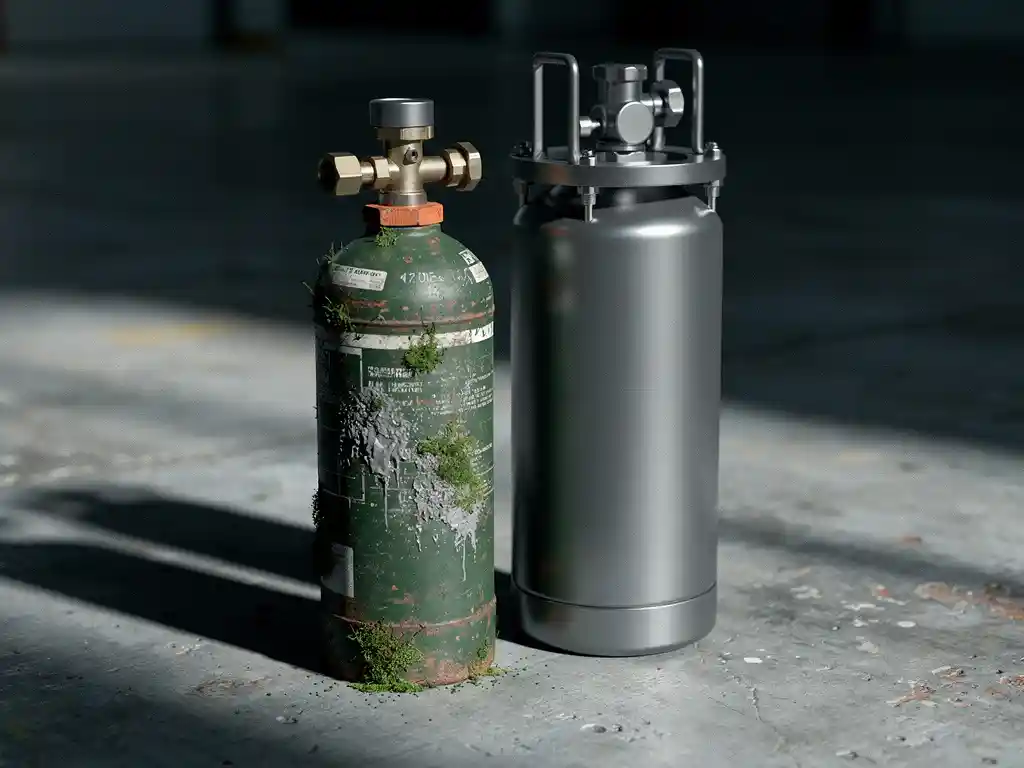
Yes, existing fire suppression systems can often be upgraded to reduce their environmental impact, and in many cases, a full replacement is not necessary. The most impactful change businesses can make is switching from chemical or fluorinated suppression agents to clean, inert alternatives such as nitrogen. This article unpacks the most common questions businesses ask when evaluating a greener fire suppression system upgrade.
What types of fire suppression systems have the highest environmental impact?
Fire suppression systems that use fluorinated chemical agents, particularly those containing PFAS (per- and polyfluoroalkyl substances), carry the highest environmental impact. These synthetic compounds persist in soil, water, and living organisms for decades, earning the label “forever chemicals.” Older halon-based systems, now banned in most countries, and certain clean agent systems using HFCs or HFOs also contribute to greenhouse gas emissions or leave harmful residues.
Wet chemical and foam-based systems present a different but equally serious concern. Aqueous Film-Forming Foam (AFFF), widely used in industrial and aviation settings, contains high concentrations of PFAS compounds that contaminate groundwater long after a suppression event. Even a single discharge can cause lasting environmental damage to the surrounding area.
Beyond the agents themselves, pressurized gas systems introduce additional risk. High-pressure cylinders require regular inspection, recertification, and careful handling, adding to the overall carbon footprint of ownership over time. For businesses with sustainability goals, these systems are increasingly difficult to justify.
Can an existing fire suppression system be retrofitted or must it be replaced?
In many cases, an existing fire suppression system can be retrofitted rather than fully replaced, depending on the type of system, the enclosure being protected, and the suppression agent being swapped in. Retrofitting is most straightforward when the protected object is a closed enclosure, such as a server rack or electrical cabinet, where a self-contained suppression unit can be integrated without redesigning the broader infrastructure.
Full replacement becomes necessary when the existing system relies on infrastructure that is fundamentally incompatible with cleaner agents. For example, a halon or AFFF system designed for open-area flooding cannot simply be re-agented without redesigning nozzle layouts, pipe sizing, and detection logic. In these situations, replacement is the more practical and cost-effective path.
For object-level protection of cabinets and enclosures, modern modular systems offer a strong retrofit case. They can be installed within existing enclosures, connected to a current fire panel via built-in relays, and do not require specialist certification for commissioning. This makes the transition to a greener suppression solution far less disruptive than businesses often expect.
What is the most environmentally friendly fire suppression agent available today?
Nitrogen is widely regarded as the most environmentally friendly fire suppression agent available today. As a naturally occurring inert gas that makes up approximately 78% of the atmosphere, nitrogen has zero ozone depletion potential, zero global warming potential, and leaves no chemical residue after discharge. It suppresses fire by reducing oxygen concentration within a protected space without introducing any synthetic or toxic compounds.
Unlike fluorinated agents or chemical powders, nitrogen causes no secondary contamination. Sensitive electronics, precision components, and high-value equipment remain undamaged after a nitrogen suppression event, which also means faster recovery and lower replacement costs. This combination of environmental and operational advantages makes nitrogen the leading green fire suppression alternative for mission-critical environments.
Other inert gases such as argon and IG-541 (a mixture of nitrogen, argon, and carbon dioxide) share similar environmental credentials. However, nitrogen in a non-pressurized solid-state form offers an additional advantage: it eliminates the risks and maintenance demands associated with high-pressure storage cylinders.
Are PFAS regulations forcing businesses to upgrade fire suppression systems?
Yes, evolving PFAS regulations are actively compelling businesses to evaluate and, in many cases, replace fire suppression systems that contain fluorinated compounds. In 2026, regulatory pressure on PFAS-containing products has intensified across the European Union, North America, and several Asia-Pacific markets. The EU’s restriction proposals under REACH target a broad class of PFAS substances, with fire suppression agents explicitly included in the scope.
For businesses still operating foam-based or certain clean agent systems, the regulatory timeline is shortening. Beyond outright bans, procurement policies at major organizations and public sector bodies increasingly exclude PFAS-containing products from approved vendor lists. This means that even where a legal deadline has not yet passed, commercial pressure is already driving change.
Proactive businesses are treating regulatory compliance as an opportunity rather than a burden. Upgrading to a PFAS-free fire suppression system now avoids future forced replacement costs, reduces liability exposure, and positions the organization as a responsible actor in its industry. For companies with public sustainability commitments, the reputational benefit of early action is also a meaningful factor.
How does nitrogen-based fire suppression compare to traditional gas systems?
Nitrogen-based fire suppression outperforms traditional gas systems on environmental impact, safety, and long-term cost while delivering equivalent or superior suppression performance for enclosed spaces. Traditional gas systems, including those using HFCs, HFOs, or FK-5-1-12, suppress fire effectively but involve synthetic agents with measurable global warming potential or unresolved questions about long-term environmental persistence.
Environmental and safety profile
Nitrogen is completely inert, non-toxic at suppression concentrations used for object protection, and requires no special disposal or handling after use. Traditional chemical gas agents often require specialist handling, safety data sheet compliance, and careful discharge management. In enclosed environments where personnel may be present nearby, the risk profile of synthetic agents warrants additional precautions that nitrogen simply does not require.
Storage and maintenance demands
Traditional gas suppression systems store agent under high pressure, requiring periodic inspection, hydrostatic testing of cylinders, and recertification. Nitrogen delivered in a non-pressurized solid-state format eliminates these demands entirely. There are no pressurized vessels to certify, no agent loss through slow leakage, and no specialist contractor required for routine maintenance. Over the system lifecycle, this difference translates directly into a lower total cost of ownership.
What should businesses consider before upgrading to a greener fire suppression system?
Before upgrading to a greener fire suppression system, businesses should evaluate the type and volume of the space being protected, the sensitivity of the equipment inside, compatibility with existing fire detection infrastructure, and the total cost of ownership over the system’s operational life. A well-matched upgrade reduces both environmental impact and operational risk without creating new complexity.
Key considerations include:
- Protected volume and enclosure type: Inert gas suppression is most effective in closed enclosures. Open areas or large rooms require different approaches and higher agent volumes.
- Equipment sensitivity: High-value electronics, battery systems, and precision instruments benefit most from agents that leave no residue and cause no secondary damage.
- Detection integration: A suppression system is only as effective as its detection. Aspirating smoke detection, which identifies fire at the earliest possible stage, significantly improves response time and reduces damage.
- Regulatory compliance: Verify that the chosen agent and system design meet applicable standards in your jurisdiction, including any PFAS restrictions or inert gas system certifications.
- Installation and maintenance burden: Systems requiring specialist installation or frequent recertification add cost and complexity. Self-contained, pre-engineered units with low maintenance requirements reduce ongoing TCO.
- Scalability: Consider whether the system can be expanded as the protected infrastructure grows, without requiring a full redesign.
Businesses should also assess whether the upgrade qualifies for any environmental or sustainability reporting credit within their ESG framework, as greener fire suppression investments increasingly contribute to measurable carbon and chemical footprint reductions.
How ExxFire helps businesses reduce the environmental impact of fire suppression
ExxFire provides a direct answer to the challenge of upgrading to a more sustainable fire suppression system. Its integrated fire detection and suppression systems are built around non-pressurized nitrogen gas, delivering a PFAS-free, zero-residue suppression solution that protects closed enclosures such as server racks, switchgear cabinets, battery energy storage systems, and ICT infrastructure.
Key features that make ExxFire the practical choice for a greener fire suppression system upgrade include:
- Nitrogen-based suppression with zero global warming potential, zero ozone depletion, and no chemical residue, protecting sensitive electronics without secondary damage
- Non-pressurized solid-state storage eliminating the need for pressurized cylinder inspections, recertification, or specialist handling
- Aspirating smoke detection integrated into the same unit, enabling early fire identification before flames develop
- Pre-engineered design allowing self-installation without special certification, reducing installation cost and complexity
- Built-in relay connectivity for seamless reporting to an existing fire panel, making retrofits straightforward
- Tested and certified by CNPP France and DMT (TÜV Nord), with over 500 systems deployed across 40 countries
Whether you are replacing a PFAS-containing system to meet emerging regulations or proactively reducing your environmental footprint, ExxFire’s technology delivers a proven, sustainable, and cost-effective path forward. Contact ExxFire to discuss which system configuration is right for your application.