

What is the role of fire doors in fire prevention?
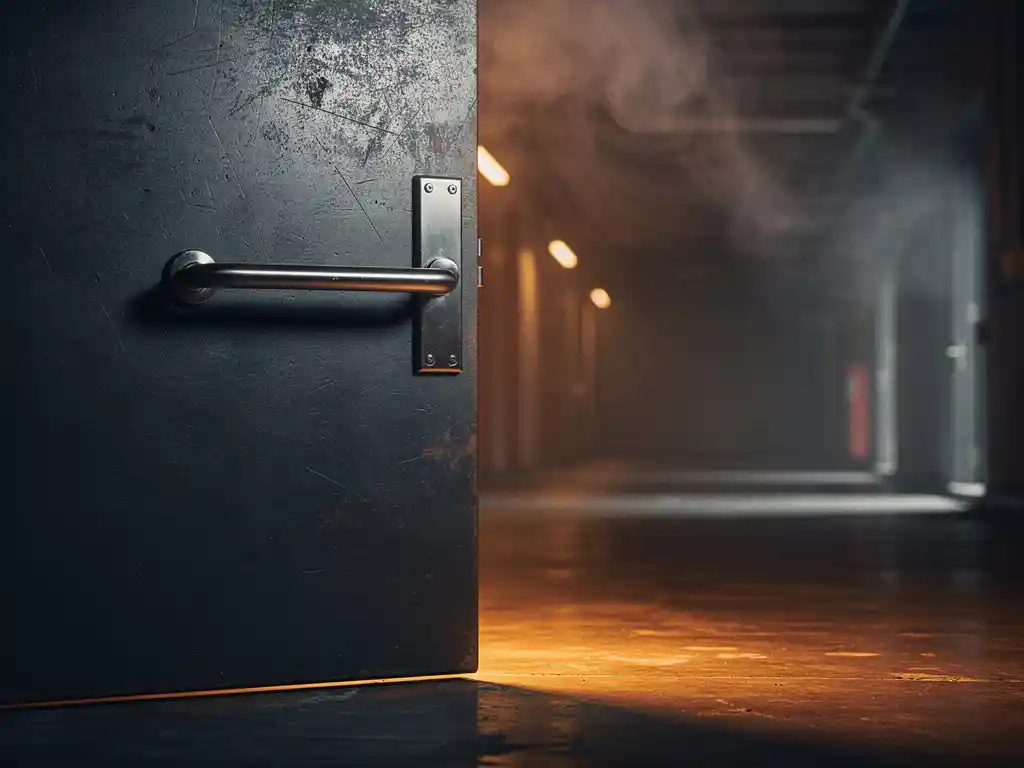
Fire doors play a direct and essential role in fire prevention by acting as physical barriers that slow or stop the spread of flames, heat, and smoke between sections of a building. They are a core component of passive fire protection, meaning they work automatically without any human intervention or mechanical activation. The sections below unpack how fire doors function, what the ratings mean, where they are required, and how to keep them effective.
How do fire doors actually stop a fire from spreading?
Fire doors stop a fire from spreading by compartmentalizing a building into separate fire-resistant zones. When closed, a certified fire door forms a sealed barrier that resists the passage of flames and heat for a defined period, giving occupants time to evacuate and limiting fire damage to a contained area.
The effectiveness of a fire door comes from its construction and the way it fits within its frame. Unlike a standard door, a fire door is built from or around materials engineered to withstand extreme heat, such as solid timber cores, steel, or composite mineral materials. The door leaf itself is only part of the system. The frame, hinges, intumescent seals, and closer all work together as a single fire-resistant assembly.
Intumescent seals are particularly important. These strips, typically fitted around the door edge or frame, expand rapidly when exposed to heat. This expansion closes the gap between the door and frame that would otherwise allow flames and hot gases to pass through. Many fire doors also incorporate cold smoke seals, which prevent smoke infiltration even before temperatures become high enough to activate the intumescent material.
Fire doors are also designed to be self-closing. A door that is propped open or held ajar provides no fire containment at all. The door closer ensures the door returns to the closed position after every use, maintaining the integrity of the fire compartment at all times.
What are the different fire door ratings and what do they mean?
Fire door ratings indicate how long a door assembly can resist fire under standardized test conditions. The most common ratings are FD30 and FD60, meaning the door provides 30 or 60 minutes of fire resistance, respectively. Higher ratings such as FD90 and FD120 exist for environments requiring extended protection.
In European and international standards, fire doors are often rated using the E and I classifications. The E classification measures integrity, meaning how long the door prevents flames and hot gases from passing through. The I classification measures insulation, meaning how long the door keeps the temperature on the unexposed side below a critical threshold. A door rated EI60, for example, maintains both integrity and insulation for 60 minutes.
The rating applies to the complete door assembly, not just the door leaf. If a non-rated frame, hinge, or hardware component is used with a rated door, the certified fire resistance of the entire assembly is compromised. This is why fire doors must be installed as a tested system, using only compatible and certified components.
Where are fire doors legally required in a building?
Fire doors are legally required in locations where fire compartmentation is mandated by building regulations, which typically includes escape routes, stairwells, corridors connecting different fire compartments, and any area where fire could spread rapidly and endanger occupants or critical systems. Exact requirements vary by country, building type, and occupancy classification.
In most regulatory frameworks, fire doors are required at the following locations:
- Entrances to stairwells and protected escape routes
- Openings between different fire compartments within a building
- Doors leading to high-risk areas such as plant rooms, electrical switchrooms, or storage areas containing flammable materials
- Entrances to individual residential units in multi-occupancy buildings such as apartment blocks and care homes
- Openings in walls that form part of a required fire-rated structure
Commercial and industrial buildings often have additional requirements based on the nature of the operations taking place. Facilities housing critical infrastructure, large electrical installations, or hazardous processes are subject to more stringent compartmentation rules. Building owners and facility managers should consult the applicable national building code and fire safety regulations, and have fire risk assessments carried out by qualified professionals to confirm exactly where fire doors are required.
What’s the difference between a fire door and a smoke door?
A fire door is designed to resist flames, heat, and smoke for a rated period of time, while a smoke door is designed specifically to limit the movement of smoke without necessarily providing significant resistance to flames or heat. The two serve related but distinct purposes within a building’s overall fire safety strategy.
Smoke is responsible for the majority of fire-related fatalities, often incapacitating or killing occupants before flames reach them. Smoke doors address this by sealing gaps through which smoke travels, particularly in corridors and stairwells that serve as escape routes. They use brush or blade seals rather than intumescent strips because their primary function is to block cold smoke movement rather than resist fire itself.
Many modern fire doors combine both functions. A door rated for fire resistance and fitted with both intumescent and cold smoke seals provides protection against flames, heat, and smoke simultaneously. When a specification or regulation refers to a fire and smoke door, it is requiring this combined performance. It is important not to assume that a smoke door provides fire resistance, or that a fire door without cold smoke seals adequately controls smoke spread at lower temperatures.
How often should fire doors be inspected and maintained?
Fire doors should be visually inspected at least every six months in most commercial and residential settings, with more frequent checks recommended in high-traffic areas where wear occurs faster. A full functional inspection by a competent person should take place at least annually, in line with guidance from fire safety bodies and national regulations.
A routine fire door inspection should cover the following:
- The door closes fully and latches without manual assistance
- Intumescent seals and cold smoke seals are intact, with no gaps, compression damage, or missing sections
- Hinges are secure, undamaged, and the correct fire-rated type for the assembly
- The door closer operates correctly and returns the door to the closed position every time
- The door leaf and frame show no warping, damage, or unauthorized modifications
- Any glazing is fire-rated and undamaged
- Certification labels or plugs are present and legible
Maintenance is equally important. Replacing worn seals, adjusting or replacing door closers, and repairing damaged frames are all tasks that must be carried out promptly. A fire door that passes a visual inspection but has a faulty closer or a compressed seal may fail to perform when it is needed most.
Can a fire door fail even when it looks undamaged?
Yes, a fire door can fail to perform its fire-containment function even when it appears visually intact. Several failure modes are invisible to a casual inspection, including a faulty door closer that does not fully return the door to the closed position, compressed intumescent seals that no longer expand sufficiently, and incorrect clearance gaps around the door leaf.
One of the most common causes of fire door failure is the gap between the door edge and the frame. Industry guidance typically specifies a maximum gap of 3 to 4 millimeters on the sides and top of the door. A gap that is too wide allows flames and gases to pass through before the intumescent seals have time to activate. This is not always visible without measurement.
Unauthorized modifications are another hidden risk. Drilling additional holes for cables or hardware, painting over intumescent seals, fitting non-rated hinges, or installing a replacement door leaf that does not match the certified assembly can all compromise fire resistance without any obvious visual sign of damage. Even a door that looks identical to the original may not meet the rated performance if the components are not part of the tested assembly.
This is why periodic inspection by a trained and competent person, rather than a simple visual check, is essential. A door that appears fine but fails to close fully, has compressed seals, or has been modified without proper assessment offers no reliable fire protection.
How ExxFire complements passive fire protection
Fire doors are a critical layer of passive fire protection, but they work best when combined with active detection and suppression that addresses fire at its source before it reaches the scale where compartmentation is tested. ExxFire’s integrated fire detection and suppression systems provide exactly this early intervention for enclosed, high-value equipment.
ExxFire’s systems are designed for closed enclosures such as server racks, electrical cabinets, and switchgear, where fire can start and escalate rapidly. Key features include:
- Aspirating smoke detection that identifies smoke at the earliest possible stage, before flames develop
- Non-pressurized nitrogen gas suppression delivered through the patented Cool Gas Generator technology, which extinguishes fire without chemical residues or damage to sensitive electronics
- PFAS-free suppression, making ExxFire a compliant and environmentally responsible alternative to legacy gas systems
- Built-in relay outputs that integrate with existing fire panels, ensuring the system fits within a building’s broader fire safety infrastructure
- Easy self-installation without the need for special certification, supporting low Total Cost of Ownership
By suppressing fire at the object level before it spreads to the point where fire doors and compartmentation are tested, ExxFire reduces the risk of large-scale damage, hardware loss, and operational downtime. Contact ExxFire to find out how its certified systems can strengthen your fire safety strategy.
Related Articles
- How do you balance fire management with conservation goals?
- How do you store flammable materials safely at home?
- What fire suppression agents have the lowest environmental impact?
- Why are data centers switching to green fire suppression systems?
- Can fire suppression systems contribute to carbon reduction goals?