

How do sprinkler systems contribute to fire prevention?
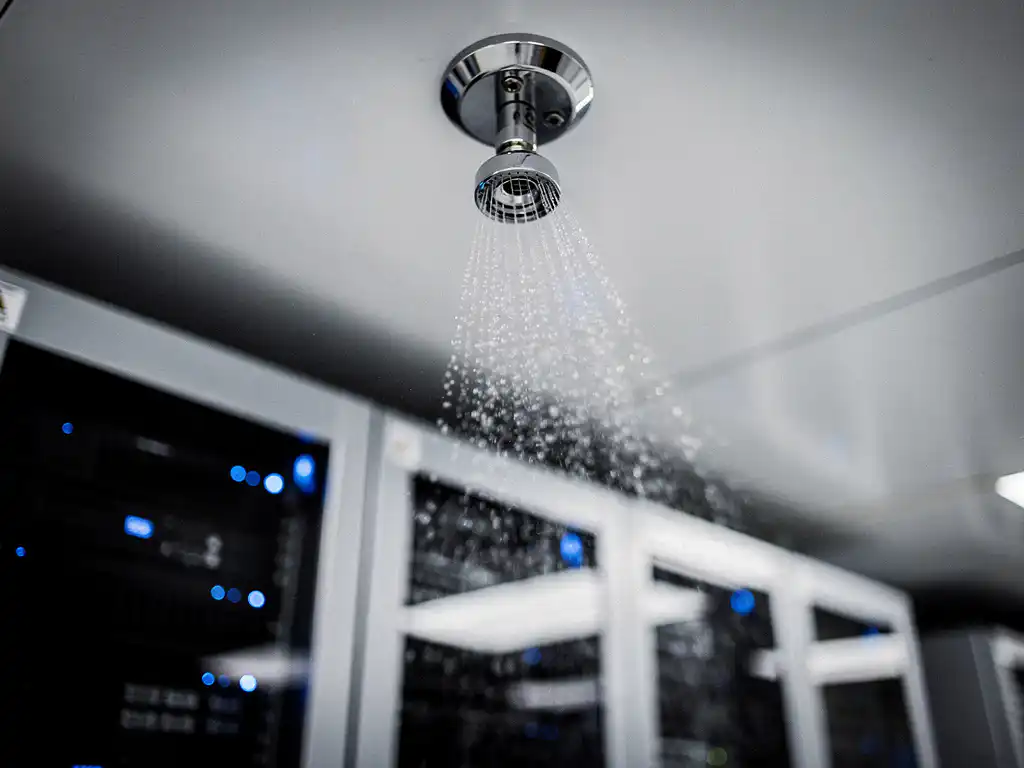
Sprinkler systems contribute to fire prevention by detecting heat and automatically releasing water to suppress flames before they spread. They are one of the most widely deployed active fire protection tools in commercial and residential buildings, valued for their ability to control fires with minimal human intervention. The sections below unpack how sprinklers work, what types exist, where they perform well, and where their limitations matter most.
How does a sprinkler system actually suppress a fire?
A sprinkler system suppresses a fire by releasing water directly onto the heat source when a sprinkler head is triggered. Each sprinkler head contains a heat-sensitive element, typically a glass bulb filled with a glycerin-based liquid, that shatters at a set temperature. When the element breaks, water flows through that individual head and onto the fire below.
A common misconception is that all sprinkler heads activate simultaneously when a fire alarm sounds. In reality, most systems activate only the heads closest to the heat source, which limits water damage to the immediate area. This selective activation is what makes sprinkler systems both effective and relatively efficient in terms of water use.
The suppression mechanism works on two levels. First, the water cools the burning material below its ignition temperature. Second, the water vapor produced displaces oxygen around the fire, reducing the oxygen available for combustion. Together, these effects work to contain and extinguish the fire before it reaches neighboring areas or structural elements.
What types of sprinkler systems are used in buildings?
The most common sprinkler system types used in buildings are wet pipe, dry pipe, pre-action, and deluge systems. Each is designed for a specific environment and risk profile, and choosing the wrong type can reduce effectiveness or cause unnecessary damage.
- Wet pipe systems are the most widely used. Water is stored permanently in the pipes, so activation is immediate when a sprinkler head triggers. These are standard in offices, hotels, and retail spaces.
- Dry pipe systems keep the pipes filled with pressurized air or nitrogen instead of water. When a head activates, the air escapes first and water follows. These are used in unheated environments where standing water in pipes could freeze.
- Pre-action systems require two independent events to release water: a fire detection signal and a sprinkler head activation. This double-trigger mechanism makes them suitable for environments where accidental discharge would cause serious damage, such as museums or data centers.
- Deluge systems have open sprinkler heads and release water across the entire protected area simultaneously. They are used in high-hazard locations such as aircraft hangars and chemical storage facilities where rapid, total coverage is critical.
The choice of system type depends on the building’s temperature range, occupancy type, the sensitivity of the contents, and the acceptable risk of accidental discharge.
How effective are sprinkler systems at preventing fire damage?
Sprinkler systems are highly effective at controlling fires in the built environment. Industry experience consistently shows that sprinklers either extinguish or control the vast majority of fires in buildings where they are installed, significantly reducing structural damage, injury risk, and total losses compared to unprotected buildings.
Their effectiveness stems from speed. A sprinkler system responds automatically, often within minutes of a fire developing, without relying on human detection or intervention. In the time it takes for occupants to notice smoke and for emergency services to arrive, a functioning sprinkler system can already be suppressing the fire at its source.
Sprinklers are particularly effective in large open spaces where fires can spread rapidly across floor areas. Warehouses, retail floors, and production halls benefit substantially from sprinkler coverage because the system can intercept a fire before it reaches neighboring racks, shelves, or machinery.
That said, effectiveness depends heavily on correct installation, regular maintenance, and adequate water pressure. A system that has not been inspected or tested regularly may fail at the moment it is needed most.
What are the limitations of sprinkler systems for protecting electronics?
Sprinkler systems have significant limitations when it comes to protecting sensitive electronics. Water and electronics are fundamentally incompatible. Even a brief discharge from a sprinkler head can cause irreversible damage to servers, switchgear, battery systems, and other high-value equipment, often destroying hardware that the fire itself might not have reached.
Several specific limitations apply in electronic environments:
- Collateral water damage: Sprinklers do not discriminate between what is burning and what is nearby. Equipment several meters from the fire source can be soaked during suppression.
- Delayed detection of electrical fires: Sprinklers are triggered by heat, not smoke. Electrical fires inside enclosed cabinets or server racks often smolder and produce smoke long before generating enough heat to trigger a sprinkler head. By the time the system activates, internal components may already be severely damaged.
- Inability to reach fires inside enclosures: Water discharged from ceiling-mounted heads cannot penetrate a closed electrical cabinet or server rack. The fire continues inside the enclosure while the sprinkler wets the exterior.
- Extended downtime: After a sprinkler discharge, affected areas must be dried, cleaned, and inspected before operations can resume. This adds significant downtime beyond the fire event itself.
For these reasons, sprinklers are widely regarded as a building-level protection measure rather than a solution for object-level protection of sensitive equipment.
What is the difference between sprinkler systems and gaseous suppression?
The key difference between sprinkler systems and gaseous suppression is the suppression agent used and the environments each is suited to. Sprinklers use water to cool and smother fires, making them effective for general building protection. Gaseous suppression systems use inert or chemical gases to displace oxygen or interrupt the combustion process, making them suitable for environments where water would cause damage.
Gaseous systems are typically deployed in enclosed spaces such as server rooms, electrical cabinets, and telecom enclosures. Because gases do not conduct electricity and leave no residue, they can suppress a fire without harming the equipment inside. This makes them the preferred choice wherever sensitive electronics, high-value components, or irreplaceable data are at risk.
Another important distinction is the triggering mechanism. Sprinklers respond to heat at the sprinkler head. Gaseous suppression systems are often paired with early smoke detection, allowing them to activate at the earliest sign of a fire, well before heat builds to levels that would trigger a sprinkler. This earlier intervention reduces the window during which damage can occur.
From an environmental standpoint, the choice of gas matters. Some older gaseous systems rely on chemical agents that contain PFAS compounds, which are persistent environmental pollutants. Inert gas alternatives based on nitrogen, for example, carry no such environmental risk and leave no chemical residue after discharge.
When should a building use object-level fire suppression instead of sprinklers?
A building should use object-level fire suppression when it contains high-value, sensitive, or mission-critical equipment that a sprinkler system cannot protect adequately. Sprinklers protect the building structure and its occupants. Object-level suppression protects the specific asset itself, targeting the fire at or inside the enclosure where it originates.
Object-level suppression is the right choice in the following situations:
- Server racks and ICT cabinets where water discharge would destroy hardware and data
- Electrical switchgear and high-voltage cabinets where internal fires can smolder undetected
- Battery Energy Storage Systems (BESS) where thermal runaway can develop rapidly inside sealed enclosures
- Telecom infrastructure where downtime carries high operational and financial consequences
- Any enclosed equipment where a ceiling-mounted sprinkler cannot physically reach the fire source
In most cases, object-level suppression and sprinklers are complementary rather than competing. The sprinkler system protects the building; the object-level system protects the asset inside it. Relying on sprinklers alone to protect enclosed electronics is a gap in fire strategy that carries significant risk to hardware, operations, and business continuity.
How ExxFire protects mission-critical equipment beyond sprinklers
ExxFire provides object-level fire detection and suppression designed specifically for the environments where sprinklers fall short. The system combines aspirating smoke detection with non-pressurized nitrogen gas suppression, allowing it to identify a fire in its earliest stage and suppress it before heat builds, before water is discharged from the ceiling, and before equipment is lost.
Key features of ExxFire’s integrated approach include:
- Early smoke detection: Aspirating detection identifies combustion particles at concentrations far below what triggers a heat-based sprinkler head, enabling a faster response
- Nitrogen-based suppression: Inert nitrogen gas suppresses the fire without leaving chemical residue, conducting electricity, or damaging sensitive components
- PFAS-free technology: ExxFire’s Cool Gas Generator contains no PFAS compounds, making it the environmentally responsible alternative to legacy chemical suppression agents
- Object-level targeting: Systems are designed for closed enclosures such as server racks, electrical cabinets, and BESS units up to 4.5 m³, with multiple units interconnectable for larger volumes
- Easy installation: Pre-engineered for self-installation without special certification, with built-in relays for integration with existing fire panels
- Tested and certified: Validated by CNPP France and DMT, part of TÜV Nord, ensuring compliance-ready deployment
If your facility contains switchgear, server infrastructure, battery storage, or other high-value enclosures that a sprinkler system cannot adequately protect, contact ExxFire to discuss the right object-level fire suppression solution for your environment.
Related Articles
- What is the difference between prescribed fire and arson?
- How does fire safety compliance reduce liability for facility managers?
- How do you document fire suppression compliance for an audit?
- Can existing fire suppression systems be upgraded to reduce environmental impact?
- What is the EU chemicals strategy for fire protection?