

What is the difference between a fire extinguisher and a sprinkler system?
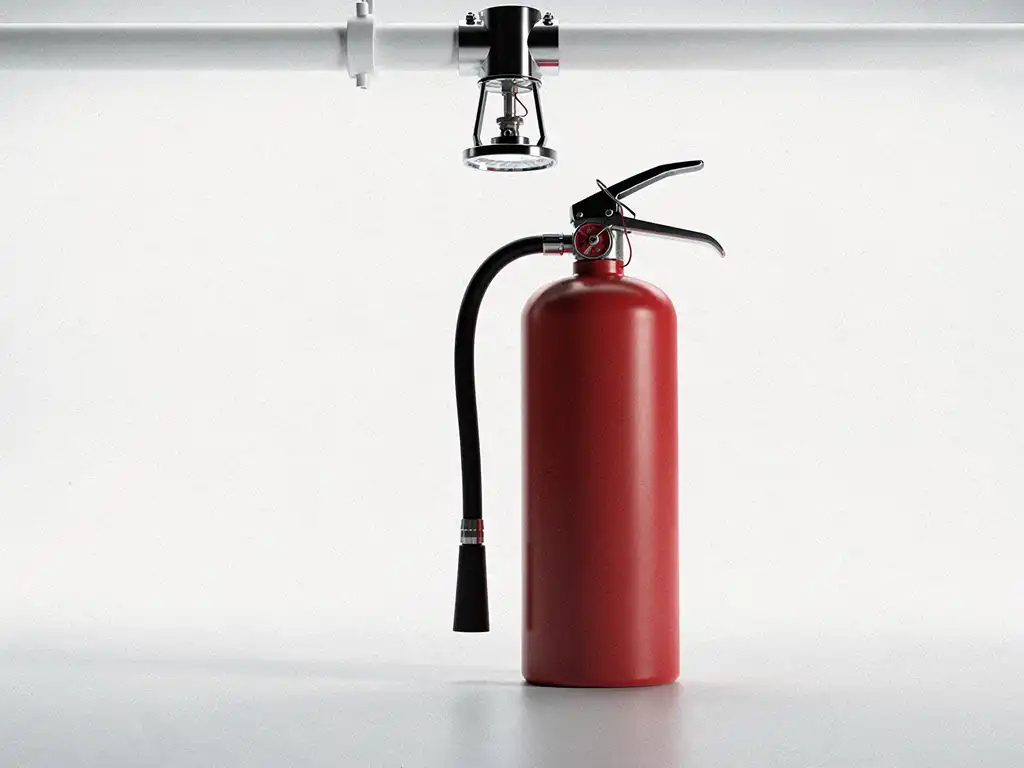
A fire extinguisher is a portable, manually operated device used to tackle small fires at close range, while a sprinkler system is a fixed, automated installation that detects heat and releases water across a wider area. The core difference comes down to activation: extinguishers require a person to be present and act, whereas sprinklers respond automatically without human intervention. Understanding both systems helps you choose the right fire protection strategy for your environment.
How does a fire extinguisher actually work?
A fire extinguisher works by manually discharging a suppression agent directly onto a fire to remove one or more elements of the fire triangle: heat, fuel, or oxygen. The user pulls a safety pin, aims the nozzle at the base of the flames, and squeezes the handle to release the agent. Most portable extinguishers discharge for only 8 to 30 seconds, making speed and proximity essential.
Different extinguisher types use different agents suited to different fire classes. Water and foam extinguishers cool burning material and are effective on ordinary combustibles like wood and paper. CO2 extinguishers displace oxygen and leave no residue, making them popular near electrical equipment. Dry powder models smother flames across multiple fire classes but leave a fine powder that can damage sensitive components. ABC-rated dry chemical extinguishers are among the most common in commercial settings because of their versatility.
The limitation of any portable extinguisher is that it depends entirely on a trained person being nearby, recognizing the fire early, and acting correctly under pressure. If a fire starts undetected in a closed cabinet or at night in an unmanned facility, a handheld extinguisher provides no protection at all.
How does a sprinkler system detect and suppress fire?
A sprinkler system detects fire through heat-sensitive elements built into individual sprinkler heads. When the air temperature at a sprinkler head reaches a set threshold, a glass bulb or fusible link breaks, opening the valve and releasing water under pressure. Contrary to popular belief, only the sprinkler heads closest to the fire activate, not the entire system at once.
Wet pipe systems, the most widely installed type, keep water pressurized in the pipes at all times, allowing immediate discharge. Dry pipe systems, used in environments where pipes could freeze, hold compressed air instead and release water only once a head opens. Pre-action systems add a second trigger, requiring both a heat detection signal and a sprinkler head to open before water flows, which reduces the risk of accidental discharge near sensitive equipment.
Sprinklers are highly effective at controlling or extinguishing structural fires, protecting building occupants, and limiting property damage across large spaces. However, water is inherently damaging to electronics, electrical switchgear, and data storage equipment. A sprinkler activation in a server room or battery storage facility can cause as much harm to the equipment as the fire itself.
What are the main differences between a fire extinguisher and a sprinkler system?
The main differences between a fire extinguisher and a sprinkler system are the activation method, coverage area, response speed, and suitability for different environments. Extinguishers are manual, portable, and operator-dependent. Sprinklers are automatic, fixed, and operate without human presence. Each serves a distinct role in a layered fire safety strategy.
- Activation: Extinguishers require a person to be present and trained. Sprinklers activate automatically when heat reaches a set threshold.
- Coverage: Extinguishers protect a small, targeted area. Sprinklers cover entire rooms or zones.
- Response time: A trained person with an extinguisher can act within seconds of noticing a fire. Sprinklers respond to heat buildup, which may take longer than smoke or early flame detection.
- Suppression agent: Extinguishers use water, foam, CO2, or dry powder. Sprinklers almost always use water.
- Residual damage: Water from sprinklers can extensively damage electronics and stored goods. CO2 extinguishers leave no residue, but dry powder does.
- Maintenance and certification: Both require regular inspection, but fixed sprinkler systems involve more complex infrastructure and professional servicing.
In practice, most buildings use both: sprinklers protect the structure and occupants at the building level, while portable extinguishers give individuals a first-response option for small, incipient fires.
Which fire suppression method is better for protecting electronics?
Neither standard fire extinguishers nor water-based sprinkler systems are ideal for protecting sensitive electronics. Water causes short circuits and corrosion, and dry powder extinguishers leave residue that can permanently damage components. For electronics, gaseous suppression agents that leave no residue and do not conduct electricity are the preferred approach.
CO2 extinguishers are a step in the right direction because they discharge a clean gas without leaving residue, but they require a person to operate them and are not suitable for enclosed spaces where people may be present due to oxygen displacement. For unmanned environments with high-value electronics such as server racks, switchgear cabinets, or telecom enclosures, a fixed gaseous suppression system that activates automatically provides far superior protection.
The key criteria for electronics protection are: the suppression agent must be electrically non-conductive, leave no chemical residue, and activate early enough to prevent thermal damage to components. Inert gas systems that detect smoke at the earliest stage and suppress within the enclosure itself address all three requirements in a way that neither a portable extinguisher nor a water sprinkler can match.
When should you use a fire extinguisher instead of a fixed suppression system?
A fire extinguisher is the right tool when a person is present, the fire is small and contained, and the operator has been trained to use the correct extinguisher type for the fire class involved. Extinguishers are well suited to early-stage fires on ordinary combustibles in occupied spaces where someone can intervene safely within the first moments of ignition.
Fixed suppression systems, by contrast, are the better choice when equipment must be protected around the clock regardless of whether staff are present, when the risk area is enclosed or difficult to access, or when a fire could develop rapidly before anyone notices. Critical infrastructure environments, unmanned facilities, and any location containing high-value or irreplaceable equipment fall firmly into the category where fixed, automatic protection is essential.
Extinguishers also play a complementary role even where fixed systems exist. They allow occupants to address a small fire before it triggers a larger suppression event, potentially avoiding unnecessary downtime or collateral suppression damage. However, they should never be the sole fire protection method for mission-critical equipment or unattended environments.
Are there fire suppression alternatives beyond extinguishers and sprinklers?
Yes, there are several fire suppression alternatives that go beyond portable extinguishers and water-based sprinkler systems, particularly for environments where water damage, chemical residue, or environmental impact are concerns. The most established categories include gaseous suppression systems, aerosol suppression, and inert gas systems.
Gaseous suppression systems
Gaseous systems discharge a suppression agent in gas form to reduce oxygen concentration or interrupt the chemical chain reaction of combustion. Traditional options included halon, which is now banned under the Montreal Protocol due to its ozone-depleting properties. Modern alternatives include FM-200, Novec 1230, and CO2, each with different profiles in terms of environmental impact, safety in occupied spaces, and suitability for specific equipment types. Many of these agents are under scrutiny due to PFAS-related concerns, as some synthetic gases contain per- and polyfluoroalkyl substances that persist in the environment.
Inert gas and nitrogen-based systems
Inert gas systems use naturally occurring gases such as nitrogen, argon, or a blend of both to reduce the oxygen level within a protected space below the threshold needed to sustain combustion, without dropping it so low as to be immediately dangerous to humans. Nitrogen in particular is abundant, non-toxic, and leaves absolutely no chemical residue, making it one of the cleanest suppression agents available. These systems are especially well suited to protecting enclosed equipment enclosures where residue-free suppression and zero environmental impact are priorities.
Aerosol suppression systems represent another category, using fine particles to interrupt combustion chemistry, though they are typically limited to smaller enclosed volumes and may leave particulate residue.
As regulatory pressure on PFAS-containing agents increases in 2026 and sustainability requirements tighten across industries, inert gas alternatives are seeing growing adoption as the environmentally responsible replacement for legacy chemical suppression systems.
How ExxFire protects mission-critical equipment from fire
ExxFire offers a purpose-built alternative to both portable extinguishers and water-based sprinklers for organizations that need reliable, automatic protection for enclosed high-value equipment. ExxFire’s integrated fire detection and suppression systems combine aspirating smoke detection with non-pressurized nitrogen gas suppression, delivering protection at the earliest possible stage before a fire can cause serious damage.
Key features of ExxFire’s approach include:
- Early smoke detection: Aspirating detection identifies smoke at the pre-fire stage, triggering suppression long before heat-based detectors or sprinklers would respond.
- Clean nitrogen suppression: Nitrogen leaves no chemical residue, causes no damage to sensitive electronics, and is completely PFAS-free, making it safe for server racks, switchgear cabinets, battery energy storage systems, and telecom enclosures.
- Non-pressurized storage: Unlike traditional pressurized gas cylinders, ExxFire’s Cool Gas Generator technology stores nitrogen in a solid, non-pressurized state, simplifying installation and reducing maintenance requirements.
- Self-installation without special certification: Systems are pre-engineered for straightforward deployment and integrate with existing fire panels via built-in relays.
- Tested and certified: All systems are validated by CNPP in France and DMT, part of TÜV Nord in Germany, ensuring compliance and reliability.
For organizations weighing fire extinguisher vs sprinkler system options for their critical infrastructure, ExxFire provides a third path: automatic, clean, and object-level fire suppression that protects equipment without the collateral damage water or chemical agents cause. Contact ExxFire to discuss which system configuration is right for your specific environment.
Related Articles
- What are the biggest challenges in modern fire management?
- What is post-fire management and why is it important?
- How do you develop a wildfire evacuation plan?
- What are the fire detection standards for telecom infrastructure in 2026?
- How do clean agent systems protect sensitive equipment from fire damage?