

How do wildfires start and what can homeowners do to prevent them?
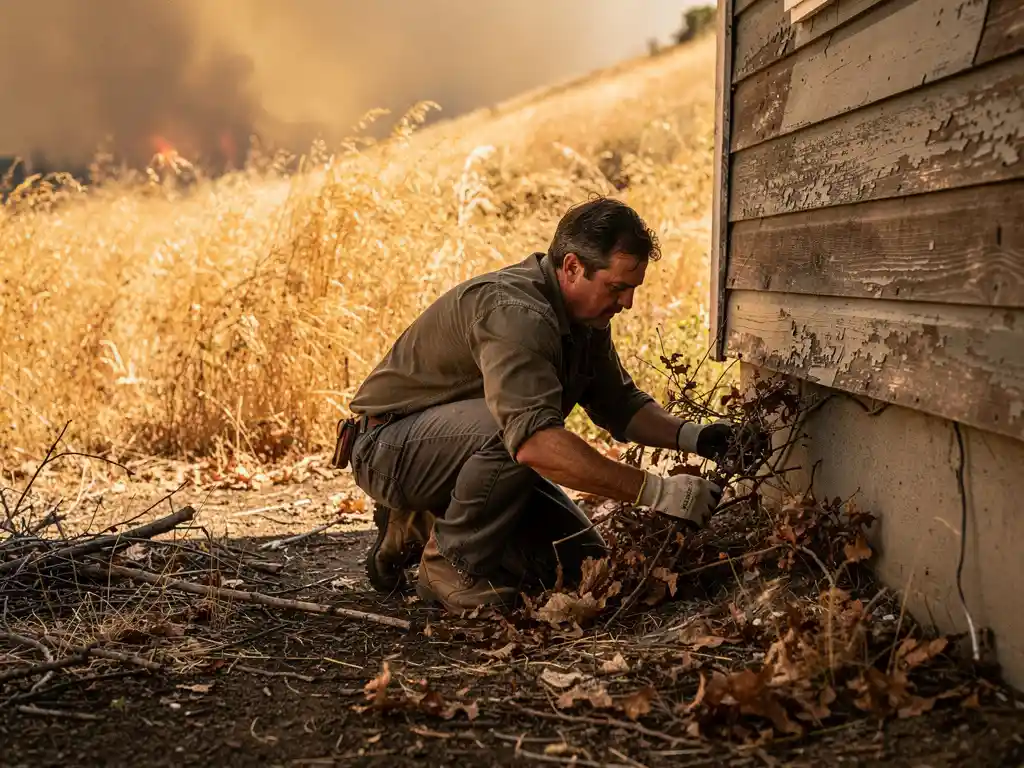
Wildfires start when three elements combine: a heat source, dry fuel such as grass, brush, or timber, and oxygen. Once those conditions align, a fire can ignite in seconds and spread rapidly across a landscape. Human activity causes the majority of wildfires, though natural ignition sources like lightning play a role too. This article unpacks the science behind wildfire ignition, the most common causes, and the practical steps homeowners can take to reduce their risk.
What conditions cause a wildfire to ignite and spread?
A wildfire ignites when a heat source meets dry, combustible fuel in the presence of oxygen — the same three elements that sustain any fire. What makes wildfires uniquely dangerous is the scale of available fuel and the atmospheric conditions that allow fire to travel enormous distances at extraordinary speed.
Drought is one of the most powerful accelerants. When vegetation loses moisture, it becomes highly flammable. Grasses, shrubs, and dead leaves that would otherwise resist ignition can catch fire from a single spark during prolonged dry periods. Low relative humidity compounds this effect by drawing remaining moisture out of plant material and soil.
Wind plays an equally critical role. Strong, dry winds do three things simultaneously: they supply additional oxygen to the fire, carry burning embers ahead of the main fire front, and dry out unburned vegetation in the fire’s path. In regions prone to seasonal wind events, a fire that might otherwise be contained can become uncontrollable within minutes. Temperature also matters — hotter air temperatures accelerate the drying of fuels and lower the energy required for ignition. Steep terrain further amplifies spread, since fire climbs uphill faster than it moves across flat ground, preheating the vegetation above it.
What are the most common human causes of wildfires?
Human activity is responsible for the majority of wildfires globally. The most common causes include unattended campfires, burning debris that escapes containment, discarded cigarettes, sparks from power lines and equipment, and arson. In many regions, infrastructure-related ignitions from electrical faults have become an increasingly significant factor.
Campfires left burning or improperly extinguished are a persistent cause, particularly in dry summer months when even a small ember can ignite surrounding vegetation. Debris burning — clearing land by burning brush, leaves, or agricultural waste — is another frequent source when fires escape their intended boundaries due to wind shifts or inadequate firebreaks.
Vehicle-related ignitions are often underestimated. Hot catalytic converters, sparks from dragging chains, or exhaust contact with dry roadside grass can all trigger a fire. Fireworks, both professional and recreational, are a well-documented seasonal risk. Power lines downed by wind or vegetation contact have also been linked to some of the most destructive wildfire events in recent years. Regardless of the specific cause, the underlying factor in most human-caused wildfires is a combination of carelessness and dry, high-risk conditions.
How does defensible space protect a home from wildfire?
Defensible space is the buffer zone created around a home by reducing or removing flammable vegetation and materials. It protects a home from wildfire in two ways: it slows or stops the spread of ground-level fire before it reaches the structure, and it reduces the intensity of radiant heat that can ignite the building from a distance.
Fire safety guidance typically divides defensible space into two zones. The first zone, immediately surrounding the structure, should be kept clear of dry grass, dead leaves, and combustible materials. Vegetation in this area should be well-irrigated, low-growing, and spaced so that fire cannot travel continuously from plant to plant. The second zone extends further out and focuses on reducing fuel load by thinning trees, removing dead wood, and cutting back shrubs, while not requiring complete clearing.
The logic behind defensible space is straightforward: fire needs continuous fuel to spread. By interrupting that continuity, homeowners deprive an advancing fire of the pathway it needs to reach the structure. Defensible space also creates room for firefighters to work safely if they need to defend the property directly. Even modest improvements to the area immediately surrounding a home can meaningfully reduce the probability of ignition from a passing fire front.
What home materials and design features reduce wildfire risk?
Homes built or retrofitted with fire-resistant materials and design features are significantly less likely to ignite during a wildfire. The roof is the most vulnerable part of a structure because it is a large surface exposed to falling embers. Metal, tile, or Class A asphalt shingles offer far greater resistance than wood shingles or shake roofing.
Vents, including soffit vents, gable vents, and foundation vents, are common entry points for windblown embers. Installing ember-resistant or mesh-screened vents dramatically reduces the risk of embers entering the attic or crawl space and igniting from the inside out. Enclosed eaves eliminate another common ignition pathway.
Windows are also a vulnerability. Double-paned or tempered glass is more resistant to radiant heat than single-pane glass. Exterior shutters rated for fire exposure add an additional layer of protection. Decking and fencing materials matter too — composite or non-combustible decking, and metal or masonry fencing rather than wood, reduce the chance that fire travels directly to the structure from the surrounding landscape. Keeping gutters clear of dry leaves and debris removes one more potential ignition source. Taken together, these measures do not make a home fireproof, but they substantially reduce its vulnerability to the ember showers that precede most wildfire-related home losses.
What should homeowners do before and during a wildfire threat?
Before a wildfire threat, homeowners should focus on preparation: creating defensible space, clearing gutters and roofs of debris, reviewing their evacuation plan, and assembling an emergency kit with essential documents, medications, and supplies. Signing up for local emergency alerts ensures timely notification when conditions escalate.
When a wildfire warning is issued for your area, act immediately rather than waiting to see how the situation develops. Early evacuation is consistently safer than last-minute departure. Roads become congested quickly, visibility can drop to near zero from smoke, and conditions can change faster than most people anticipate.
If time and conditions allow before leaving, close all windows, doors, and vents to slow ember intrusion. Move combustible outdoor furniture, doormats, and decorations inside or away from the structure. Shut off gas at the meter. Leave exterior lights on so the property is visible in smoke. If you have a pool or large water source, leave a note indicating its location for firefighters. Once you have left, do not return until authorities declare it safe — re-entry during an active wildfire is one of the leading causes of civilian fatalities in fire events.
Are some regions more at risk of wildfires than others?
Yes, wildfire risk is significantly higher in regions that combine dry climates, seasonal drought, dense vegetation, and strong winds. The western United States, southern Europe including Portugal, Spain, and Greece, southeastern Australia, and parts of South Africa and South America experience the highest concentration of destructive wildfires.
In the United States, states like California, Oregon, Washington, Colorado, and Arizona face elevated risk due to a combination of Mediterranean and semi-arid climates, extensive wildland-urban interface zones, and increasingly prolonged fire seasons. The wildland-urban interface — where developed land meets undeveloped vegetation — is where the majority of home losses occur, and this zone has expanded significantly as housing development extends into fire-prone landscapes.
Climate patterns are shifting the risk profile in many regions. Areas that historically experienced fire primarily in summer are now seeing extended fire seasons that stretch into autumn and, in some cases, year-round. Regions with increasing drought frequency, including parts of southern Europe and the Mediterranean basin, are experiencing more frequent and intense fire events than in previous decades. Homeowners in any fire-prone region should treat wildfire not as a remote possibility but as a realistic risk that warrants active preparation.
How ExxFire helps protect critical assets in fire-prone environments
While defensible space and fire-resistant construction address the exterior of a home, the equipment and systems inside a building — electrical panels, server infrastructure, battery storage systems, and switchgear — face their own fire risk that landscape measures cannot fully address. ExxFire’s integrated fire detection and suppression systems are designed specifically to protect enclosed, high-value equipment from fire at its source.
ExxFire’s systems combine aspirating smoke detection with non-pressurized nitrogen gas suppression, responding to a fire threat before it can develop into a larger incident. Key features include:
- Early smoke detection: Aspirating detection identifies smoke at the earliest stage, well before conventional detectors would trigger.
- Clean suppression: Nitrogen gas leaves no chemical residue, protecting sensitive electronics from both fire damage and suppression agent damage.
- No pressurized cylinders: The patented Cool Gas Generator technology operates without pressurized storage, reducing installation complexity and ongoing maintenance requirements.
- Simple installation: Systems are pre-engineered for self-installation without specialist certification, lowering the total cost of ownership.
- Integration-ready: Built-in relays allow the system to report status to an existing fire panel, fitting seamlessly into current fire safety infrastructure.
For homeowners and businesses operating in wildfire-prone regions where the consequences of fire extend beyond structural damage to critical equipment loss and operational downtime, object-level protection is a meaningful additional layer of resilience. Contact ExxFire to discuss the right protection solution for your specific environment.
Related Articles
- How does off-gas detection reduce the risk of thermal runaway in battery cabinets?
- Should you use a fire blanket or an extinguisher to put out a kitchen fire?
- How do you prevent electrical fires at home?
- How does nitrogen fire suppression compare to traditional sprinkler systems?
- What is the role of fire suppression in green building certification?