

How does fire prevention training reduce workplace injuries?
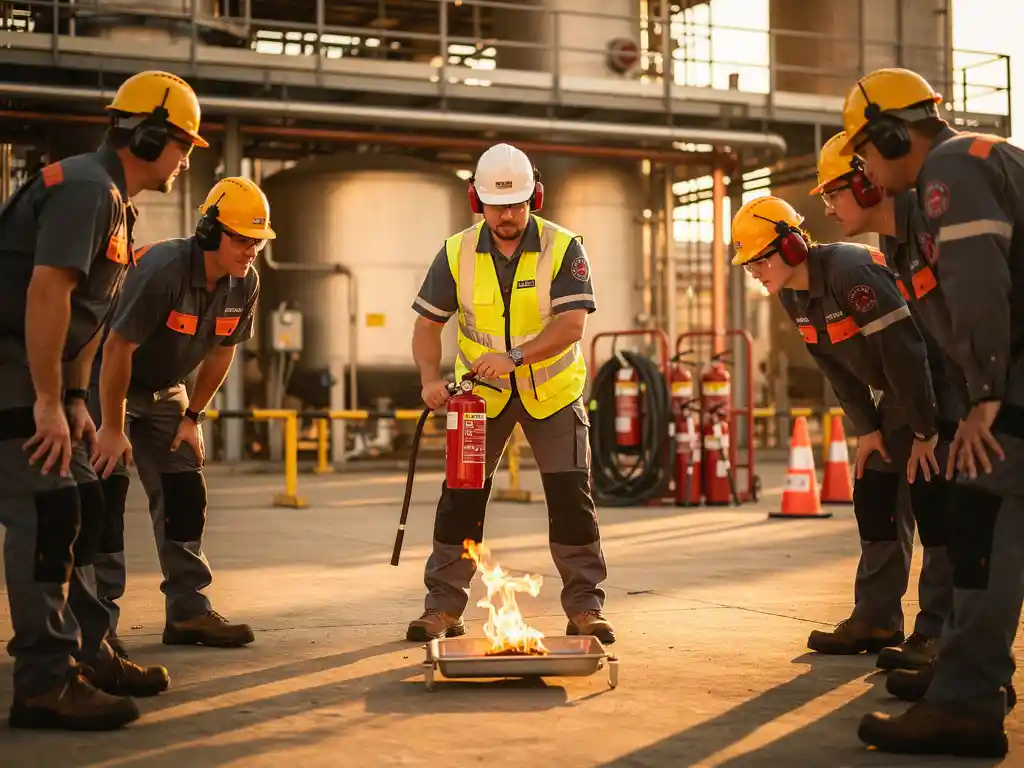
Fire prevention training reduces workplace injuries by equipping employees with the knowledge and skills to identify hazards before they escalate into emergencies. When workers understand how fires start, how to prevent them, and how to respond early, the likelihood of injury drops significantly. The sections below address the most common questions about workplace fire prevention training in detail.
What types of workplace injuries does fire prevention training address?
Fire prevention training addresses burns, smoke inhalation injuries, injuries sustained during evacuation, and trauma caused by fire-related explosions or equipment failures. By teaching employees to recognize and eliminate hazards before a fire starts, training reduces exposure to the conditions that cause these injuries in the first place.
Burns are the most direct injury associated with workplace fires, ranging from minor contact burns to severe injuries caused by flash fires or ignited materials. Smoke inhalation is often more dangerous than the flames themselves, as toxic fumes from burning equipment, insulation, or stored materials can cause serious respiratory damage within minutes of exposure.
Evacuation-related injuries are frequently overlooked in fire safety discussions. Panic, poor visibility, and unfamiliar escape routes can lead to falls, crush injuries, and collisions. Training that includes regular fire drills and clear communication of evacuation procedures directly reduces these risks. Equipment-related incidents, such as electrical fires in switchgear or energy storage systems, can also cause arc flash injuries, which training helps prevent through proper hazard identification and handling protocols.
How does fire hazard awareness training change employee behavior?
Fire hazard awareness training changes employee behavior by shifting the mindset from reactive to preventive. Employees who understand what creates fire risk, such as improper storage of flammable materials, overloaded electrical circuits, or blocked ventilation, actively make safer decisions in their daily routines rather than waiting for an alarm to act.
Behavioral change in fire safety follows a consistent pattern: awareness leads to recognition, and recognition leads to action. When employees can identify a hazard, they are far more likely to report it, correct it, or escalate it to the appropriate person. This is especially important in environments with high-value electrical equipment, where early identification of anomalies like unusual smells or heat can prevent a minor issue from becoming a serious fire.
Training also builds confidence. Employees who feel prepared are less likely to panic during an incident, which reduces the risk of injury during evacuation or first-response situations. Repeated exposure to fire safety information through drills, refresher sessions, and visual reminders reinforces safe habits over time, making them part of workplace culture rather than a one-time compliance exercise.
What are the key components of effective workplace fire prevention training?
Effective workplace fire prevention training includes hazard identification, emergency procedures, equipment familiarization, evacuation drills, and clear communication of responsibilities. Each component addresses a different layer of fire risk, and together they create a workforce that can prevent, detect, and respond to fire incidents effectively.
- Hazard identification: Teaching employees to recognize ignition sources, fuel types, and conditions that increase fire risk in their specific work environment.
- Emergency procedures: Clear, practiced protocols for what to do when a fire is detected, including who to notify, how to evacuate, and when to attempt suppression.
- Equipment familiarization: Hands-on training with fire extinguishers, suppression systems, and alarm panels so employees can act quickly and correctly under pressure.
- Evacuation drills: Regular, realistic practice of evacuation routes and assembly points, including scenarios that account for blocked exits or limited visibility.
- Role clarity: Defined responsibilities for fire wardens, first responders, and general staff so there is no confusion about who does what during an incident.
Training that is tailored to the specific risks of a workplace is significantly more effective than generic programs. A facility with electrical cabinets, battery energy storage systems, or server infrastructure faces different fire risks than a warehouse or office, and the training content should reflect those differences.
How often should workplace fire prevention training be conducted?
Workplace fire prevention training should be conducted at least once per year for all employees, with additional sessions when new equipment is introduced, when the workplace layout changes, or when a near-miss or incident occurs. High-risk environments may require more frequent training, including quarterly drills or role-specific refreshers.
Annual training ensures that all staff, including those who joined after the last session, have a baseline level of fire safety knowledge. However, annual training alone is rarely sufficient to maintain high levels of preparedness. Research in occupational safety consistently shows that knowledge retention drops significantly within months of a training session without reinforcement.
Practical drills should be conducted at least twice per year in most workplace settings. These drills should be unannounced where possible to simulate real conditions and reveal gaps in awareness or procedure that a scheduled drill might not expose. After each drill, a debrief session helps identify what worked and what needs improvement, turning the drill into a continuous improvement tool rather than a compliance checkbox.
What’s the difference between fire prevention training and fire safety training?
Fire prevention training focuses on stopping fires from starting, while fire safety training covers how to respond once a fire has already occurred. Both are essential components of a complete workplace fire risk reduction strategy, but they address different stages of the fire risk lifecycle.
Fire prevention training teaches employees to identify and eliminate hazards, manage ignition sources, handle flammable materials correctly, and maintain equipment in a way that reduces fire risk. The goal is to intervene before an incident happens.
Fire safety training, by contrast, covers emergency response: how to raise the alarm, how to use suppression equipment, how to evacuate safely, and how to account for all personnel after an incident. It prepares employees to minimize harm once a fire has started.
In practice, the most effective workplace programs integrate both. Prevention reduces the frequency of incidents, while safety training reduces the severity when prevention fails. Organizations that invest only in one area leave a significant gap in their overall fire risk reduction strategy.
How does fire prevention training support regulatory compliance?
Fire prevention training supports regulatory compliance by helping organizations meet the legal requirements set by occupational health and safety authorities, fire codes, and industry-specific standards. In most jurisdictions, employers are legally obligated to provide fire safety instruction to employees, and documented training records are required as evidence of compliance during inspections or audits.
Regulations such as the European Framework Directive on workplace health and safety, OSHA standards in the United States, and equivalent national legislation in other markets all require employers to assess fire risks and take preventive measures. Training is a core element of demonstrating that an organization has fulfilled its duty of care to employees.
Beyond legal minimums, compliance-driven training also supports insurance requirements. Many commercial insurers require evidence of regular fire safety training and documented risk assessments as a condition of coverage. Organizations that cannot demonstrate a structured training program may face higher premiums or reduced coverage in the event of a claim.
Regulatory frameworks are also evolving in response to growing concerns about environmental impact, including restrictions on certain chemical-based suppression agents. Organizations that align their training and equipment choices with current and anticipated regulations are better positioned to avoid costly retrofits or penalties as standards tighten.
How ExxFire supports workplace fire hazard prevention
Training prepares people, but the equipment protecting critical assets must be equally capable. ExxFire’s integrated fire detection and suppression systems provide an additional layer of protection precisely where fire risk is highest, inside the enclosures that house mission-critical equipment.
ExxFire’s systems combine aspirating smoke detection with non-pressurized nitrogen gas suppression, delivering automatic protection for closed enclosures such as server racks, electrical cabinets, switchgear, and battery energy storage systems. Key features include:
- Early smoke detection: Aspirating detection identifies smoke at the earliest stage, triggering suppression before a fire can develop and cause significant damage.
- Clean, residue-free suppression: Nitrogen gas leaves no chemical residue, protecting sensitive electronics and high-value components from secondary damage.
- Non-pressurized storage: The patented Cool Gas Generator technology stores nitrogen in a solid, non-pressurized state, eliminating the risks and maintenance burden associated with pressurized cylinders.
- Easy installation: Systems are pre-engineered for self-installation without special certification, reducing deployment costs and integration time.
- PFAS-free and environmentally responsible: ExxFire’s solution is a certified alternative to PFAS-containing suppression agents, supporting compliance with tightening environmental regulations.
- Fire panel integration: Built-in relays allow the system to report status to an existing fire panel, ensuring compatibility with current fire safety infrastructure.
For organizations looking to strengthen both their fire prevention training programs and the physical protection of their critical equipment, ExxFire offers a tested, certified solution that supports business continuity, regulatory compliance, and sustainability goals. Contact ExxFire to find out how its systems can complement your workplace fire risk reduction strategy.