

What is the difference between EN54 and NFPA standards?
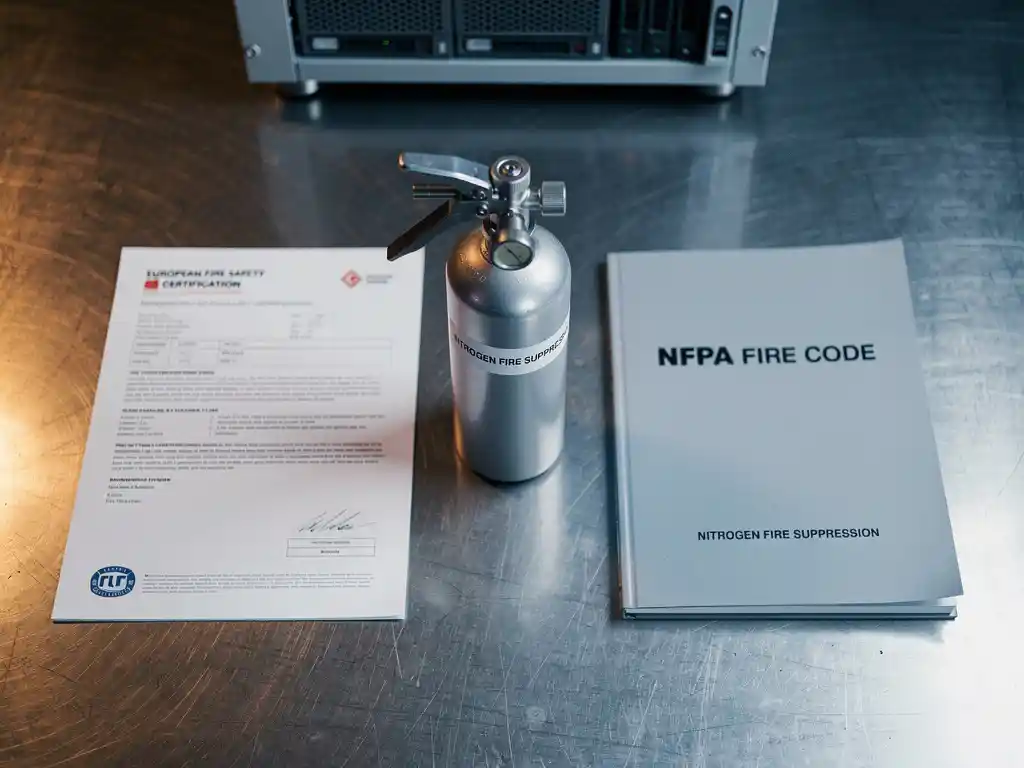
EN54 and NFPA are two distinct fire safety standards frameworks that govern how fire detection and suppression systems are designed, tested, and installed. EN54 is a European standard developed by the European Committee for Standardization (CEN), while NFPA is a suite of codes published by the National Fire Protection Association in the United States. The two systems differ in scope, testing methodology, and regional adoption, which directly affects how industrial facilities specify and procure fire protection equipment.
Understanding the distinction matters most when a facility operates across multiple jurisdictions, sources equipment internationally, or must satisfy both local regulators and global insurers. The sections below address the most common questions safety and compliance managers face when working across these two frameworks.
Which industries and regions use EN54 versus NFPA?
EN54 is the dominant fire detection standard across Europe, the Middle East, and many parts of Africa and Asia where European regulatory influence is strong. NFPA codes, particularly NFPA 72 for fire alarm systems and NFPA 13 for sprinkler systems, govern fire safety in the United States, Canada, and a large number of countries in Latin America, Southeast Asia, and the Middle East that have adopted American codes. Some regions, particularly in the Gulf, formally accept both frameworks depending on the project type.
In terms of industry sectors, EN54 is widely applied in manufacturing, data centers, commercial buildings, and critical infrastructure across Europe. NFPA standards are the default reference for oil and gas facilities, petrochemical plants, and heavy industrial operations in North America and in international projects where American engineering firms or insurers like FM Global set the specifications. Mining operations and large industrial campuses often encounter both frameworks simultaneously, especially when equipment is sourced from European suppliers for projects in NFPA-governed territories.
What do EN54 and NFPA actually certify?
EN54 certifies individual fire detection and alarm components, such as detectors, control panels, sounders, and power supplies, against a series of performance and reliability tests defined in numbered parts of the standard. Each part of EN54 covers a specific component type, and certification confirms that the component meets defined sensitivity, stability, and environmental resistance thresholds. NFPA, by contrast, is primarily a code and design standard rather than a product certification scheme. It prescribes how systems must be designed, installed, and maintained, rather than certifying individual products to a laboratory benchmark.
Product-level certification in the NFPA world is typically handled by third-party listing bodies such as UL (Underwriters Laboratories) or FM Approvals, which test products against standards like UL 268 for smoke detectors. A product can carry a UL listing and be installed in an NFPA-compliant system, but the NFPA code itself does not issue product certificates. EN54 certification, on the other hand, is issued by notified bodies accredited to test against the EN54 standard directly, and the CE marking that follows is a product-level declaration of conformity recognized across the European Economic Area.
How do EN54 and NFPA testing requirements differ?
EN54 testing is highly prescriptive at the component level. Each part of the standard defines specific environmental tests, including temperature cycling, humidity exposure, vibration, electromagnetic compatibility, and fire sensitivity tests using standardized test fires. A smoke detector certified under EN54-7, for example, must pass a defined set of fire types and environmental stress conditions before it can carry the certification mark. The testing is conducted by accredited third-party laboratories, and the results must be documented in a full test report that supports the CE declaration.
NFPA testing requirements, as expressed through UL or FM standards, also involve rigorous laboratory testing, but the structure differs. UL standards for fire detection products specify performance criteria and test methods that are aligned with NFPA design intent but are maintained separately. FM Approvals testing tends to be especially demanding for industrial applications, often exceeding minimum NFPA requirements. The key practical difference is that EN54 creates a unified European product passport, while the NFPA ecosystem relies on a network of listing bodies that each maintain their own product databases and test protocols.
Can EN54-certified equipment be used in NFPA-governed projects?
EN54-certified equipment is not automatically accepted on NFPA-governed projects. NFPA codes generally require that equipment be listed by a recognized testing laboratory, which in practice means a UL listing or FM Approval. An EN54-certified product that does not also carry a UL listing or equivalent American approval will typically be rejected during inspection or permitting in jurisdictions that enforce NFPA codes strictly.
There are exceptions. Some authorities having jurisdiction (AHJs) in the United States have discretion to accept equipment that is certified to an equivalent standard, and in international projects where the AHJ is more flexible, EN54 certification may be accepted as evidence of product quality. However, relying on this discretion introduces compliance risk. The safest approach for specifying equipment that must work in both environments is to select products that carry both EN54 certification and a recognized American listing, which a growing number of manufacturers now offer for their core detection components.
What happens when a facility must comply with both standards?
When a facility must satisfy both EN54 and NFPA requirements, the compliance strategy typically involves selecting equipment that holds dual certification, designing the system to the more demanding of the two frameworks in each area, and documenting compliance against both sets of requirements for the authority having jurisdiction in each region. This situation arises most often in multinational organizations managing facilities across Europe and North America, or in international projects where the client is European but the local regulator follows NFPA.
In practice, the system design often defaults to NFPA for layout and installation rules, since NFPA codes are more prescriptive about spacing, zoning, and installation methods. EN54 compliance is then addressed at the component level by specifying certified detectors and panels. The documentation burden increases significantly in dual-compliance scenarios, as each certification body and AHJ may require separate evidence packages. Engaging a fire safety consultant with experience in both frameworks early in the design phase reduces the risk of costly redesign later.
Which standard is more stringent for fire suppression systems?
Neither standard is universally more stringent across all suppression scenarios, but the answer depends on the suppression technology and application. For gaseous suppression systems protecting enclosed spaces, European standards such as EN 15004 (which governs clean agent systems) are generally considered rigorous and well-aligned with international best practice. NFPA 2001 covers clean agent systems in the American framework and includes detailed concentration, discharge time, and safety requirements that are broadly comparable. For water-based suppression, NFPA 13 is widely regarded as one of the most detailed and demanding installation standards in the world.
For industrial enclosure protection specifically, the key differentiator is often not which standard is stricter in absolute terms, but which standard is enforced by the insurer or the local regulator. FM Global, which sets loss prevention standards for many large industrial insurers, often imposes requirements that exceed both EN and NFPA minimums. Facilities in high-risk sectors such as oil and gas or petrochemicals should verify requirements with their insurer and local AHJ rather than assuming that meeting one framework automatically satisfies the other.
How ExxFire supports compliance with fire detection and suppression standards
ExxFire’s integrated fire detection and suppression systems are designed to simplify compliance for industrial facilities navigating complex regulatory environments. The systems combine aspirating smoke detection with non-pressurized nitrogen gas suppression in a single pre-engineered unit, tested and certified by CNPP in France, making them well-suited for facilities operating under European fire safety frameworks. Key features relevant to compliance managers include:
- CNPP-certified performance: Independent third-party testing by CNPP France provides documented evidence of detection sensitivity and suppression effectiveness, supporting EN54-aligned compliance documentation.
- No chemical residues: Nitrogen suppression leaves no residue on sensitive electronics, eliminating secondary damage claims and simplifying post-incident compliance reporting.
- Seamless panel integration: Built-in relays allow the system to report status to an existing fire alarm panel, supporting integration with broader NFPA 72 or EN54-compliant alarm infrastructure.
- Easy self-installation: Pre-engineered enclosure protection for volumes up to 4.5 m³ requires no special certification for installation, reducing installation cost and compliance overhead.
- PFAS-free suppression agent: Nitrogen is a fully inert, PFAS-free gas, ensuring compliance with evolving environmental regulations that are tightening across both European and North American jurisdictions.
If you are specifying fire suppression for switchgear, electrical cabinets, or battery energy storage systems and need a solution that aligns with your regional compliance requirements, contact ExxFire to discuss your application and receive documentation relevant to your certification needs.
Related Articles
- What is the process for getting a fire suppression system VdS certified?
- What are the IEC standards for fire detection in electrical enclosures?
- How do you prevent fires in a home office?
- How does poor wiring cause fires and what are the warning signs?
- What is active fire protection and how is it different from passive?