

What fire suppression standards apply to data centers in 2026?
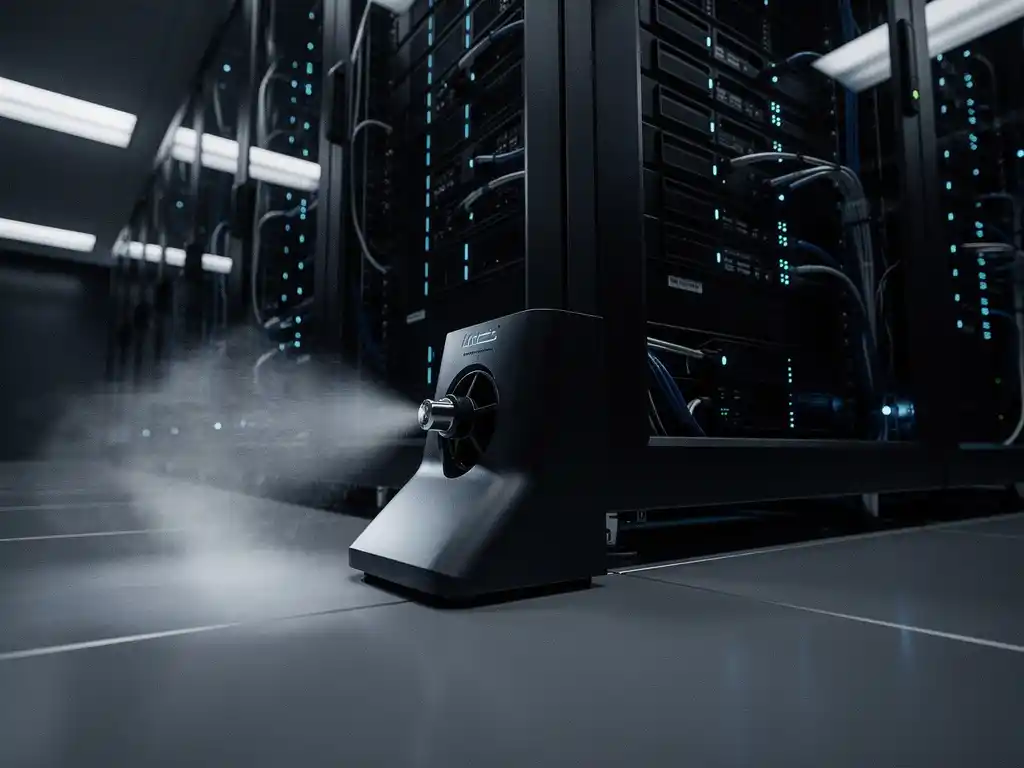
Data centers in 2026 are governed by a clear set of fire suppression standards, primarily NFPA 75 and NFPA 2001, alongside international equivalents such as ISO 14520 and EN 15004. These standards define how suppression systems must be designed, installed, tested, and maintained to protect information technology equipment and the facilities that house it. The sections below address the most common compliance questions facility managers and data center operators face this year.
Which specific standards govern data center fire suppression in 2026?
The primary standards governing data center fire suppression in 2026 are NFPA 75 (Standard for the Fire Protection of Information Technology Equipment), NFPA 2001 (Standard on Clean Agent Fire Extinguishing Systems), and, where applicable, ISO 14520 and EN 15004 for international and European facilities. Together, these documents define the minimum requirements for detection sensitivity, agent selection, enclosure integrity, and system performance.
NFPA 75 is the foundational document for data center fire protection in North America. It covers both room-level and localized protection, specifying when automatic suppression is required and what detection thresholds must trigger a system response. NFPA 2001 then governs the specific clean agent systems most commonly installed in data centers, including inert gas and halocarbon alternatives.
For facilities operating across multiple jurisdictions, ISO 14520 provides a globally recognized framework for gaseous suppression systems. European operators typically reference EN 15004, which mirrors much of ISO 14520 but incorporates EU-specific environmental and safety requirements. Local building codes and Authority Having Jurisdiction (AHJ) rulings can add further requirements on top of these baseline standards, so compliance always requires a jurisdiction-specific review.
What has changed in data center fire suppression requirements recently?
The most significant recent changes to data center fire suppression requirements center on three areas: stricter enclosure integrity testing, revised agent concentration limits, and the phaseout of certain chemical suppression agents due to environmental legislation. The 2024 edition of NFPA 2001 tightened guidance on enclosure leakage testing and extended hold-time requirements for gaseous systems.
Enclosure integrity, measured through door fan testing, has become a more rigorous compliance checkpoint. A suppression system that discharges correctly but cannot hold agent concentration long enough for fire service arrival is now considered non-compliant under updated guidance. Facilities that passed integrity checks under older editions may need to retest under current criteria.
Separately, regulatory pressure on fluorinated gases has accelerated. The EU F-Gas Regulation and US EPA SNAP program have progressively restricted or delisted several halocarbons previously common in data center suppression. This has pushed facilities toward inert gas alternatives and nitrogen-based systems that carry no global warming potential and face no regulatory sunset risk.
What types of suppression systems are accepted under these standards?
NFPA 75 and NFPA 2001 accept two broad categories of suppression systems for data center use: clean agent systems (both halocarbon and inert gas) and water-based systems under specific conditions. Clean agents are strongly preferred for active IT environments because they suppress fire without damaging sensitive electronics or leaving residue.
Inert gas systems
Inert gas systems use agents such as nitrogen, argon, or IG-541 blends to reduce oxygen concentration below the level needed to sustain combustion. They are accepted under both NFPA 2001 and ISO 14520, carry zero ozone depletion potential, and pose no global warming risk. They are particularly well suited to enclosed equipment spaces where chemical residue from other agents would cause secondary damage.
Halocarbon clean agents
Halocarbons such as FK-5-1-12 and HFC-227ea remain listed under NFPA 2001 but are subject to increasing environmental scrutiny. Facilities specifying these agents in 2026 must verify that the chosen compound is not restricted or delisted under applicable environmental regulations in their jurisdiction before committing to installation.
Water mist and sprinkler systems
Water mist systems are accepted under NFPA 75 for certain data center configurations, particularly in spaces where clean agent systems are not feasible. Standard sprinkler systems may also be required at the room level even when localized clean agent systems protect individual enclosures. The two approaches are often used in combination rather than as alternatives.
How do PFAS regulations affect compliant suppression choices in data centers?
PFAS regulations directly eliminate aqueous film-forming foam (AFFF) and certain fluorinated clean agents from compliant data center suppression options. In 2026, PFAS restrictions under EU REACH, national legislation in several European countries, and evolving US EPA guidance mean that any suppression agent containing per- or polyfluoroalkyl substances is either already prohibited or facing near-term restriction in most major markets.
For data center operators, this has practical consequences at the specification stage. Several halocarbon agents previously common in clean agent systems contain fluorinated compounds that fall within PFAS definitions under current or pending regulation. Facilities procuring or upgrading suppression systems in 2026 need to confirm that their chosen agent is explicitly PFAS-free, not simply listed under NFPA 2001, since standard listing does not guarantee regulatory compliance under environmental law.
Inert gas systems, including pure nitrogen systems, are entirely PFAS-free by nature and carry no regulatory risk from this direction. They represent the most straightforward path to both fire suppression compliance and environmental compliance simultaneously, without requiring ongoing monitoring of chemical regulation updates.
What are the detection requirements tied to suppression system standards?
NFPA 75 requires that suppression systems in data centers be triggered by automatic detection, and it specifies that detection sensitivity must be appropriate for the environment being protected. For enclosed IT equipment spaces, this typically means very early warning smoke detection, with aspirating smoke detection (ASD) systems recognized as the preferred technology for high-sensitivity applications.
NFPA 72, the National Fire Alarm and Signaling Code, governs the detection side of the system and works in conjunction with NFPA 75 and NFPA 2001. Together, these standards require that detection be capable of identifying a fire condition early enough to allow suppression discharge before significant hardware damage occurs. For localized systems protecting individual enclosures, detection must be positioned at or near the potential ignition source rather than relying solely on room-level smoke detectors.
Pre-discharge warning requirements are also tied to detection. NFPA 2001 mandates an audible and visual pre-discharge alarm that gives personnel time to evacuate before agent release. The detection-to-discharge sequence, including any time delay, must be engineered as part of the system design and documented in the system acceptance test.
Who is responsible for certifying compliance with data center fire suppression standards?
Compliance certification for data center fire suppression systems is a shared responsibility involving the system designer, the installing contractor, the equipment manufacturer, and the Authority Having Jurisdiction (AHJ). No single party holds sole responsibility. The AHJ, typically a local fire marshal or building authority, has final approval authority over whether a system meets applicable codes in a given jurisdiction.
Third-party testing laboratories such as UL, FM Global, and VdS provide product-level certification, confirming that individual components and systems meet the performance criteria defined in the relevant standards. A system installed using certified components still requires a system-level acceptance test, typically a door fan test for gaseous systems and a functional discharge test, before the AHJ will sign off on occupancy or operation.
For facilities operating under insurance requirements from FM Global, additional data sheets and approval criteria apply on top of NFPA standards. FM Global’s own data sheets for data center protection can be more stringent than NFPA minimums, and facilities seeking FM approval need to design to the more demanding of the two sets of requirements. Engaging a qualified fire protection engineer at the design stage is the most reliable way to ensure all applicable standards are met before installation begins.
How ExxFire supports data center fire suppression compliance
ExxFire’s integrated detection and suppression systems are purpose-built for the kind of localized, enclosure-level protection that NFPA 75 and NFPA 2001 require for IT equipment. For data center operators and facility managers working through compliance requirements in 2026, the ExxFire system addresses several of the most critical specification challenges at once:
- PFAS-free suppression: ExxFire uses non-pressurized nitrogen gas, which contains no fluorinated compounds and meets current and anticipated PFAS restrictions without any regulatory risk.
- Early smoke detection built in: The system integrates aspirating smoke detection directly with suppression, meeting the high-sensitivity detection requirements under NFPA 75 and NFPA 72 without requiring separate detection infrastructure.
- Enclosure-level protection: Designed for closed enclosures such as server racks and electrical cabinets up to 4.5 m³, with multiple units interconnectable for larger volumes, providing the localized suppression approach recognized under current standards.
- Third-party tested and certified: Systems are tested and certified by CNPP in France and DMT (part of TÜV Nord) in Germany, providing the independent verification that AHJs and insurers require.
- Fire panel integration: Built-in relays allow the system to report status to an existing fire suppression system, supporting the documentation and signaling requirements under NFPA 72.
If you are specifying or upgrading fire suppression for a data center and need a system that is compliant, PFAS-free, and straightforward to install, contact ExxFire to discuss your specific enclosure protection requirements.