

Why is early fire detection critical in electrical cabinet protection?
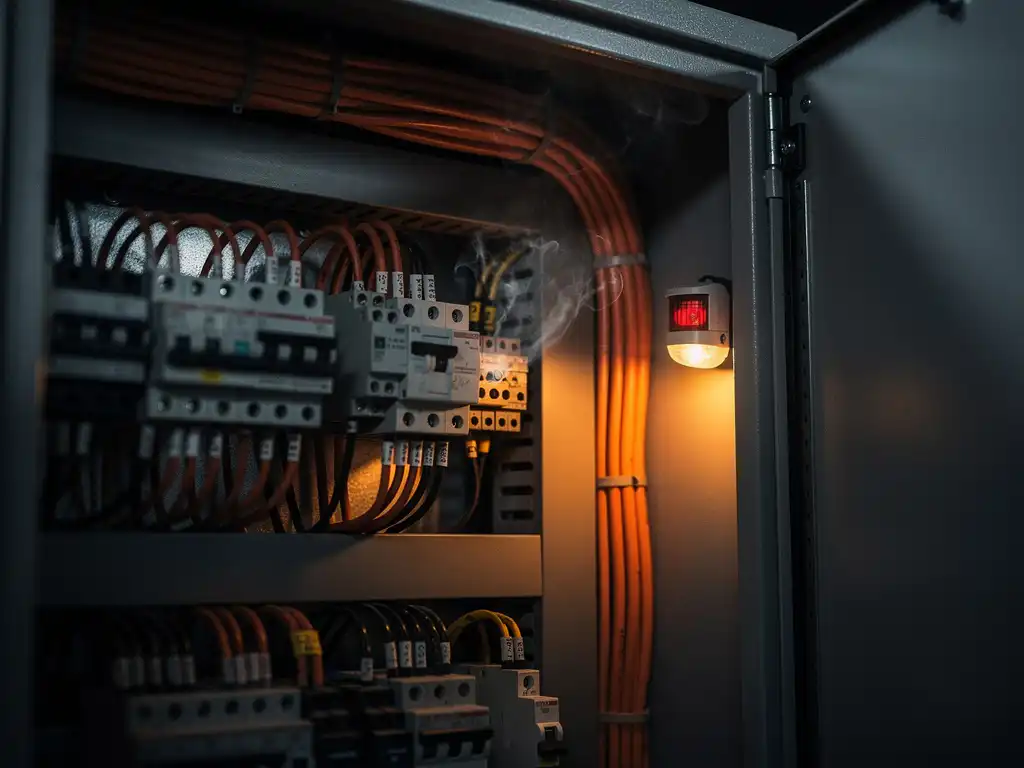
Early fire detection is critical in electrical cabinet protection because fires in enclosed spaces develop rapidly, progressing from invisible thermal stress and smoldering components to full ignition within minutes. Detecting the earliest signs of combustion, such as microscopic smoke particles, gives suppression systems the time they need to act before flames, heat, and toxic gases cause irreversible damage. The sections below unpack exactly how that process unfolds and what effective protection looks like.
What happens inside an electrical cabinet before a fire breaks out?
Before a fire breaks out inside an electrical cabinet, components under thermal or electrical stress begin to degrade silently. Overloaded connections, failing insulation, loose terminals, and aging capacitors generate heat and release microscopic smoke particles long before any visible flame appears. This pre-fire phase can last minutes or even hours, and it is the window in which early detection makes the greatest difference.
The enclosed nature of electrical cabinets makes this phase particularly dangerous. Heat and combustion byproducts accumulate inside the enclosure rather than dispersing into the surrounding room. Oxygen levels drop, materials continue to smolder, and the internal temperature climbs steadily. By the time a conventional detector in the room registers anything unusual, the cabinet interior may already be at a critical threshold.
Common ignition sources inside electrical enclosures include:
- Loose or corroded bus bar connections generating resistive heat
- Overloaded circuit breakers or fuses operating near their thermal limits
- Insulation breakdown on cables due to age, mechanical wear, or overloading
- Arc faults caused by damaged or incorrectly installed wiring
- Failing capacitors or power supply units releasing flammable gases
Understanding this pre-ignition sequence is the foundation of any effective electrical cabinet fire protection strategy. The goal is not to react to flames but to intercept the process well before combustion becomes self-sustaining.
Why is smoke detection faster than heat detection in electrical cabinets?
Smoke detection is faster than heat detection in electrical cabinets because smoke particles are produced in the very earliest stages of thermal degradation, well before temperatures rise to levels that trigger heat detectors. Inside a sealed enclosure, heat builds slowly and unevenly, while aerosol particles from smoldering materials are present almost immediately once a component begins to fail.
Heat detectors respond to a threshold temperature or a rate of temperature rise. In a well-ventilated room, that threshold may not be reached until a fire is already significant. Inside a cabinet, even a localized smoldering fault produces a measurable concentration of aerosol particles within the enclosure long before the ambient heat reaches detector-level thresholds.
Aspirating smoke detection technology takes this principle further by actively drawing air samples from inside the enclosure and analyzing them for combustion particles. This approach can detect the earliest signs of an electrical fire, sometimes described as the pre-smoke or incipient phase, giving the system time to trigger suppression before open flames develop. For fire detection in switchgear and similar enclosures, this speed advantage is decisive.
What damage can occur if electrical cabinet fires are detected late?
Late detection of an electrical cabinet fire leads to damage that extends far beyond the cabinet itself. Once a fire establishes inside an enclosure, it destroys electronic components, melts wiring, and can spread to adjacent equipment or the surrounding facility. The consequences range from expensive hardware replacement to prolonged operational downtime and, in severe cases, structural damage or injury.
The financial and operational impact of a late-detected cabinet fire typically includes:
- Hardware destruction: Printed circuit boards, power supplies, and switching equipment are rarely recoverable after exposure to sustained heat and flame
- Contamination: Conventional suppression agents, including certain chemical gases, can leave residues that damage sensitive electronics even when the fire itself is controlled
- Downtime: Replacing or restoring mission-critical switchgear, ICT infrastructure, or battery energy storage systems can take days or weeks
- Cascading failures: A fire in one cabinet can propagate through cable trays or shared enclosures to affect connected systems
- Regulatory and insurance consequences: Inadequate fire protection in electrical installations can trigger compliance investigations and affect insurance claims
For industrial facilities where electrical cabinets control production processes or power distribution, even a few hours of unplanned downtime carries significant costs. Early fire detection combined with targeted suppression is the most effective way to contain an incident before it escalates to this level.
How does a combined detection and suppression system protect electrical cabinets?
A combined detection and suppression system protects electrical cabinets by integrating early smoke detection with an automatic suppression response inside the same enclosure. When the detection element identifies combustion particles at the incipient stage, it triggers suppression directly at the source, flooding the cabinet interior with an extinguishing agent before flames can develop or spread.
This integrated approach closes the gap between detection and response. Standalone room-level detection systems alert personnel, but they depend on human intervention or a separate suppression system to act. In the time it takes for a response to be initiated, an electrical cabinet fire can transition from a smoldering fault to an open flame. A self-contained system eliminates that delay.
The choice of suppression agent matters significantly for electrical enclosures. Agents that leave chemical residues can cause secondary damage to the very components being protected. Inert gas suppression, particularly nitrogen-based systems, extinguishes fire by displacing oxygen without depositing any residue, making it well suited for protecting sensitive electronics and high-value electrical equipment.
Which electrical cabinets and enclosures need early fire detection?
Any electrical cabinet or enclosure that houses high-density electronics, carries a significant electrical load, or controls a critical process should be considered a candidate for early fire detection. The risk is not limited to large industrial installations; compact enclosures in data centers, manufacturing facilities, and energy infrastructure face the same internal fire dynamics.
Enclosure types where early fire detection and suppression are most commonly applied include:
- Switchgear and medium-voltage cabinets in industrial and utility environments
- ICT and server cabinets in data centers and network rooms
- Battery Energy Storage Systems (BESS), where thermal runaway creates rapid and intense fire conditions
- High-voltage distribution cabinets in manufacturing and process industries
- Control panels and PLC cabinets managing automated production lines
- UPS systems and power conditioning enclosures in critical infrastructure
The common thread is consequence. Where a cabinet failure would cause significant downtime, safety risk, or financial loss, the case for fire safety in electrical enclosures becomes straightforward. Early detection systems are especially important in unmanned or remotely monitored installations where there are no on-site personnel to respond quickly.
What standards and certifications apply to cabinet fire detection systems?
Cabinet fire detection systems are evaluated against a range of international standards covering detection performance, suppression agent safety, and electrical compatibility. The specific standards that apply depend on the type of enclosure, the installation environment, and the jurisdiction, but several frameworks are widely recognized across industrial and commercial applications.
Relevant standards and certification bodies include:
- EN 54 (European Standard for fire detection and alarm systems), which covers detector performance and system design requirements
- NFPA 72 (National Fire Alarm and Signaling Code), widely referenced in North American industrial specifications
- NFPA 2001, which addresses clean agent fire extinguishing systems, including inert gas suppression
- ISO 14520, the international standard for gaseous fire-extinguishing systems
- ATEX Directive (2014/34/EU), relevant where cabinets are located in potentially explosive atmospheres
- IEC 60079 series for equipment used in explosive gas atmospheres
Third-party testing and certification by recognized bodies adds an important layer of credibility. Certifications from organizations such as CNPP in France or TÜV Nord in Germany demonstrate that a system has been independently validated under controlled conditions, not just self-assessed by the manufacturer. For safety managers specifying systems under FM Global or similar insurance frameworks, independently certified performance data is often a procurement requirement.
How ExxFire protects electrical cabinets with early detection and suppression
ExxFire’s integrated systems address the full lifecycle of an electrical cabinet fire threat, from the earliest detectable sign of smoldering through to automatic suppression, without requiring human intervention. The systems are built around aspirating smoke detection paired with non-pressurized nitrogen gas suppression delivered through the patented Cool Gas Generator technology.
Key features of ExxFire’s cabinet fire protection systems include:
- Aspirating smoke detection that actively samples air inside the enclosure, identifying combustion particles at the incipient stage before visible smoke or elevated heat is present
- Non-pressurized nitrogen suppression that leaves no chemical residue, protecting sensitive electronics and components from secondary damage
- Pre-engineered self-installation without the need for specialist certification, reducing installation cost and complexity
- Scalable coverage for enclosures up to 4.5 m³ per unit, with multiple units interconnectable for larger volumes
- Built-in relay outputs for integration with existing fire alarm panels, ensuring the system fits within current safety infrastructure
- Independent certification by CNPP France, providing third-party validation of detection and suppression performance
ExxFire’s approach is PFAS-free, environmentally responsible, and designed for the lowest possible Total Cost of Ownership through easy maintenance and long service intervals. If you are specifying fire protection for switchgear, ICT cabinets, BESS installations, or other critical enclosures, contact ExxFire to discuss the right system configuration for your application.