

What tools are used in fire management today?
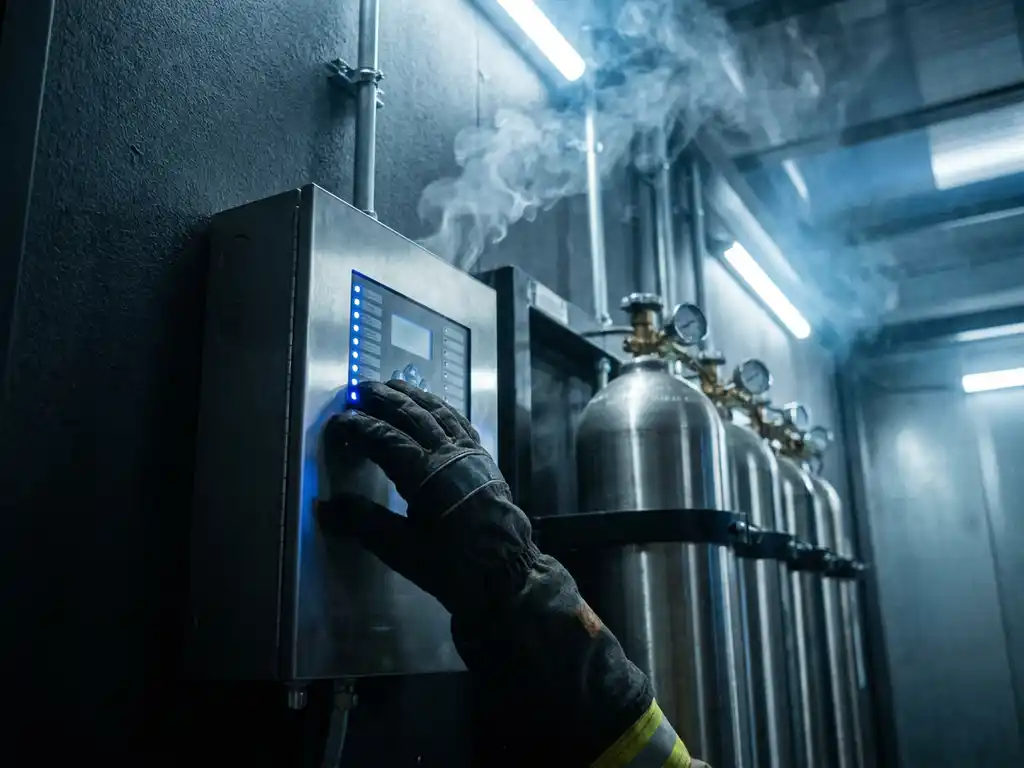
Modern fire management relies on a combination of detection systems, suppression technologies, monitoring tools, and risk assessment equipment working together to identify, contain, and extinguish fires before they cause serious damage. The specific tools used depend heavily on the environment being protected — whether that is a data center, an industrial facility, or an energy storage installation. This article unpacks the most important questions surrounding fire management tools today, from how detection works to which suppression methods are safest for sensitive equipment.
What types of tools are used in modern fire management?
Modern fire management tools fall into four main categories: detection systems, suppression systems, monitoring and control panels, and risk management software. Together, these fire protection equipment types form a layered defense strategy that catches fire threats early, responds automatically, and helps operators maintain oversight of protected environments at all times.
Detection tools include smoke detectors, heat sensors, flame detectors, and aspirating smoke detection systems. Suppression tools range from water-based sprinklers to gaseous agents, foam systems, and inert gas generators. Control panels tie everything together, receiving signals from detectors and triggering suppression responses. In more advanced deployments, fire management software integrates with building management systems to provide real-time status reporting, alarm logging, and remote monitoring capabilities.
The trend in modern fire management is toward combined systems — single units that handle both detection and suppression in one integrated package. This approach is particularly valuable for protecting enclosed, high-value equipment where speed of response and precision matter more than broad area coverage.
How do fire detection systems work in critical environments?
In critical environments, fire detection systems work by continuously sampling the air or monitoring environmental conditions to identify the earliest possible signs of combustion — typically smoke particles or heat changes — long before a visible flame develops. The goal is to trigger a suppression response or alert while damage is still preventable.
Standard point detectors, such as ionization or photoelectric smoke detectors, react when smoke reaches the sensor directly. In critical environments, this is often too slow. Aspirating smoke detection (ASD) systems take a more proactive approach: they actively draw air samples through a network of pipes and analyze those samples in a central detector unit. This allows them to identify smoke concentrations far below the threshold that would trigger a conventional detector, giving operators and suppression systems more time to respond.
Temperature and heat sensors provide a complementary layer, detecting rapid rises in ambient temperature that may indicate a developing fire even when smoke is not yet present. In environments such as server rooms, electrical cabinets, and battery storage installations, combining aspirating detection with suppression in a single unit ensures that the response is not only fast but precisely targeted at the source of the threat rather than the broader room.
What is the difference between gaseous and water-based fire suppression?
The key difference between gaseous and water-based fire suppression is the suppression mechanism and the type of damage each method can cause. Water-based systems extinguish fire by cooling and smothering flames with water, while gaseous systems suppress fire by displacing oxygen or chemically interrupting combustion using a gas agent — leaving no liquid residue behind.
Water-based systems, including sprinklers and water mist systems, are cost-effective and widely used for general building protection. However, they are unsuitable for environments containing sensitive electronics, live electrical equipment, or high-value hardware, because water contact causes its own category of damage — corrosion, short circuits, and permanent hardware failure.
Gaseous suppression systems use agents such as CO2, inert gases like nitrogen and argon, or synthetic chemical gases to reduce oxygen levels or interrupt the chemical chain reaction of combustion. These agents dissipate cleanly after discharge, leaving no residue. This makes gaseous fire suppression the preferred choice for data centers, switchgear rooms, ICT cabinets, and any environment where the equipment inside is as valuable as the structure itself. The trade-off is that some gaseous agents carry their own risks — high-pressure storage, toxicity concerns, or environmental impact from fluorinated compounds.
Which fire suppression tools are safe for sensitive electronics?
The fire suppression tools safest for sensitive electronics are inert gas systems — particularly those using nitrogen or argon — because they extinguish fire without leaving chemical residues, moisture, or corrosive agents that could damage circuit boards, connectors, or storage media. Clean agent gaseous systems are the industry standard for protecting electronics-dense environments.
Water-based systems, foam agents, and dry powder extinguishers all pose significant secondary damage risks in electronics environments. Even water mist, while less damaging than traditional sprinklers, introduces moisture that can cause corrosion and short circuits in live equipment.
Among gaseous options, nitrogen stands out because it is chemically inert, non-toxic, and leaves absolutely no residue after discharge. Systems that store nitrogen in a solid, non-pressurized state offer an additional safety advantage: they eliminate the risks associated with high-pressure gas cylinders, such as accidental discharge or pressure-related failures in confined spaces. This makes them particularly well-suited for installation inside server racks, electrical cabinets, and switchgear enclosures where space is limited and the equipment inside cannot tolerate any form of contamination.
It is also worth noting the growing concern around PFAS-containing suppression agents. Many traditional clean agent systems rely on fluorinated compounds that are now subject to increasing regulatory scrutiny due to their environmental persistence. PFAS-free alternatives, such as inert nitrogen-based systems, are becoming the preferred choice for organizations that need both effective fire protection and environmental compliance.
What tools are used to manage fire risk in battery energy storage systems?
Managing fire risk in battery energy storage systems (BESS) requires a combination of early-stage smoke and gas detection, thermal monitoring, and fast-acting suppression tools capable of responding to the unique hazards of lithium-ion battery fires. Standard fire safety tools are often insufficient because battery fires can develop through a process called thermal runaway, which generates heat and flammable gases before any visible flame appears.
Effective fire risk management in BESS environments typically involves the following layers of protection:
- Aspirating smoke detection: Detects combustion byproducts at very early stages, often before thermal runaway escalates to open fire
- Gas detection sensors: Monitor for hydrogen and other flammable gases released during battery degradation or failure
- Thermal imaging and temperature monitoring: Identify abnormal heat patterns across battery modules before they trigger a chain reaction
- Object-level suppression systems: Target suppression directly at the battery enclosure rather than flooding the entire room, limiting damage and reducing downtime
- Fire panel integration: Relay system status and alarm signals to a central control point for rapid human response
The combination of early detection and targeted suppression is critical in BESS environments because the consequences of a delayed response can be severe — battery fires are notoriously difficult to extinguish once they escalate, and the thermal energy released can sustain combustion even after the initial fuel source appears to be suppressed.
How are fire management tools tested and certified?
Fire management tools are tested and certified through independent third-party testing organizations that evaluate performance, reliability, and safety under controlled conditions. Certification confirms that a product meets defined standards for detection sensitivity, suppression effectiveness, and operational safety before it can be deployed in real environments.
In Europe, recognized certification bodies include CNPP (Centre National de Prévention et de Protection) in France, which specializes in fire safety testing, and organizations within the TÜV Nord group in Germany, which conduct rigorous technical assessments of fire suppression systems. Products that carry certification from these bodies have been independently validated — not just self-declared by the manufacturer.
The certification process typically covers several dimensions:
- Detection performance: How quickly and accurately the system identifies smoke or heat under standardized test conditions
- Suppression effectiveness: Whether the agent and delivery mechanism reliably extinguish test fires within a defined enclosure volume
- Safety of the suppression agent: Toxicity, pressure safety, and residue impact on protected equipment
- Environmental compliance: Increasingly, certification processes assess whether agents contain PFAS or other regulated substances
For buyers and facility managers, certification from recognized bodies provides the assurance that a system will perform as expected in an emergency — not just under ideal laboratory conditions. It also supports compliance with insurance requirements and regulatory frameworks that mandate the use of certified fire safety equipment in certain industries and facility types.
How ExxFire helps with fire management
ExxFire provides integrated fire detection and suppression systems purpose-built for the environments where fire management tools matter most — server racks, electrical cabinets, switchgear enclosures, and battery energy storage systems. Key features of ExxFire’s approach include:
- Combined detection and suppression in one unit: Aspirating smoke detection paired with non-pressurized nitrogen gas suppression in a single, pre-engineered system
- PFAS-free inert nitrogen technology: No chemical residues, no damage to sensitive electronics, and no environmental compliance concerns
- Easy self-installation: Systems are designed for straightforward installation without specialist certification requirements, reducing deployment costs
- Maintenance-free operation: Once commissioned, ExxFire units require no ongoing check-ups, keeping the total cost of ownership low
- Fire panel integration: Built-in relays report system status to existing fire panels, ensuring seamless compatibility with current infrastructure
- Independent certification: Tested and certified by CNPP in France and DMT (part of TÜV Nord) in Germany
Whether you are protecting a single ICT cabinet or a large-scale BESS installation, ExxFire’s fire suppression systems offer a clean, certified, and cost-effective solution. Contact ExxFire to discuss the right fire management tools for your specific environment.