

What fire prevention equipment does every home need?
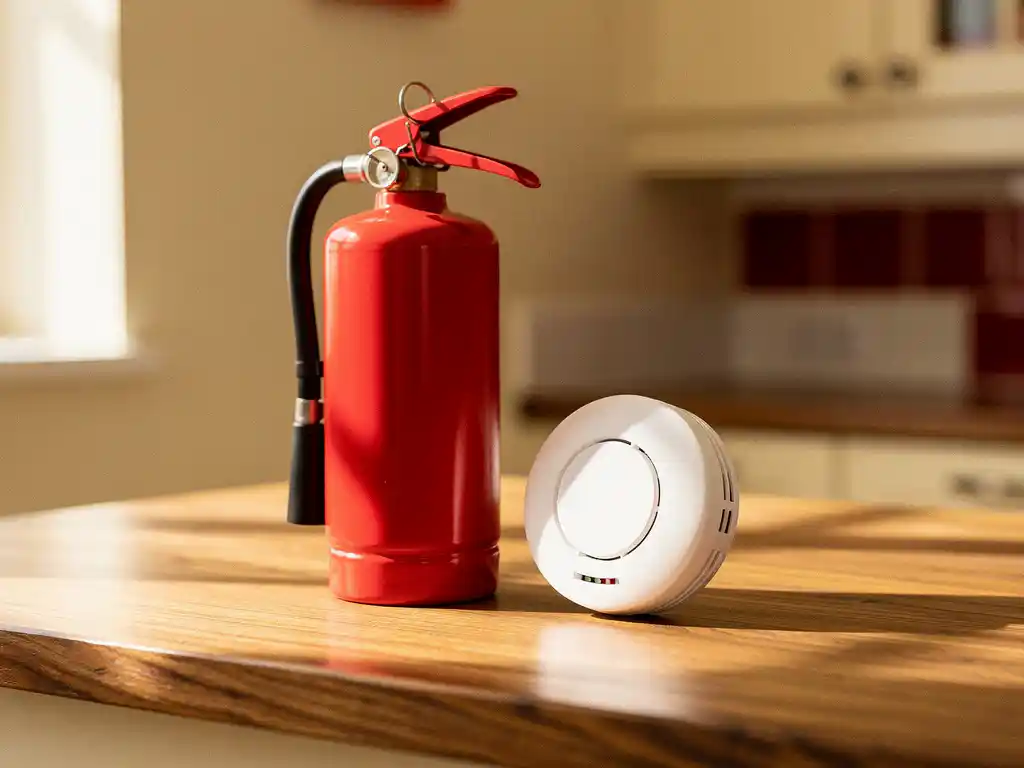
Every home needs a core set of fire prevention equipment to detect hazards early and respond quickly if a fire starts. At minimum, that means working smoke detectors on every level, a carbon monoxide detector, and at least one fire extinguisher suited to household fire types. The sections below walk through each essential device, where to place it, and how to keep it working reliably.
What types of fire hazards are most common in homes?
The most common home fire hazards fall into a few predictable categories: cooking equipment, electrical faults, heating appliances, and open flames such as candles. Cooking is consistently the leading cause of residential fires, typically when food or grease is left unattended on a hot stove. Electrical hazards, including overloaded outlets, faulty wiring, and aging appliances, are another major source of ignition.
Heating equipment, including space heaters placed too close to combustible materials, is especially risky during colder months. Candles and smoking materials round out the most frequent causes. Understanding these hazard categories helps you choose the right fire prevention equipment and position it where it will do the most good. A smoke detector near the kitchen, for example, addresses the single highest-risk zone in most homes.
What is a smoke detector and where should it be placed?
A smoke detector is a fire safety device that senses airborne smoke particles and triggers an audible alarm to warn occupants of a potential fire. It is the most important piece of home fire protection equipment you can own, giving residents time to evacuate before flames spread. Most residential smoke detectors use either ionization or photoelectric sensing technology, or a combination of both.
Ionization vs. photoelectric smoke detectors
Ionization detectors respond quickly to fast-flaming fires, such as those fueled by paper or cooking grease. Photoelectric detectors are more sensitive to slow, smoldering fires, which are common when upholstered furniture or wiring begins to burn. Dual-sensor models combine both technologies and offer the broadest protection for home use.
Where to install smoke detectors
Install a smoke detector on every level of the home, including the basement. Place one inside each bedroom and at least one outside each sleeping area. Mount detectors on the ceiling or high on a wall, since smoke rises. Keep them at least 10 feet from cooking appliances to reduce nuisance alarms, and avoid placing them near windows, doors, or vents where drafts may interfere with detection.
Do you need a carbon monoxide detector in your home?
Yes, every home with gas appliances, a fuel-burning furnace, an attached garage, or a fireplace needs a carbon monoxide detector. Carbon monoxide (CO) is a colorless, odorless gas produced by incomplete combustion. It cannot be detected by human senses alone, making a dedicated detector essential for home fire safety and, more broadly, for preventing CO poisoning.
Install a CO detector on every level of the home and outside each sleeping area. If the detector and smoke detector are separate units, place the CO detector lower on the wall, since CO is roughly the same density as air and distributes evenly throughout a room. Combination smoke and CO detectors are widely available and simplify installation. Replace CO detectors according to the manufacturer’s guidance, typically every five to seven years, as the electrochemical sensors degrade over time.
What type of fire extinguisher is best for home use?
A multi-purpose ABC dry chemical fire extinguisher is the best choice for most homes. The ABC rating means it is effective against Class A fires (ordinary combustibles like wood and paper), Class B fires (flammable liquids), and Class C fires (energized electrical equipment). A single ABC extinguisher placed in an accessible location covers the majority of fire types a household is likely to encounter.
For kitchens specifically, a Class K wet chemical extinguisher is better suited to grease and cooking oil fires, which can re-ignite if treated with dry chemical agents. If you have a workshop or garage with significant flammable liquid storage, consider an additional Class B extinguisher for that space. For general household use, choose an extinguisher with a minimum rating of 2-A:10-B:C and a size you can comfortably handle, typically 2.5 to 5 pounds for a portable unit.
Store the kitchen extinguisher near an exit, not directly beside the stove, so you can reach it without passing through flames. Every adult in the household should know how to use it with the PASS technique: Pull the pin, Aim at the base of the fire, Squeeze the handle, and Sweep side to side.
What other fire safety equipment should a home have?
Beyond smoke detectors and a fire extinguisher, a complete set of fire safety devices for home includes fire escape ladders, fire blankets, and a clearly communicated escape plan. Each adds a layer of protection that addresses a different stage of a fire emergency.
- Fire escape ladders: Collapsible ladders designed for second-floor or higher windows give occupants a safe exit route when stairways are blocked by smoke or flames. Store one in each upper-floor bedroom where windows are the only alternative exit.
- Fire blankets: A fire blanket can smother small fires, particularly cooking fires, and can also be wrapped around a person whose clothing has ignited. Keep one in the kitchen within easy reach.
- Home escape plan: While not a physical device, a practiced evacuation plan is a critical component of home fire protection. Identify two exits from every room, designate an outdoor meeting point, and rehearse the plan with all household members at least twice a year.
- Heat detectors: In areas where smoke detectors are not suitable, such as garages or attics where temperature fluctuations cause false alarms, a heat detector provides an alternative early warning trigger.
How often should home fire safety equipment be tested and replaced?
Smoke detectors should be tested monthly by pressing the test button and replaced every ten years. Carbon monoxide detectors should also be tested monthly and replaced every five to seven years depending on the model. Fire extinguishers should be visually inspected monthly to confirm the pressure gauge reads in the operable range, and professionally serviced annually.
Here is a straightforward maintenance schedule for core fire prevention equipment:
- Monthly: Test smoke and CO detectors; check fire extinguisher pressure gauge
- Annually: Replace smoke detector batteries (unless the unit has a sealed 10-year battery); have fire extinguishers professionally inspected
- Every 5 to 7 years: Replace carbon monoxide detectors
- Every 10 years: Replace smoke detectors regardless of apparent function
- After any use: Replace or recharge fire extinguishers immediately, even if only partially discharged
Keeping a written log of test dates and replacement schedules makes it easier to stay on top of maintenance, especially in larger homes with multiple devices across several floors.
How ExxFire helps with fire prevention in high-risk environments
While home fire prevention focuses on detectors and extinguishers, organizations responsible for critical infrastructure face a more complex challenge: protecting high-value equipment inside enclosed spaces where a fire can cause irreversible damage within minutes. This is where ExxFire’s integrated fire detection and suppression systems provide a purpose-built solution.
ExxFire’s systems combine aspirating smoke detection with non-pressurized nitrogen gas suppression, using patented Cool Gas Generator technology developed from space research. They are designed specifically for closed enclosures such as server racks, electrical switchgear cabinets, and battery energy storage systems. Key advantages include:
- Early detection: Aspirating smoke detection identifies fire signatures at the earliest possible stage, before flames develop
- Clean suppression: Nitrogen gas leaves no chemical residue, protecting sensitive electronics from secondary damage
- PFAS-free: A sustainable alternative to legacy gas suppression systems containing harmful chemicals
- Easy installation: Pre-engineered for self-installation without special certification, reducing deployment cost and complexity
- Scalable protection: Units cover enclosures up to 4.5 m³ and can be interconnected for larger volumes
- System integration: Built-in relays allow status reporting to an existing fire panel for seamless compatibility
If your organization operates mission-critical equipment that cannot afford downtime or hardware loss from fire, contact ExxFire to learn how its certified, tested suppression systems can protect your assets.