

How do firefighters use fire management principles?
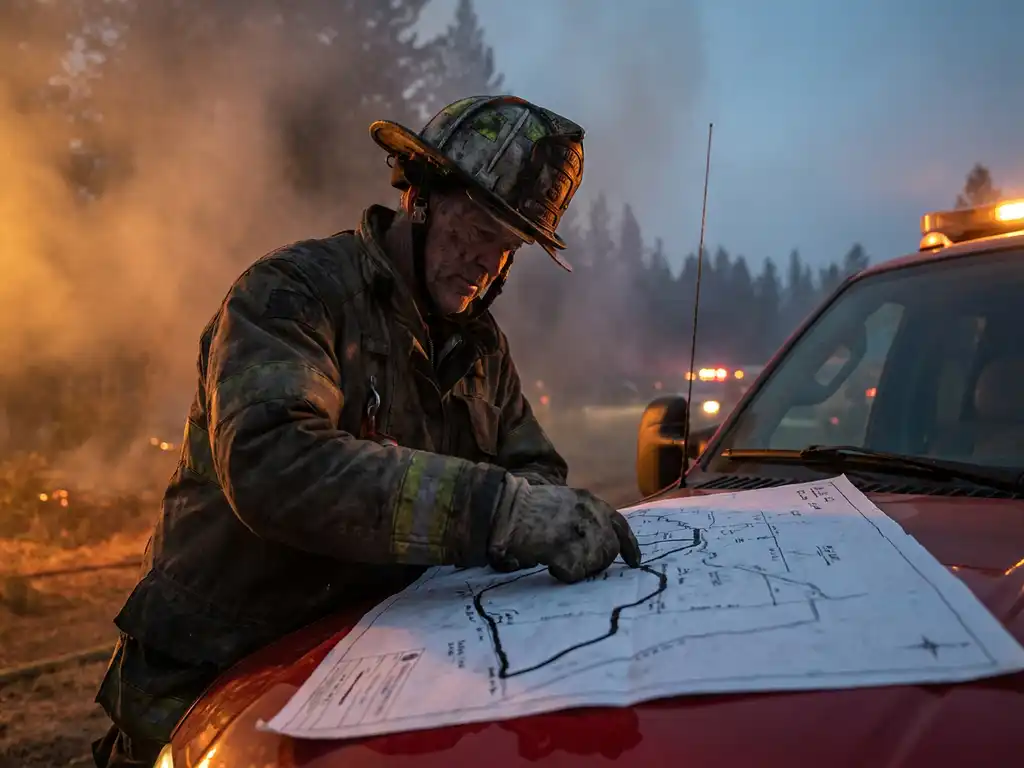
Firefighters use fire management principles to systematically assess, control, and extinguish fires while protecting lives, property, and the environment. These principles guide every decision on the fireground, from reading initial fire behavior to choosing the right suppression tactic. The following sections unpack the core questions that define how fire management works in practice.
What are the core principles behind fire management?
The core principles behind fire management are life safety, incident stabilization, and property conservation, applied in that order of priority. Every firefighting operation, regardless of scale, is structured around these three goals. Firefighters are trained to never compromise life safety for property, and to stabilize the incident before attempting to preserve assets or structures.
Beyond these priorities, fire management also rests on a command-and-control framework. A designated incident commander makes strategic decisions, assigns roles, and coordinates resources. This structured approach prevents freelancing on the fireground, where individual actions taken without coordination can escalate an already dangerous situation.
Fire management principles also incorporate size-up, which is the continuous process of gathering and evaluating information throughout an incident. A good size-up covers the type of occupancy, the materials involved, the stage of the fire, available resources, and environmental factors such as wind direction and building layout. These inputs directly shape the tactics chosen.
How do firefighters read fire behavior before acting?
Firefighters read fire behavior by observing flame color, smoke density and movement, heat indicators, and structural conditions before committing to any action. These visual and sensory cues reveal how a fire is developing, where it is likely to spread, and whether conditions are deteriorating rapidly. Reading fire behavior accurately is what separates a controlled response from a dangerous one.
Smoke is one of the most informative indicators. Thick, dark, turbulent smoke under pressure suggests a fire that is oxygen-limited and potentially building toward a flashover or backdraft. Light-colored, freely rising smoke typically indicates an earlier stage with more predictable behavior. Firefighters are trained to interpret these signals before advancing into a structure.
Flame color also carries information. Yellow and orange flames generally indicate a fire burning with an adequate air supply. Dark red or near-invisible flames can signal oxygen-deficient conditions where a sudden influx of air could trigger an explosive event. Combined with thermal imaging cameras, these observations give firefighters a clearer picture of what is happening inside a space before entry.
What suppression tactics do firefighters use to control a fire?
Firefighters use three primary suppression tactics to control a fire: direct attack, indirect attack, and combination attack. The choice depends on the fire’s stage, location, and the conditions inside the structure. Each tactic applies water or suppression agents differently to remove heat, displace oxygen, or interrupt the chemical chain reaction sustaining combustion.
Direct attack
A direct attack involves applying water or a suppression agent straight onto the burning material at close range. This is most effective in the incipient or early growth stage, when the fire is accessible and conditions allow firefighters to advance. It is the fastest method for knocking down flames when the environment is tenable.
Indirect and combination attack
An indirect attack introduces suppression agents into the heated gas layer above the fire, converting water into steam to absorb heat and disrupt combustion without direct contact with the flames. This is used when direct entry is not possible. A combination attack blends both methods, using short bursts directed at the ceiling and walls to cool the environment while advancing toward the seat of the fire. This is the most commonly used approach in structural firefighting today.
How does early detection change fire management outcomes?
Early detection fundamentally changes fire management outcomes by reducing the time between ignition and suppression, which directly limits damage, downtime, and the resources needed to control the fire. The earlier a fire is detected, the more options are available, and the less damage occurs before intervention. Detection that happens at the smoke stage rather than the flame stage can be the difference between a contained incident and a catastrophic loss.
In environments where high-value equipment is at risk, early detection is especially critical. Aspirating smoke detection systems, for example, actively sample air and identify smoke particles at concentrations far below what standard detectors can sense. This allows suppression to begin before open flames develop, protecting sensitive electronics and preventing heat damage to components that would otherwise be irreplaceable or extremely costly to restore.
From a fire management perspective, early detection also gives incident commanders more time to make sound tactical decisions. When a fire is reported at the earliest possible stage, firefighters arrive while conditions are still manageable. Late detection forces a defensive posture from the outset, limiting the options available and increasing the risk to both personnel and property.
What is the difference between fire suppression and fire extinguishment?
Fire suppression refers to reducing a fire’s intensity and preventing its spread, while fire extinguishment means completely eliminating all combustion. Suppression controls the fire and limits damage, but the fire may still be smoldering or capable of re-igniting. Extinguishment achieves a final, stable state where no further combustion is occurring and reignition risk is eliminated.
In practical firefighting, suppression often comes first. Crews knock down visible flames, cool hot gases, and prevent the fire from extending to adjacent areas. Once the fire is suppressed and conditions are safe enough to advance, firefighters move to overhaul, which involves searching for hidden embers, checking structural voids, and applying water or agents to any remaining heat sources to achieve full extinguishment.
The distinction also matters in automated fire protection systems. A system designed for suppression activates to control a fire and protect assets, buying time for human intervention or limiting damage within a defined space. A system designed for extinguishment, such as a total flooding inert gas system, delivers enough agent to bring oxygen levels below the threshold that sustains combustion, achieving a complete stop. Understanding which outcome a system is designed for is essential when specifying fire protection for critical environments.
When should fire management shift from offensive to defensive strategy?
Fire management should shift from offensive to defensive strategy when interior conditions become untenable, structural integrity is compromised, or the risk to firefighters outweighs the potential to save lives or property. This transition is one of the most critical decisions an incident commander makes, and it must be made proactively rather than reactively. Waiting too long to go defensive has been a leading factor in firefighter fatalities.
Specific triggers for a defensive transition include signs of imminent structural collapse, rapidly deteriorating smoke and heat conditions that indicate flashover is approaching, or a fire that has grown beyond the capacity of available resources to control from the interior. When any of these conditions are present, all personnel are withdrawn from the structure and operations shift to exterior master streams and aerial devices.
The offensive-to-defensive decision is never permanent. As conditions change, particularly as water application begins to cool the structure and reduce the fire load, incident commanders continuously reassess whether a transition back to offensive operations is safe and tactically sound. This ongoing size-up process reflects the dynamic nature of fire behavior and the need for fire management strategies to adapt in real time.
How ExxFire supports fire management at the object level
While firefighters manage fires at a structural and operational scale, protecting mission-critical equipment requires a dedicated layer of fire management that acts before the fire service arrives. ExxFire’s integrated fire detection and suppression systems address this gap with a solution built around early intervention and clean suppression.
- Early smoke detection: Aspirating detection identifies smoke at the earliest possible stage, triggering suppression before open flames develop inside server racks, electrical cabinets, or battery enclosures.
- Non-pressurized nitrogen suppression: ExxFire’s patented Cool Gas Generator delivers nitrogen gas directly inside the protected enclosure, reducing oxygen levels and extinguishing the fire without chemical residues or damage to sensitive electronics.
- PFAS-free and environmentally responsible: The system uses no fluorinated compounds, making it a compliant and sustainable alternative to legacy suppression agents.
- Easy installation and low maintenance: Systems are pre-engineered for self-installation without special certification and require no ongoing maintenance once commissioned.
- Fire panel integration: Built-in relays allow the system to report status to an existing fire panel, supporting coordinated fire management across the facility.
For organizations that cannot afford downtime or hardware loss, early object-level protection is not optional. Contact ExxFire to find out how the right suppression system can be matched to your specific environment and equipment.
Related Articles
- What are the fire safety requirements for lithium-ion battery cabinets?
- What are the fire detection standards for telecom infrastructure in 2026?
- How do wildfires start and what can homeowners do to prevent them?
- How do you conduct a fire hazard inspection at home?
- What fire suppression options meet EU environmental standards in 2026?