

What are the fire risks of storing flammable liquids at home?
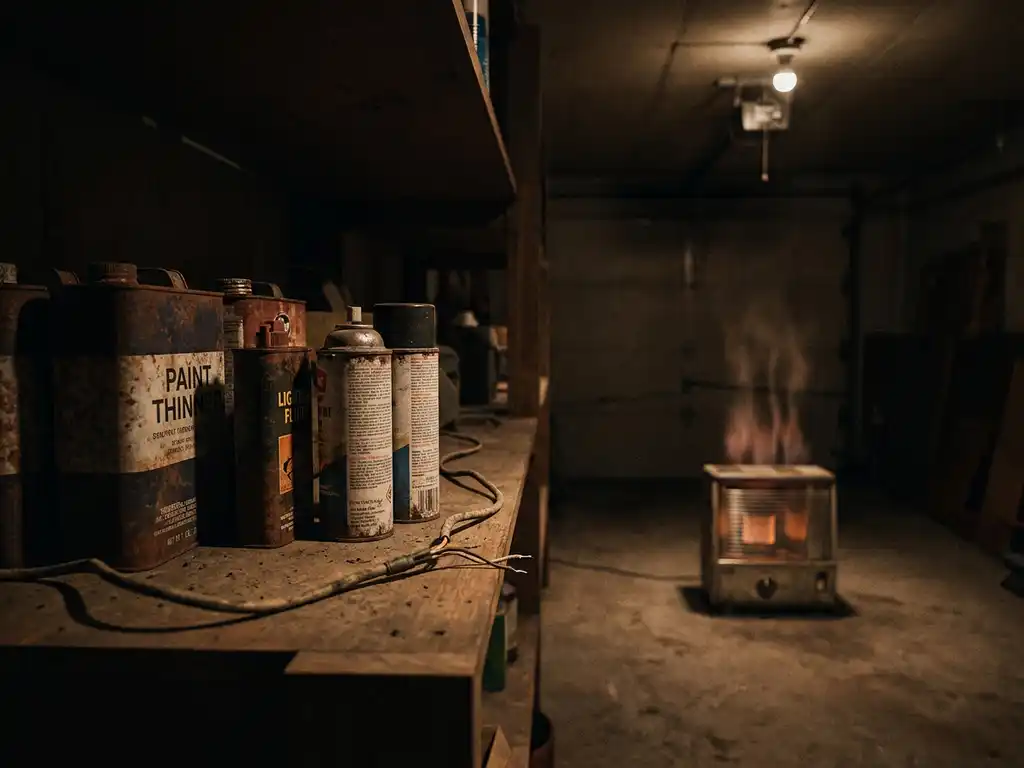
Storing flammable liquids at home poses a serious fire risk because these substances ignite easily, burn intensely, and can produce explosive vapors even at room temperature. A small spark, an open flame, or a nearby heat source is often all it takes to start a fire that spreads rapidly. Understanding these risks and how to manage them is one of the most practical steps any household can take toward fire safety.
What makes flammable liquids so dangerous in a home environment?
Flammable liquids are dangerous at home primarily because they release invisible vapors that can ignite well before the liquid itself reaches a flame. These vapors are often heavier than air, meaning they travel along the floor and accumulate in low-lying areas such as basements or garages, where a spark from an appliance or light switch can trigger ignition far from the original storage point.
What makes this especially hazardous in a home setting is the proximity of everyday ignition sources. Pilot lights on gas appliances, electrical outlets, water heaters, and even static electricity from clothing can all serve as triggers. Unlike in industrial environments where flammable liquids are stored under controlled conditions, homes rarely have the ventilation, containment systems, or monitoring equipment needed to manage these risks effectively.
Fires involving flammable liquids also tend to escalate quickly. Because these substances burn at high temperatures and can splash or flow, a small initial fire can spread to surrounding materials within seconds, making early detection and rapid response critical.
Which flammable liquids are most commonly found in homes?
The most common flammable liquids found in homes include petrol, paint thinners, acetone, methylated spirits, lighter fluid, and certain cleaning solvents. Many households also store aerosol products containing flammable propellants, as well as adhesives and varnishes that carry significant fire risk. These items are frequently kept in garages, sheds, kitchens, and utility rooms without much thought given to the hazard they represent.
Petrol is among the most dangerous because it has an extremely low flash point, meaning it produces ignitable vapors even in cold conditions. Paint thinners and acetone, commonly used for DIY projects, evaporate quickly and fill enclosed spaces with flammable vapor faster than most people expect. Methylated spirits, often used as a cleaning agent or fuel for camping stoves, is another frequent culprit in household fires.
Even products that are not immediately associated with fire, such as nail polish remover or certain hand sanitisers, contain flammable compounds. The risk is not limited to obvious containers labelled with hazard symbols – it extends to a wide range of everyday household products.
What are the most common causes of flammable liquid fires at home?
The most common causes of flammable liquid fires at home are improper storage near heat or ignition sources, accidental spills in enclosed spaces, and the use of flammable liquids near open flames. Many incidents also result from storing these substances in unsuitable containers, such as repurposing food or drink containers that offer no warning of the contents inside.
Garages and sheds are frequent locations for these fires because they often contain both flammable liquids and ignition sources in close proximity. A lawnmower engine, a power tool, or even sunlight concentrated through a glass object can provide enough heat or spark to ignite vapors from a nearby container. Poor ventilation compounds the problem by allowing vapors to build up to dangerous concentrations.
Human error also plays a significant role. Pouring flammable liquids near a lit barbecue, using them to accelerate a fire in a fireplace or outdoor pit, or leaving containers open while working are all behaviors that dramatically increase the risk of a fire starting. Children accessing improperly stored flammable substances is another cause that should not be overlooked.
How should flammable liquids be stored safely at home?
Flammable liquids should be stored in their original, tightly sealed containers in a cool, well-ventilated area away from heat sources, direct sunlight, and ignition points. Dedicated storage in a detached outbuilding or a purpose-built flammable storage cabinet is strongly recommended. Quantities kept at home should be limited to what is genuinely needed for immediate use.
Safe storage of flammable liquids at home involves several practical measures:
- Use original containers: Never transfer flammable liquids into unlabelled or unsuitable containers. Original packaging is designed to minimise vapor release and carries essential hazard information.
- Store away from living areas: Keep flammable liquids in a detached garage, shed, or purpose-built cabinet rather than inside the home, particularly away from kitchens, boiler rooms, and sleeping areas.
- Ensure adequate ventilation: Storage areas should have sufficient airflow to prevent vapor accumulation. Sealed, poorly ventilated spaces dramatically increase explosion risk.
- Keep away from ignition sources: Maintain a safe distance from electrical panels, water heaters, pilot lights, and any equipment that generates sparks or heat.
- Limit stored quantities: Store only what is needed in the short term. Larger quantities should remain at a supplier or be disposed of safely through local hazardous waste facilities.
- Store out of reach of children: Flammable liquids should be locked away or placed on high shelves inaccessible to young children.
Checking containers regularly for leaks or deterioration is also important. Even a small seep from a damaged container can release enough vapor in an enclosed space to create a serious hazard.
What should you do if a flammable liquid fire starts at home?
If a flammable liquid fire starts at home, the immediate priority is to alert everyone in the property and evacuate without delay. Do not attempt to extinguish the fire unless it is very small, you have a suitable dry powder or CO2 fire extinguisher immediately to hand, and you have a clear escape route behind you. Call the emergency services as soon as you are safely outside.
Water should never be used on a flammable liquid fire. Applying water to a burning liquid can cause it to splash and spread the fire rapidly over a wider area. Standard foam or water-based extinguishers are also ineffective and potentially dangerous. Only dry powder or CO2 extinguishers are appropriate for this type of fire, and even then, only trained individuals should attempt to tackle anything beyond a very small, contained blaze.
Closing doors as you evacuate helps slow the spread of fire and smoke to other parts of the building. Once outside, stay well clear of the building and do not re-enter for any reason until the fire service has declared it safe to do so.
Prevention remains far more effective than response. Ensuring flammable liquids are stored correctly and that working smoke detectors are installed throughout the home gives the best chance of early warning before a fire escalates beyond control.
How ExxFire helps protect against fire risks in critical environments
While the guidance above focuses on home fire safety, the risks associated with flammable materials and fire in enclosed spaces extend well beyond the household. In professional and industrial environments where high-value equipment operates in closed enclosures, the consequences of fire are even more severe. ExxFire’s fire suppression systems are designed specifically to address these risks.
ExxFire’s integrated fire detection and suppression systems offer:
- Early smoke detection: Aspirating smoke detection identifies fire at the earliest possible stage, before flames develop.
- Non-pressurized nitrogen suppression: The patented Cool Gas Generator releases clean nitrogen gas to reduce oxygen levels and extinguish fire without chemical residues or damage to sensitive equipment.
- PFAS-free technology: ExxFire systems contain no PFAS compounds, making them a safe, environmentally responsible alternative to conventional suppression agents.
- Easy installation and low maintenance: Systems are pre-engineered for straightforward self-installation in server racks, electrical cabinets, and other enclosures, with no ongoing maintenance required after commissioning.
- Certified and tested: All systems are tested and certified by CNPP in France and DMT, part of TÜV Nord in Germany, providing confidence in their reliability and performance.
Whether you are responsible for protecting ICT infrastructure, switchgear, battery energy storage systems, or other mission-critical enclosures, ExxFire provides a proven, sustainable solution. Contact ExxFire to find out how its fire detection and suppression technology can safeguard your assets and ensure business continuity.
Related Articles
- Why do regulated industries require certified fire suppression systems?
- How do children accidentally cause fires and how can parents prevent them?
- What is passive fire protection and how does it work?
- How do PFAS restrictions impact fire protection planning in 2026?
- How do you evaluate the lifecycle environmental impact of a suppression system?