

What are the fire risks of using extension cords long-term?
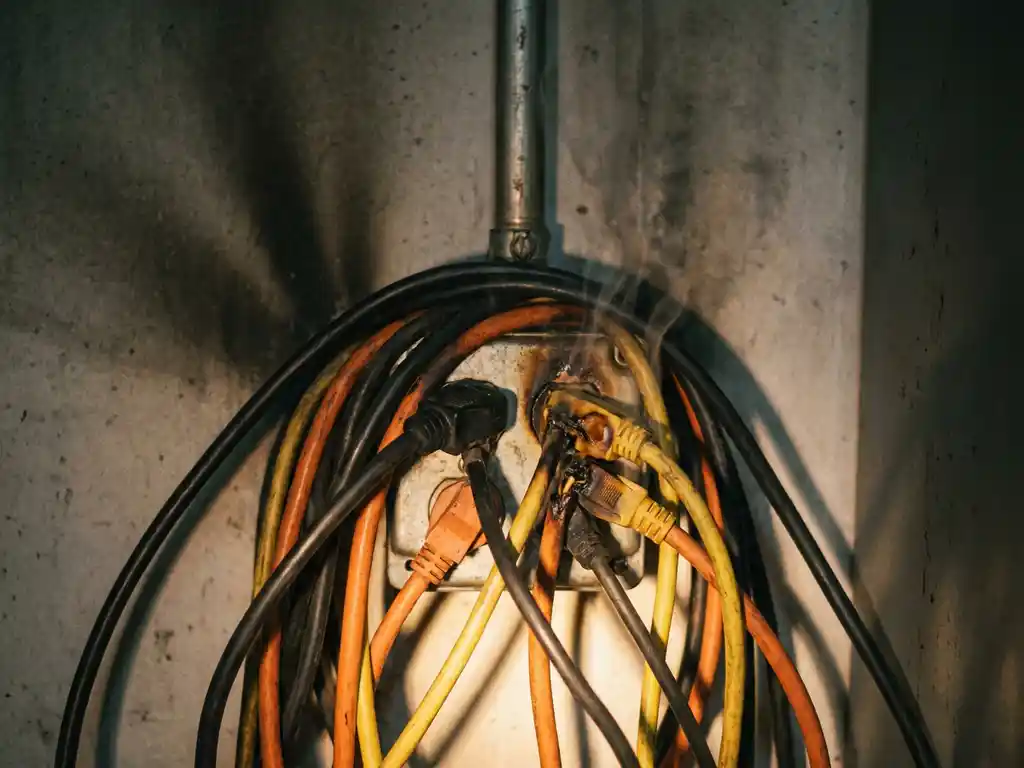
Extension cords are a leading cause of electrical fires in both homes and workplaces. Using them long-term significantly increases fire risk because they are designed as temporary solutions, not permanent wiring. Sustained current draw, physical wear, and improper use compound over time, turning a convenient tool into a genuine fire hazard. The questions below break down exactly how and why this happens, and what you can do about it.
How do extension cords cause electrical fires?
Extension cords cause electrical fires primarily through overheating. When an extension cord carries more electrical current than its wiring is rated to handle, resistance in the wire generates heat. If that heat cannot dissipate fast enough, it can ignite the cord’s insulation, nearby materials, or the connected equipment itself. This risk is compounded by damaged insulation, loose connections, and poor-quality manufacturing.
Every extension cord has a maximum ampere rating, which reflects how much current it can safely carry. Plug in devices that collectively exceed that rating, and the cord becomes a resistive heater. The problem is that this process is often invisible. The cord may feel warm to the touch, but the real danger builds inside the insulation, where temperatures can reach the ignition point before any visible warning appears.
Loose connections at the plug or socket are another common ignition point. A poor contact creates arcing, where electricity jumps across a small gap, generating intense localized heat. Arcing can ignite insulation materials in milliseconds and is one of the harder causes of fires to detect without proper monitoring equipment.
What makes long-term extension cord use more dangerous than short-term?
Long-term extension cord use is more dangerous than short-term use because sustained exposure to electrical load, physical stress, and environmental conditions progressively degrades the cord. A cord used temporarily for a single task has little time to accumulate damage. A cord left in place for months or years develops insulation fatigue, conductor corrosion, and connection wear that dramatically increase fire risk.
Physical wear is a major factor. Cords that run under carpets, across doorways, or along walls get pinched, bent repeatedly, and compressed. Over time, this breaks down the internal copper conductors and cracks the insulation. A cord with compromised insulation can short-circuit at any point along its length, often in a location that is hidden from view.
Heat cycling is another underappreciated hazard. Each time a cord heats up under load and cools down again, the insulation material expands and contracts. Over hundreds or thousands of cycles, this causes micro-fractures in the insulation that eventually expose the live conductors. In a business environment where equipment runs continuously, this cycle happens far more frequently than most facility managers realize.
What are the warning signs of a fire-risk extension cord?
The key warning signs of a fire-risk extension cord include visible damage to the outer casing, discoloration near the plug or sockets, a burning or plastic smell, tripped circuit breakers, and a cord that feels warm or hot along its length during normal use. Any one of these signs should be treated as a reason to immediately stop using the cord.
- Discoloration or scorch marks: Brown or black marks near the plug ends indicate previous arcing or overheating events.
- Warm or hot cord surface: A cord should not be noticeably warm during normal use. Heat along the length signals it is carrying too much current.
- Burning or plastic smell: This indicates insulation is degrading under heat, often before any visible damage appears.
- Tripped circuit breakers: Repeated tripping on a circuit supplying an extension cord suggests chronic overloading.
- Frayed, cracked, or exposed wiring: Any breach in the outer insulation is a direct fire and electrocution risk.
- Loose or wobbly plug connections: A plug that does not sit firmly in the socket creates resistance and arcing risk.
In commercial and industrial settings, these signs can be easy to overlook because cords are often routed behind equipment or in low-traffic areas. Periodic visual inspections should be part of any workplace electrical safety routine.
Which devices should never be plugged into an extension cord?
High-draw appliances and continuously running equipment should never be plugged into an extension cord long-term. This includes space heaters, air conditioning units, refrigerators, industrial machinery, server equipment, battery charging systems, and any device whose manufacturer specifies a direct wall connection. These devices draw sustained high current that extension cords are not designed to handle safely over time.
The core issue is continuous load. A space heater, for example, may draw close to the maximum rated capacity of a standard extension cord by itself. Running it for hours every day puts the cord under near-maximum stress indefinitely. The same applies to server racks and electrical cabinets in commercial environments, where multiple high-draw devices are often daisy-chained through extension cords as a stopgap measure.
Battery charging equipment deserves particular attention. Lithium-ion battery systems, including Battery Energy Storage Systems used in commercial and industrial applications, generate significant heat during charge and discharge cycles. Pairing that thermal load with an already-stressed extension cord creates compounding fire risk at the point of connection.
How can businesses reduce fire risk from electrical infrastructure?
Businesses can reduce electrical fire risk by replacing long-term extension cord use with permanent, correctly rated wiring, conducting regular electrical audits, training staff to recognize hazard signs, and installing object-level fire detection and suppression systems around high-value electrical enclosures. Relying on extension cords as a permanent solution is one of the most preventable sources of electrical fire in commercial environments.
Practical steps include:
- Commission permanent wiring: Any device running continuously should be connected to a dedicated, properly rated circuit installed by a qualified electrician.
- Conduct regular electrical inspections: Schedule periodic checks of all extension cords, power strips, and electrical connections, looking for the warning signs described above.
- Enforce a no-daisy-chain policy: Plugging one extension cord or power strip into another multiplies overload risk and should be prohibited in any workplace.
- Use only rated, certified equipment: Ensure all extension cords and power strips carry appropriate safety certifications and are matched to the load they will carry.
- Install object-level fire protection: For electrical cabinets, server racks, and switchgear, add dedicated fire detection and suppression at the equipment level, not just at the room level.
The last point matters most in environments where the cost of equipment loss and downtime is high. Room-level fire suppression activates only after a fire has grown large enough to be detected by ceiling-mounted sensors. By that point, sensitive electronics are often already damaged beyond recovery.
How ExxFire helps protect against electrical fire risk
ExxFire provides a direct line of defense against electrical fires in high-value enclosures, addressing the risk at the source rather than waiting for a fire to spread. For businesses operating server racks, switchgear cabinets, battery energy storage systems, or other critical electrical infrastructure, ExxFire’s integrated detection and suppression systems offer targeted protection where it matters most.
- Early smoke detection: Aspirating smoke detection identifies combustion at the earliest stage, before a fire takes hold.
- Non-pressurized nitrogen suppression: The patented Cool Gas Generator releases clean nitrogen gas to suppress fire without leaving chemical residues that damage sensitive electronics.
- Object-level protection: Systems are designed specifically for closed enclosures up to 4.5 m³, securing equipment close to the potential ignition source.
- PFAS-free and environmentally responsible: ExxFire is a clean alternative to legacy suppression agents, meeting modern sustainability and compliance requirements.
- Easy installation and maintenance-free operation: Systems can be self-installed without special certification and require no ongoing maintenance after commissioning.
If your business relies on electrical cabinets or critical infrastructure that cannot afford downtime or hardware loss, explore ExxFire’s fire suppression systems to find the right level of protection for your environment.
Related Articles
- What makes wooden buildings more vulnerable to fire?
- What are the fire risks in care homes and assisted living facilities?
- How do you achieve EN54 compliance for an electrical enclosure?
- What are the fire detection standards for telecom infrastructure in 2026?
- How does fire suppression system design affect environmental performance?