

What fire prevention measures are required in schools?
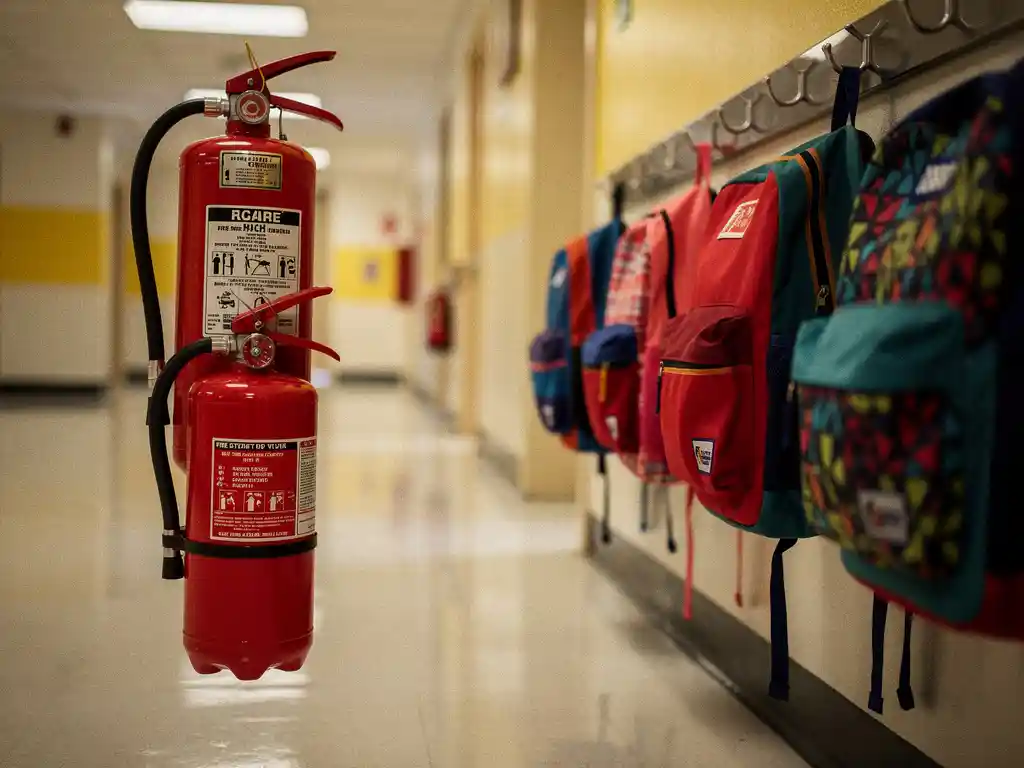
Schools are legally required to implement a range of fire prevention measures, including fire risk assessments, detection systems, suppression equipment, evacuation procedures, and clearly assigned responsibilities for fire safety. These requirements are set out in national fire safety legislation and building regulations, which apply to all educational premises regardless of size. The sections below cover each of the key requirements in detail.
What fire safety laws apply to schools?
Schools in most countries are subject to dedicated fire safety legislation that places legal duties on the responsible person — typically the school owner, headteacher, or governing body. In the UK, for example, the Regulatory Reform (Fire Safety) Order 2005 requires all non-domestic premises, including schools, to carry out fire risk assessments and implement appropriate fire precautions. Similar frameworks exist across the EU, North America, and beyond.
The core legal obligations that apply to schools under fire safety law typically include:
- Conducting and documenting a fire risk assessment
- Installing and maintaining appropriate fire detection and warning systems
- Providing adequate means of escape and keeping escape routes clear
- Supplying suitable fire suppression equipment such as extinguishers
- Training staff in fire safety procedures
- Conducting regular fire drills
Building regulations also impose requirements on the physical construction of school buildings, including fire-resistant materials, compartmentalization, and emergency lighting. Schools undergoing renovation or new construction must comply with current building codes, which are updated periodically to reflect evolving safety standards.
What fire detection systems are required in schools?
Schools are required to install automatic fire detection and alarm systems capable of alerting all occupants quickly in the event of a fire. In most jurisdictions, this means a category L fire alarm system with smoke and heat detectors installed throughout the building, including classrooms, corridors, server rooms, storage areas, and plant rooms.
The specific standard for school fire detection systems in the UK is BS 5839, which defines the design, installation, commissioning, and maintenance requirements for fire detection and alarm systems. Equivalent standards apply in other countries. Key requirements typically include:
- Automatic detection covering all areas of the school building
- Manual call points positioned near exit routes
- Audible alarms loud enough to be heard throughout the premises
- Regular testing and servicing of the system by a competent person
- A logbook recording all tests, faults, and maintenance
Schools with server rooms, electrical cabinets, or specialist ICT infrastructure may need additional protection beyond standard ceiling-mounted detectors. Equipment enclosures can harbor slow-burning fires that produce smoke long before flames develop, making early detection at the source particularly important in these environments.
How often should schools conduct fire drills?
Schools should conduct fire drills at least once per term, which typically means a minimum of three drills per academic year. This frequency is recommended by fire safety guidance in the UK and reflects best practice in most countries. The goal is to ensure that all staff and pupils can evacuate the building quickly and safely under realistic conditions.
Effective fire drills in schools should follow a structured approach:
- Conduct the drill at different times of day to test varying occupancy scenarios
- Include all staff, pupils, and any visitors present at the time
- Time the evacuation and compare it against the target evacuation time
- Account for pupils with mobility impairments or special educational needs
- Debrief staff after each drill to identify and address any weaknesses
- Record the outcome in the fire safety logbook
New staff should receive fire safety training as part of their induction, and drills at the start of each academic year help reacquaint returning pupils with evacuation routes after the summer break. Schools should also review their evacuation procedure whenever the building layout changes or significant new risks are identified.
What fire suppression equipment must schools have?
Schools must provide appropriate fire suppression equipment, with portable fire extinguishers being the minimum legal requirement in most jurisdictions. The type and number of extinguishers depend on the size of the building and the specific fire risks present. Water, CO2, foam, and dry powder extinguishers each address different classes of fire, and schools typically need a combination.
Standard requirements for fire suppression equipment in schools include:
- Fire extinguishers positioned at exits and near identified fire risks
- Fire blankets in kitchens and food technology rooms
- Annual inspection and maintenance of all extinguishers by a competent person
- Clear signage indicating the location and type of each extinguisher
Beyond portable extinguishers, schools with specialist facilities such as science laboratories, ICT suites, or server rooms should consider dedicated suppression solutions for those environments. Electrical fires in enclosed equipment are a particular risk, and standard water-based extinguishers are not suitable near live electrical equipment. Suppression systems designed specifically for electrical enclosures provide targeted protection without damaging sensitive hardware or leaving chemical residues that could complicate recovery.
Who is responsible for fire safety in a school?
The legal responsibility for fire safety in a school rests with the responsible person, a term defined in fire safety legislation. In practice, this is usually the employer — which may be the local authority, the governing body, a multi-academy trust, or a private school owner. The headteacher or principal typically acts as the responsible person on a day-to-day basis.
Fire safety responsibility in schools is rarely held by one individual alone. Typical roles and duties include:
- The responsible person: Ensures a fire risk assessment is in place, kept up to date, and acted upon
- The fire safety coordinator or nominated officer: Manages day-to-day fire safety tasks including drills, equipment checks, and staff training
- All staff members: Required to follow fire safety procedures, report hazards, and assist with evacuations
- Facilities or premises managers: Responsible for maintaining fire safety equipment and keeping escape routes clear
Schools with complex premises or multiple buildings may appoint a dedicated fire safety manager or engage a specialist fire safety consultant to support compliance. Regardless of how duties are delegated, the responsible person retains ultimate legal accountability and can face prosecution if fire safety obligations are not met.
What should a school fire risk assessment include?
A school fire risk assessment must identify all fire hazards on the premises, evaluate the risk to occupants, and document the measures in place to reduce that risk to an acceptable level. It is a legal requirement under fire safety legislation and must be reviewed regularly — at least annually, or whenever significant changes occur in the building or its use.
A thorough school fire risk assessment should cover the following areas:
- Ignition sources: Electrical equipment, heating systems, kitchen appliances, and areas where arson risk is elevated
- Fuel sources: Combustible materials including paper, textiles, chemicals in laboratories, and stored goods
- Oxygen sources: Ventilation systems and areas where air flow could accelerate fire spread
- People at risk: Pupils with disabilities, young children, staff working alone, and visitors unfamiliar with the building
- Existing fire precautions: Detection systems, suppression equipment, escape routes, signage, and emergency lighting
- Maintenance records: Evidence that fire safety equipment is tested and serviced as required
- Action plan: Specific steps to address identified deficiencies, with timescales and named responsible persons
The assessment must be recorded in writing if the school employs five or more people. It should be carried out by a competent person with sufficient knowledge of fire safety to identify hazards accurately and recommend proportionate control measures. Schools are encouraged to review their assessment after any fire incident, near-miss, or significant change in building use.
How ExxFire supports fire safety in schools
ExxFire’s combined fire detection and suppression systems address one of the most overlooked fire risks in schools: the unprotected electrical and ICT enclosures found in server rooms, switchgear cabinets, and specialist equipment areas. Standard building-wide detection systems are not designed to catch the early-stage smoldering that occurs inside closed enclosures, and portable extinguishers are not practical for fires inside live electrical equipment.
ExxFire’s systems are purpose-built for exactly these environments. Key features relevant to school fire safety include:
- Integrated aspirating smoke detection: Actively draws air from inside the enclosure to detect smoke at the earliest possible stage, long before a fire develops
- Non-pressurized nitrogen suppression: Extinguishes fire using inert nitrogen gas, leaving no chemical residues and causing no secondary damage to sensitive electronics or hardware
- PFAS-free technology: Fully compliant with tightening environmental regulations, with no harmful fluorinated compounds
- Easy self-installation: Pre-engineered systems require no special certification to install, keeping costs and disruption low
- Integration with existing fire panels: Built-in relays allow the system to report status to the school’s existing fire alarm infrastructure
For schools looking to strengthen their fire risk assessment and close the gap in protection around critical equipment, ExxFire offers a practical, certified, and environmentally responsible solution. Contact ExxFire to discuss the right system for your school’s specific needs.
Related Articles
- What is the difference between fire management and fire suppression?
- How does IEC 62368 relate to fire safety in electronic equipment?
- What is the difference between a fire suppression system and a sprinkler system?
- What is active fire protection and how is it different from passive?
- What is the difference between inert gas and chemical suppression agents?