

What is defensible space and how does it prevent wildfire damage?
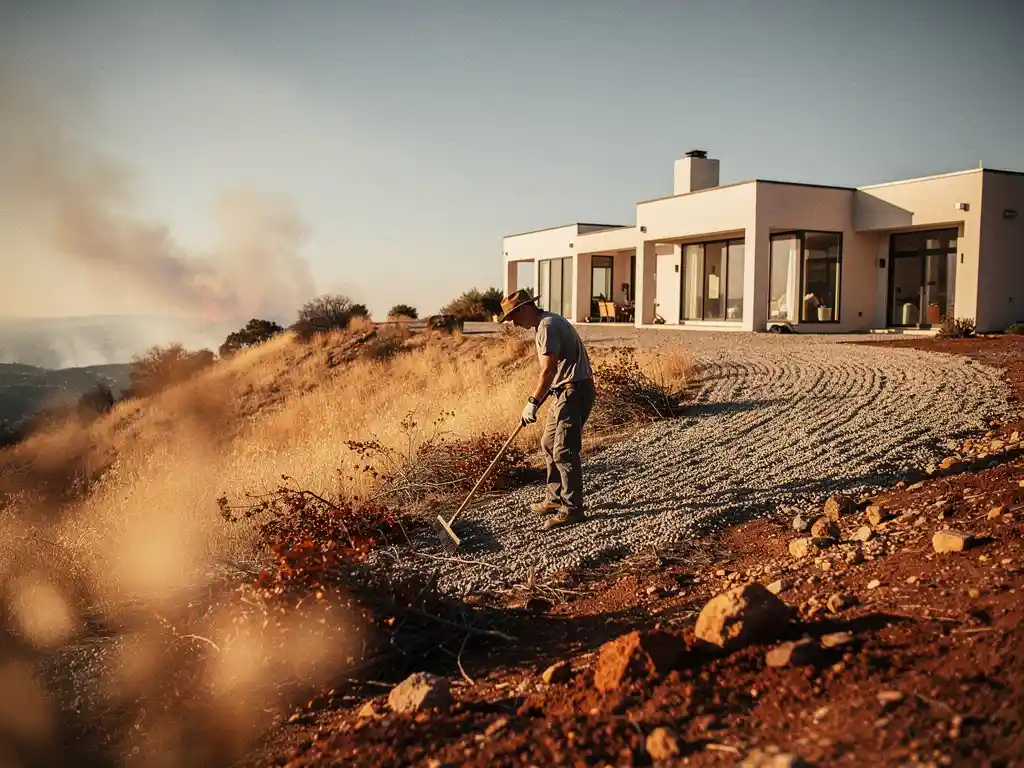
Defensible space is the buffer zone you create between a building and the surrounding vegetation, reducing the likelihood that a wildfire will reach and ignite the structure. It works by removing or reducing the combustible fuel that fire needs to travel, slowing the advance of flames, and giving firefighters a safer area from which to defend the property. The sections below cover the specific mechanics, zone layouts, terrain factors, and maintenance practices that make defensible space effective.
How does defensible space actually stop a wildfire from spreading?
Defensible space stops a wildfire from spreading to a structure by interrupting the continuous fuel pathway that fire needs to travel. When vegetation is thinned, spaced, and managed, flames lose momentum before reaching the building. The cleared zone also reduces radiant heat exposure and gives embers fewer places to land and ignite.
Wildfires spread through three primary pathways: direct flame contact, radiant heat, and airborne embers. Defensible space addresses the first two directly. By removing dense, dry, or resinous plants close to a structure, you eliminate the ladder fuels that carry ground-level fire upward into tree canopies and toward rooftops. Radiant heat, which can ignite combustible materials even without direct flame contact, diminishes rapidly with distance, so every meter of cleared space between vegetation and the structure meaningfully reduces heat exposure.
A well-maintained defensible space also changes how firefighters can respond. When crews arrive at a property surrounded by unmanaged vegetation, they often cannot safely position themselves to defend it. A clear zone gives them access, sight lines, and a lower-risk working environment, making active fire defense far more feasible.
What are the defensible space zones and what goes in each one?
Defensible space is typically divided into two primary zones based on distance from the structure. Zone 1 extends from the structure out to roughly 9 to 18 meters (30 to 60 feet) and requires the most intensive fuel management. Zone 2 extends from the outer edge of Zone 1 to approximately 30 meters (100 feet) or more, depending on slope and local regulations, and focuses on reducing fuel density rather than eliminating it.
Zone 1: The lean, clean, and green zone
In Zone 1, the goal is to eliminate any direct path for fire to travel from the ground to the structure. This means removing dead plant material, keeping grass mowed short, pruning tree branches so the lowest limbs are well above ground level, and ensuring no plants grow directly against the building. Highly flammable plants such as ornamental grasses, junipers, and eucalyptus should be replaced with fire-resistant alternatives. Wood piles, patio furniture, and other combustibles stored against exterior walls should be relocated outside this zone.
Zone 2: The reduced fuel zone
Zone 2 does not need to be stripped bare. The objective here is to reduce the density and continuity of vegetation so that fire slows and loses intensity before it reaches Zone 1. Trees should be spaced so their canopies do not touch, shrubs should be kept low and separated from one another, and dead vegetation should be cleared regularly. Maintaining this zone limits the fire’s energy and reduces the volume of embers generated near the structure.
What types of plants and materials increase wildfire risk near structures?
Plants with high oil, resin, or wax content burn intensely and ignite easily, making them particularly hazardous near structures. Junipers, rosemary, ornamental grasses, eucalyptus, and many native chaparral species fall into this category. Dead or dry vegetation of any species also significantly increases risk, as moisture content is one of the most important factors in how readily a plant ignites.
Beyond plant species, certain materials stored or built near structures create concentrated ignition points. Wooden decks, fences made of untreated timber, mulch beds composed of dry bark or wood chips, and combustible doormats or patio furniture all contribute to the risk. Fences and decks are particularly important to consider because they can act as a direct fuel bridge, carrying fire from the surrounding landscape to the exterior wall of the structure.
Replacing high-risk mulch with gravel or decomposed granite in Zone 1, choosing composite or fire-resistant decking materials, and using metal or masonry fencing near the structure are practical steps that reduce ignition potential without eliminating landscaping entirely.
Does defensible space work differently depending on slope and terrain?
Yes, slope significantly changes how defensible space should be designed and how far each zone needs to extend. Fire travels faster uphill because rising heat preheats vegetation above the flame front. On a steep slope, a fire moving uphill can reach a structure far more quickly and with greater intensity than one moving across flat ground, which means the defensible space zones must be extended to compensate.
As a general principle, for every 10 degrees of slope, the recommended depth of Zone 1 increases. A structure on a 30-degree slope may require Zone 1 to extend 18 meters or more downhill from the building, compared to roughly 9 meters on flat terrain. The uphill side of a structure typically requires less extension because fire moving away from the building loses energy as it descends.
Terrain features such as ridgelines, ravines, and canyons also concentrate fire behavior in unpredictable ways. Ravines channel wind and funnel fire upward with accelerated speed. Structures located near or at the top of a canyon or saddle face elevated risk and should treat the entire perimeter with extended zone depths rather than applying a standard flat-ground formula.
How do embers cause structure ignition even with defensible space in place?
Embers, also called firebrands, are the leading cause of structure ignition during wildfires, and they can travel several kilometers ahead of the fire front. Even a well-maintained defensible space does not eliminate ember risk because embers land on the structure itself, not just in the surrounding vegetation. Roof surfaces, gutters, vents, and gaps in siding are the most common entry and accumulation points.
Dry leaves and debris that collect in gutters are particularly vulnerable. A single ember landing in a gutter full of organic material can smolder undetected for hours before igniting the roof structure. Keeping gutters clean and installing ember-resistant mesh covers is one of the most effective ways to reduce this risk.
Attic and foundation vents are another critical vulnerability. Standard vents allow embers to enter the building envelope, where they can ignite insulation or framing materials from the inside. Replacing standard vents with ember-resistant or intumescent vent covers significantly reduces the chance of internal ignition. Sealing gaps around pipes, cables, and other wall penetrations provides additional protection against ember intrusion.
Defensible space and structure hardening work together. Defensible space reduces flame and radiant heat exposure, while structure hardening addresses the ember pathway. Neither approach is fully effective without the other.
When should defensible space be maintained and how often?
Defensible space requires ongoing maintenance, not a one-time clearance. The most important maintenance window is late spring and early summer, before seasonal vegetation dries out and fire risk peaks. However, effective wildfire risk reduction requires attention throughout the year, since dead material accumulates continuously and plant growth can quickly re-establish fuel continuity between cleared areas.
A practical maintenance schedule includes inspecting and clearing Zone 1 at least twice per year, with additional checks after storms that deposit debris or following periods of rapid plant growth. Zone 2 typically requires one thorough clearing per year at minimum, with spot checks after high winds or heavy precipitation. Gutters should be cleared before and during fire season, and more frequently if the property is surrounded by deciduous trees.
Local fire authorities in many regions conduct defensible space inspections and issue compliance notices when properties fall below required standards. Staying ahead of these requirements not only reduces legal risk but, more importantly, ensures the property maintains genuine protection rather than a superficial appearance of compliance.
How ExxFire supports fire protection for enclosed critical assets
While defensible space focuses on outdoor wildfire protection, the same principle of early intervention applies to fire safety inside buildings. ExxFire provides integrated fire detection and suppression systems purpose-built for enclosed, high-value equipment that wildfire and other ignition sources put at risk. For organizations managing critical infrastructure, ExxFire’s approach delivers:
- Early smoke detection through aspirating smoke detection technology that identifies fire at its earliest stage, before flames develop
- Immediate suppression using non-pressurized nitrogen gas delivered through the patented Cool Gas Generator, which extinguishes fire at the source without chemical residue or damage to sensitive electronics
- PFAS-free, environmentally responsible suppression that replaces legacy chemical agents with a clean, inert gas solution
- Easy installation without special certification requirements, reducing deployment time and total cost of ownership
- Seamless integration with existing fire panels via built-in relays, ensuring compatibility with current safety infrastructure
Whether protecting server racks, electrical cabinets, switchgear, or battery energy storage systems, ExxFire’s systems ensure that fire is contained at the object level before it can escalate. Contact ExxFire to find out how its certified detection and suppression technology can protect your mission-critical equipment.