

How does inert gas fire suppression work?
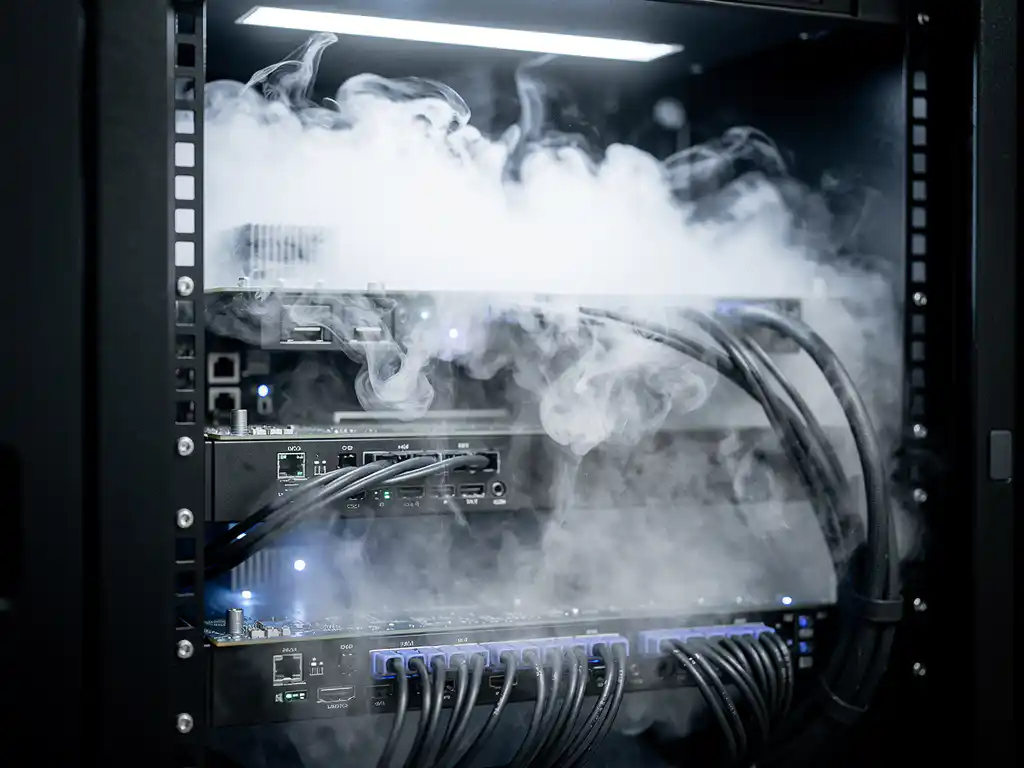
Inert gas fire suppression works by reducing the oxygen concentration inside a protected enclosure to a level where combustion can no longer be sustained, without removing oxygen entirely. When released, inert gases such as nitrogen dilute the available oxygen from the normal atmospheric level of around 21% down to approximately 12 to 15%, which extinguishes the fire while still allowing people to breathe temporarily. The sections below answer the most common questions about how these systems work, where they are used, and why they are increasingly preferred over chemical alternatives.
What happens when inert gas is released during a fire?
When an inert gas fire suppression system activates, the gas floods the protected space and displaces enough oxygen to break the fire triangle. Combustion requires oxygen, fuel, and heat working together. By lowering the oxygen concentration below the threshold needed to sustain a flame, the fire is extinguished without applying water, foam, or reactive chemicals to the protected equipment.
The suppression process is fast. Modern systems pair early smoke detection with rapid gas discharge, meaning the agent reaches the fire in its earliest stage before heat and flames cause significant hardware damage. In an enclosed cabinet or server rack, this speed is critical because even a small electrical fire can destroy sensitive components within seconds.
Nitrogen, the most widely used inert suppression agent, is particularly effective in this role because it is chemically inert. It does not react with electronics, metals, or insulation materials. Once the fire is out and the enclosure is ventilated, there is no residue to clean up and no secondary damage from the suppression agent itself.
What types of fires can inert gas suppression systems handle?
Inert gas extinguishing systems are most effective against Class A fires involving solid materials such as plastics and insulation, and Class C fires involving energized electrical equipment. These are the fire classes most commonly encountered in server rooms, electrical switchgear cabinets, battery energy storage systems, and telecommunications enclosures.
Because nitrogen gas suppression works by oxygen displacement rather than chemical reaction, it is effective regardless of the specific fuel source inside an enclosure, provided the space is sufficiently sealed to allow the gas concentration to build and hold. This makes it well suited to complex electrical environments where multiple materials may be present simultaneously.
Inert gas systems are not typically used for Class B fires involving flammable liquids in open environments, or Class D fires involving reactive metals. Those fire classes require agents specifically formulated to address their unique combustion chemistry. For the enclosed, electronics-heavy environments where inert gas suppression is deployed, however, it covers the vast majority of realistic fire scenarios.
How does inert gas suppression differ from CO2 and chemical gas systems?
The key distinction between inert gas suppression and CO2 or chemical gas systems lies in how each agent works and the risks each carries. CO2 extinguishes fire by displacing oxygen to dangerously low levels, typically below 10%, which is immediately life-threatening to people in the space. Inert gas systems using nitrogen operate at a higher residual oxygen level, making them significantly safer in occupied or semi-occupied environments.
Chemical gas systems, including those based on hydrofluorocarbons or halocarbons, extinguish fire through chemical interference with the combustion chain reaction. While effective, many of these agents contain or break down into compounds that are harmful to the environment, including substances classified as PFAS. Regulatory pressure on these agents has intensified considerably across Europe and other markets.
Nitrogen fire suppression avoids both problems. It is a naturally occurring atmospheric gas, non-toxic at suppression concentrations, and leaves no chemical residue. There is no risk of thermal decomposition byproducts, no ozone depletion potential, and no contribution to persistent environmental contamination. For organizations seeking a PFAS-free fire suppression solution, inert gas is the cleanest available alternative.
Where is inert gas fire suppression most commonly installed?
Inert gas fire suppression is most commonly installed in enclosed environments where sensitive, high-value equipment must be protected without the risk of water, foam, or chemical residue damage. The most frequent applications include electrical switchgear cabinets, server racks and ICT enclosures, battery energy storage systems, high-voltage cabinets, and telecommunications infrastructure.
These environments share several characteristics that make inert gas suppression the logical choice:
- The equipment inside is expensive to replace and difficult to restore after chemical or water damage
- Downtime carries significant financial or operational consequences
- The enclosures are relatively sealed, allowing suppression gas to build concentration effectively
- Electrical live equipment rules out water-based suppression methods
Beyond individual cabinets, inert gas systems are also installed in larger protected rooms such as data center suites, control rooms, and archive spaces where total flooding is required. In these room-level applications, the system design scales up while the core suppression principle remains the same: reduce oxygen concentration below the combustion threshold without harming people, assets, or the environment.
Is inert gas fire suppression safe for people and electronics?
Inert gas fire suppression is safe for sensitive electronics and generally safe for people when systems are correctly designed and deployed. Nitrogen does not react chemically with electronic components, circuit boards, or insulation materials, and it leaves no residue after discharge. Equipment inside a protected enclosure can often return to service quickly after a suppression event with minimal cleaning required.
For people, nitrogen suppression systems are considerably safer than CO2 systems. At the oxygen concentrations used to extinguish fire, around 12 to 15%, a person can survive brief exposure, though prolonged exposure is dangerous and evacuation is always required. In cabinet-level or object-level suppression, where the gas is confined to the enclosure rather than flooding an entire room, the risk to people in the surrounding area is negligible.
For fire suppression for electrical cabinets, this combination of equipment safety and human safety makes nitrogen the preferred agent. There are no toxic decomposition products, no corrosive residues, and no pressure shock risks associated with the suppression event itself when systems use non-pressurized stored gas technology.
What are the environmental benefits of inert gas over chemical suppression agents?
Inert gas fire suppression systems offer substantial environmental advantages over chemical suppression agents. Nitrogen is a naturally occurring component of the atmosphere, making up approximately 78% of the air we breathe. When released during a suppression event, it returns to the atmosphere without contributing to ozone depletion, global warming, or persistent chemical contamination.
Chemical suppression agents, by contrast, often carry significant environmental liabilities:
- Halon, now largely banned under the Montreal Protocol, caused direct ozone layer damage
- HFC-based agents carry high global warming potential ratings
- PFAS-containing agents persist in the environment and have been linked to health and ecological harm
- Some agents produce toxic byproducts when they decompose at high temperatures during a fire
The regulatory landscape in 2026 continues to tighten around these substances, particularly PFAS, with restrictions expanding across European and international markets. Organizations that install inert gas extinguishing systems today are not only meeting current compliance requirements but are also future-proofing their fire safety infrastructure against further regulatory changes.
How ExxFire protects critical equipment with nitrogen gas suppression
ExxFire provides integrated fire detection and suppression systems built around non-pressurized nitrogen gas technology, purpose-designed for the enclosed environments where inert gas suppression performs best. Key features of ExxFire’s approach include:
- Combined detection and suppression: Aspirating smoke detection activates suppression at the earliest sign of fire, minimizing damage before flames develop
- Non-pressurized nitrogen storage: The patented Cool Gas Generator technology stores nitrogen in a solid, non-pressurized state, eliminating the risks associated with high-pressure cylinders
- No chemical residue: Nitrogen leaves sensitive electronics completely undamaged, supporting fast recovery and business continuity
- PFAS-free and environmentally clean: Systems meet current and anticipated regulatory requirements without compromise
- Easy installation and low maintenance: Pre-engineered systems require no special certification to install and integrate with existing fire panels via built-in relays
- Third-party certified: Tested and validated by CNPP France and DMT, part of TÜV Nord
Whether you are protecting a single switchgear cabinet or a network of battery energy storage systems, ExxFire’s systems are designed to deliver reliable, clean, and certified protection. Contact ExxFire to discuss the right inert gas fire suppression solution for your application.
Related Articles
- How do you balance fire management with conservation goals?
- What are the benefits of proactive fire management?
- What is a total fire protection solution for industrial hardware?
- Why is GWP an important factor when selecting a fire suppression system?
- What should facility managers know about sustainable fire suppression?